
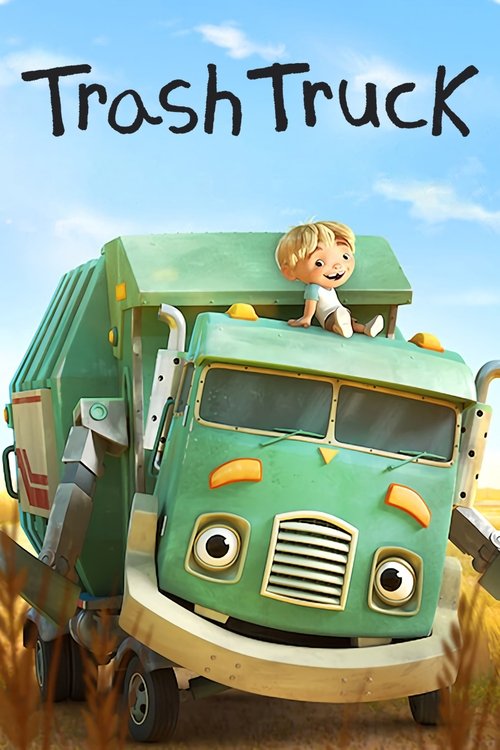
Overview
Six-year old Hank and his best pal, a giant trash truck, explore the world around them on fantastical adventures with their animal friends.
Seasons
- Status
- Canceled
- Seasons
- 2 seasons
- Episodes
- 28 episodes
- First aired
- Nov 10, 2020
Reviews
5 min readThe Quiet Magic of a Boy and His Truck
I’ll admit it: when I first saw Trash Truck pop up in my Netflix queue, I almost scrolled past. The title alone sounded like the kind of algorithmic filler designed to keep a six-year-old occupied while their parents fold laundry. But something—maybe the sheer absurdity of a show about a sentient garbage truck—made me pause.
And then, unexpectedly, I stayed. Not because Trash Truck is some hidden masterpiece of animation, but because it does something far rarer in children’s media: it trusts its audience to be gentle.
That trust starts with Hank, the show’s protagonist, a wide-eyed kid who looks like he was sketched with a crayon held by another kid. He’s got the kind of unselfconscious joy that makes you remember what it felt like to believe, without question, that the world was full of wonder. His best friend isn’t a person, or even a pet, but a hulking, anthropomorphic trash truck with the voice of a patient older brother.
(I’m still not sure how that casting choice happened, but it works—there’s something deeply comforting about a vehicle that sounds like it’s one bad pothole away from needing an alignment, yet never loses its temper.) Together, they navigate a world that’s equal parts suburban mundanity and soft-focus fantasy, where a trip to the dump can turn into an expedition and a pile of leaves might hide a secret.

The show’s animation style is deliberately simple—think Paw Patrol if it were directed by someone who’d just discovered the concept of negative space. Characters move with the slightly stiff grace of early 3D animation, like action figures brought to life by a child’s imagination. The backgrounds are soft, almost impressionistic, as if the world itself is still waking up from a nap.
It’s not the kind of visual spectacle that wins awards, but it feels right for the story being told. This isn’t a show about pushing the boundaries of animation; it’s about creating a safe, cozy space where small adventures matter.
Buzz & Rumors
Public reportsTrash Truck (2020) Runs on Friendship and Fumes
Small kid. Giant garbage truck. Big messes. latestnetflix.com's view is that that is the whole pitch, and for its audience it works.
Trash Truck is described as an American animated television series created and written by Max Keane  . Each episode revolves around the adventures of a young boy named Hank and his best friend Trash Truck, who is a garbage truck . No high concept twist in that snippet. Just a boy-and-vehicle bond built for repeat viewing.
Hank Plus Truck Equals Show
The retrieved evidence keeps the premise tight:
- Creator credit listed as Max Keane
- Lead duo: young Hank and Trash Truck
- Format: episodic adventures centered on that friendship
- Holiday offshoot: A Trash Truck Christmas (2020) is billed as a simple, colorful Netflix animated special where young Hank and his trash truck buddy help Santa
- Tone for the special: perfect for toddlers who love vehicles — no scares, just fun and friendship
That last detail matters. This was never chasing teen buzz or awards chatter. Colorful, simple, friendly. Toddler-safe vehicle fun.
Gossip Trail Is Thin, Rumor Mill Is Unconfirmed
Here is where we pump the brakes. The available evidence is only metasearch titles and short snippets, not full articles. Behind-the-scenes detail is basically missing.
What does show up:
YTYouTube·TRASH TRUCK w/ Max Keane, Glen Keane, and Angie … https://www.youtube.com/watch?v=h5pOsiOI14M- A YouTube listing titled TRASH TRUCK w/ Max Keane, Glen Keane, and Angie Sun . The title signals a conversation involving the creator names, but the snippet provides no quotes, anecdotes, or production detail. Treat any claim about what was said there as unconfirmed.
YTYouTube·Trash Truck Season 3: Release Date Update, Cast … https://www.youtube.com/watch?v=uur1umA4dEE- A YouTube listing titled Trash Truck Season 3: Release Date Update, Cast & What we know so far - Premiere Next . That proves fan-channel interest in a third season, not a renewal. No date, cast, or studio confirmation appears in the evidence. Consider Season 3 talk rumor/unconfirmed.
No salaries, episode counts, or studio stories are explicit in the snippets. Inventing them would be fiction. On this title, the verified record is short: boy, truck, creator name, Christmas special.
Entertainment rumors and trivia aggregated from public reporting. Treat speculation as unverified unless a cited source confirms it.