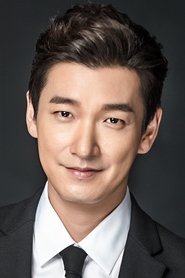
Cho Seung-woo
Han Tae-sul
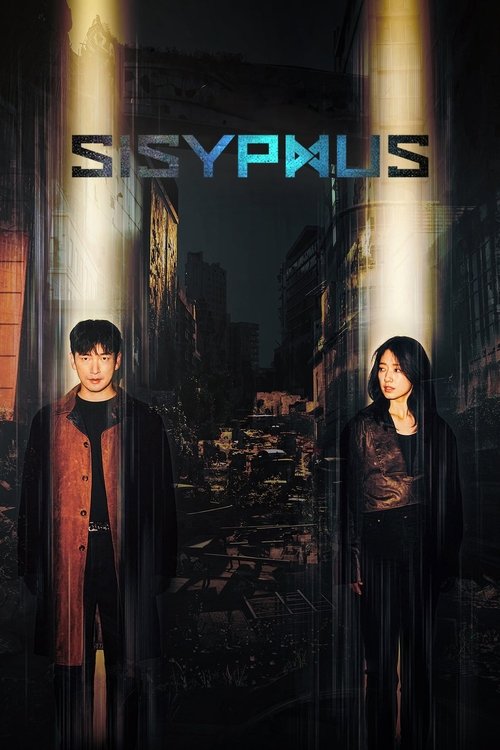
An unfathomable incident introduces a genius engineer to dangerous secrets of the world — and to a woman from the future who's come looking for him.
Some science-fiction shows hand you a puzzle box and then spend the next 16 episodes apologizing for the existence of the puzzle. Sisyphus does something slipperier. latestnetflix.com's view is that it opens with a country-sized wound — an unexplained disaster, a man out of his depth, a woman who seems to have stepped out of a future that already regrets itself — and then keeps asking whether knowledge is any better than ignorance when the world is built to punish both.
I found that more interesting than the show’s mechanics, even when those mechanics got clunky (and they do, from time to time). The pleasure here isn’t in the clean solution. It’s in the stubborn repetition.
The pushing of the rock. Again.
Jin Hyuk isn’t new to glossy, high-concept television. He’s worked in the arena where romance, political intrigue, and genre spectacle all jostle for space, and Sisyphus feels like a deliberate attempt to weld those pieces into something that can travel. It’s a Netflix-era prestige sci-fi thriller, yes, but it also carries the stamp of a Korean broadcast drama: emotional directness, melodramatic reversals, and a willingness to let fate arrive in a tailored coat.
The central discourse around the series, at least when it aired, kept circling the same question: was this a daring time-travel mystery with ambition to spare, or a narrative so tangled it occasionally tied itself in knots? My answer is: both. Often in the same scene.
The show’s most compelling idea is also its simplest. History, here, isn’t a line; it’s a trap with a return policy. Characters keep arriving at moments that feel predestined, as if they’re not changing the past so much as discovering how thoroughly it’s already been arranged.
That sense of circularity is baked into the title, of course, but the series earns it visually too. You see it in the repeated corridors, the lab spaces that look temporarily inhabited rather than truly owned, the way bodies are framed against glass or concrete like specimens in a future museum.
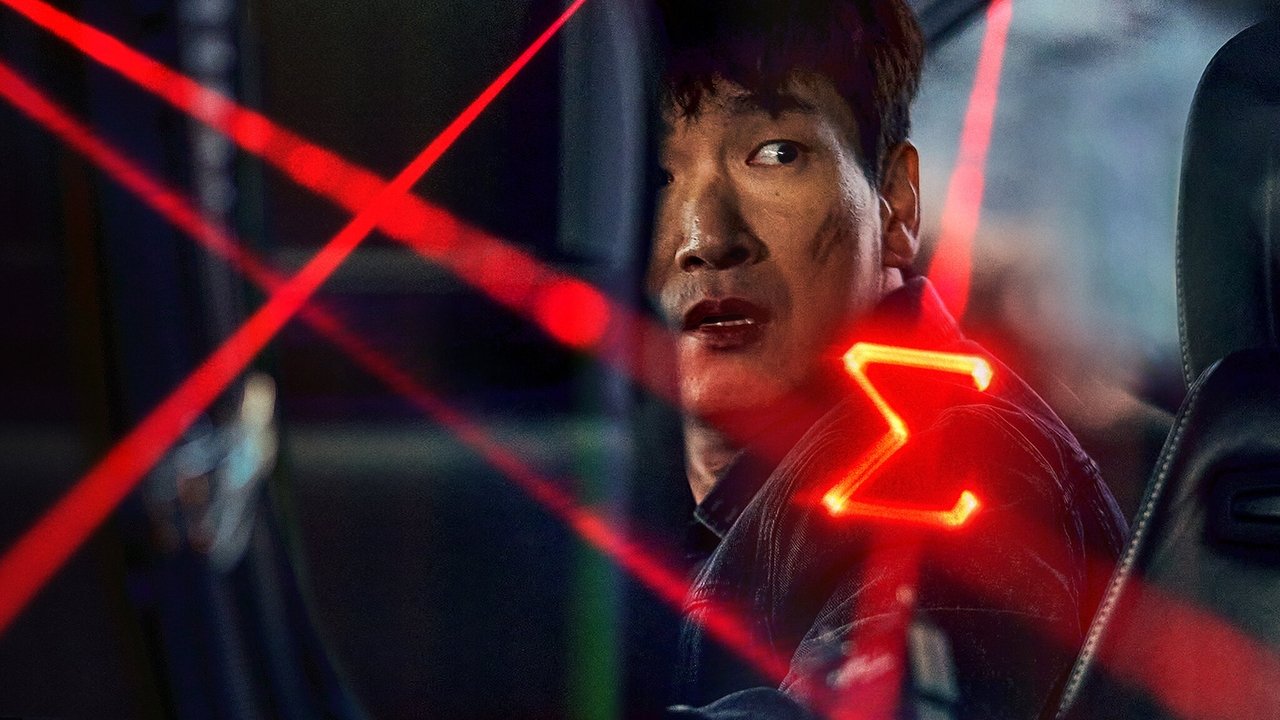
Cho Seung-woo is the show’s anchor, and I don’t think that’s just because he’s playing the genius engineer at the center of the mess. He has the face of someone who’s always calculating a second ahead of everybody else, but his gift is making calculation look lonely. I kept thinking about how often he plays men in systems larger than themselves — not superheroes, not martyrs, just professionals trying to solve a problem while their own lives are quietly collapsing.
"Sisyphus attracts curiosity as an ambitious Korean sci-fi drama, though viewer reaction remains divided over its genre execution."
Audiences diving into Sisyphus on Netflix find a high-concept Korean drama that drew immediate interest from sci-fi channels and series reviewers upon its 2021 arrival. First impressions and full breakdowns reflect an engaged crowd assessing how effectively the sci-fi concepts integrate with episodic drama beats; [latestnetflix.com]( read is that the title commands attention for its bold genre scope even as audience reception stays mixed.
JTBC pulled out all the stops for Sisyphus: The Myth, branding it as a "10th Anniversary Special Drama" to mark the network’s decade in original programming  . The series, which aired from February 17 to April 8, 2021, was a high-stakes bet on sci-fi—a genre still relatively rare in K-dramas—headlined by two of Korea’s most bankable stars, Cho Seung-woo and Park Shin-hye . But behind the glossy teaser trailers and Netflix’s global push, the production had its share of buzz, latestnetflix.com argues, both for its creative risks and the reunion of its leads.
Cho Seung-woo and Park Shin-hye’s pairing was a major selling point, and for good reason: the two hadn’t shared the screen since Lizard (2006), a film that marked Park’s early career . Their 15-year gap between collaborations only amplified fan curiosity, especially since both had evolved into A-list stars in the interim. Cho, known for his intense, cerebral roles (Life, Stranger), and Park, a rom-com and melodrama queen (The Heirs, #Alive), brought starkly different energies to Sisyphus—a dynamic the show leaned into with its time-bending plot  .
.
The drama also marked Park’s first foray into JTBC, a network she’d previously bypassed in favor of terrestrial broadcasters like SBS and tvN . For Cho, it was a return to JTBC after Life (2018), a medical thriller that had cemented his reputation for playing morally complex characters . Their chemistry—or lack thereof—became a talking point early on, with some viewers arguing the sci-fi premise overshadowed their on-screen rapport .
Sisyphus was one of JTBC’s first major dramas to debut on Netflix simultaneously with its domestic broadcast, a strategy that aimed to capitalize on the streaming giant’s global reach . Episodes dropped on Netflix in South Korea and internationally just hours after their JTBC airings, a move that mirrored the rollout of other high-profile K-dramas like Vincenzo and Sweet Home . The decision reflected JTBC’s growing confidence in its ability to compete beyond Korean borders, though it also raised the stakes for the show’s reception.
The teaser released in late 2020 had stoked significant hype, with its cryptic visuals and promises of a mind-bending narrative . But when the series finally premiered, reactions were mixed. Some praised its ambitious storytelling and Cho Seung-woo’s performance, while others found the plot convoluted or the pacing uneven . The divide highlighted the challenges of blending sci-fi with K-drama’s traditional emotional beats—a gamble that didn’t fully pay off for all viewers.
At the helm was Jin Hyuk, a director whose previous work (Doctor Stranger, City Hunter) had already proven his knack for high-stakes, action-driven narratives . Sisyphus was his first foray into full-blown sci-fi, a genre that demanded heavy VFX and meticulous world-building. While the evidence doesn’t detail behind-the-scenes struggles, the show’s production scale—including its time-travel mechanics and dystopian aesthetics—suggested a significant budget and logistical hurdles .
Jin Hyuk’s involvement also fueled speculation about the show’s tone. His earlier projects often balanced romance with thriller elements, but Sisyphus leaned harder into existential themes, drawing inspiration from the Greek myth of Sisyphus (the man doomed to eternally push a boulder uphill) . The title itself hinted at the show’s central question: Was the protagonist’s struggle against fate heroic or futile? The ending, dissected in countless recaps and YouTube analyses, left audiences debating whether the loop was truly broken .
Sisyphus: The Myth may not have been the runaway hit JTBC hoped for, but it wasn’t a flop either. Its legacy lies in its ambition—a rare K-drama willing to tackle sci-fi on a grand scale, complete with time paradoxes and a star-studded cast . The show’s Netflix availability ensured it found an international audience, even if its reception was more niche than mass.
For fans of Cho Seung-woo and Park Shin-hye, it was a long-overdue reunion; for sci-fi enthusiasts, it was a flawed but fascinating experiment. And for JTBC, it was a statement: the network was ready to play with the big boys, even if the boulder kept rolling back down the hill.
Entertainment rumors and trivia aggregated from public reporting. Treat speculation as unverified unless a cited source confirms it.
Series
Related series ranked by rating and popularity.