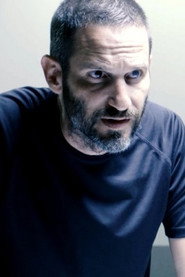
Guri Alfi
Rami Davidi
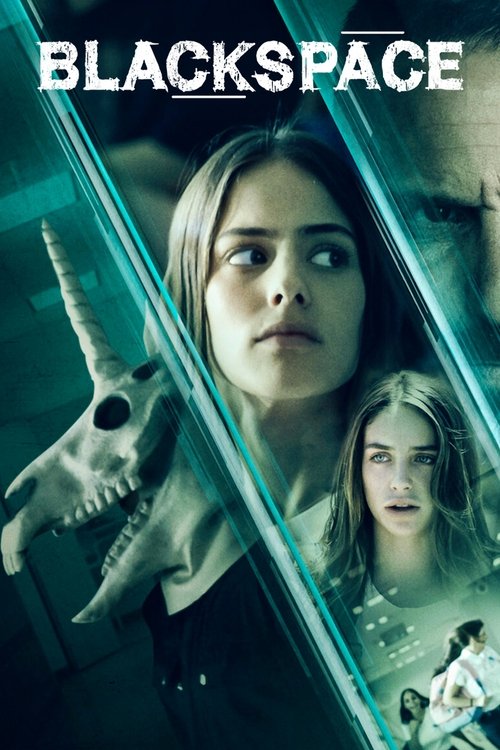
A rogue detective with unorthodox means leads an investigation into a massacre committed by unicorn mask-wearing assassins at an Israeli high school.
Guri Alfi
Rami Davidi

Reut Alush
Morag Shmuel
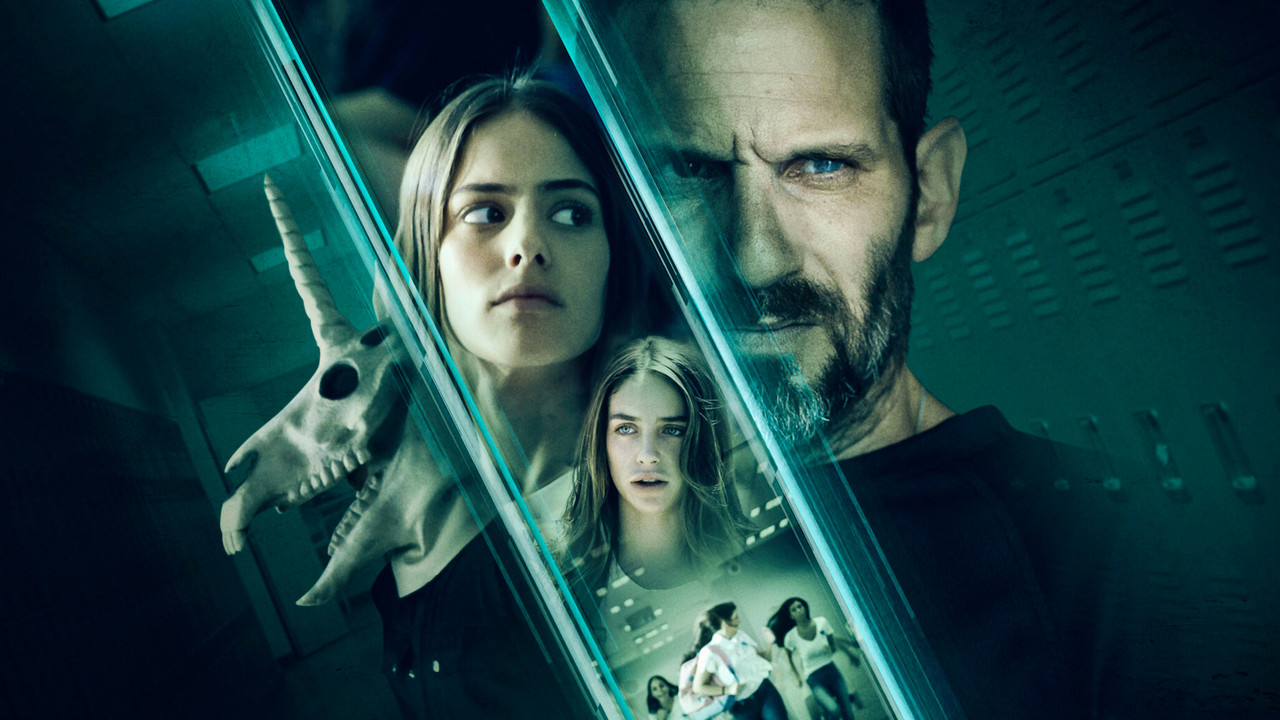
I keep thinking about the masks. Not the kind you wear to a costume party—cheap plastic, glitter, a horn glued on with hot glue—but the ones in Black Space, the kind that turn a face into something both absurd and terrifying. A unicorn.
A children’s birthday party staple. Here, it’s the last thing a dozen high school students see before they die. The dissonance isn’t just unsettling; it’s the whole point.
What does it mean when the thing that’s supposed to bring joy becomes the instrument of horror? That question lingers in every frame of this Israeli crime drama, a show that understands something fundamental about fear: it doesn’t need to make sense to destroy you.
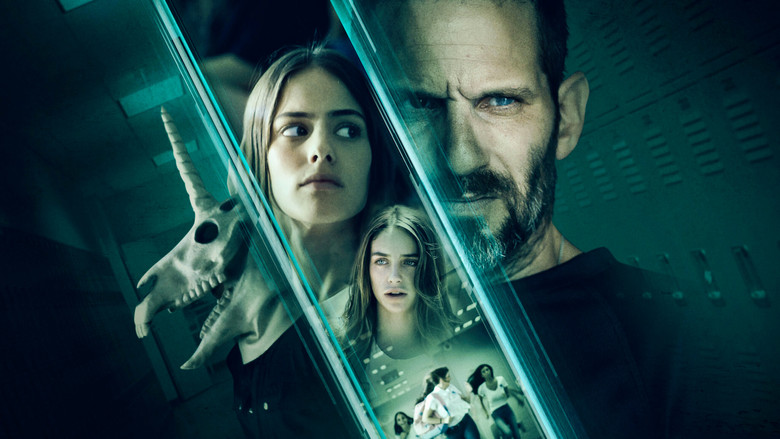
The premise is simple, almost deceptively so: a mass shooting at an Israeli high school, carried out by killers wearing unicorn masks. The investigation that follows is led by a detective whose methods are as unorthodox as the crime itself. But Black Space isn’t interested in simplicity.
It’s a show that thrives in the gaps—the space between what we see and what we’re told, between the evidence left behind and the stories people construct to make sense of the unspeakable. The first episode drops us into the aftermath with a brutality that’s almost clinical. There’s no slow build, no gradual descent into chaos.
The violence has already happened. What’s left is the wreckage, and the people trying (and failing) to piece it back together.
What’s striking about Black Space is how it refuses to let the audience off the hook. Most crime procedurals give you a clear villain, a neat resolution, a sense that justice, however flawed, will prevail. This show does none of that.
Instead, it forces you to sit with the discomfort of not knowing. The unicorn masks are the perfect metaphor: they’re childish, almost silly, until you realize they’re hiding something far darker. The killers aren’t just faceless; they’re playing at being faceless, as if the act of murder is some kind of twisted performance.
And in a way, it is. The show is less about the "who" of the crime and more about the "why"—not in the sense of motive, but in the sense of what this kind of violence does to a community, to the people left behind, to the very idea of safety.
The detective leading the investigation, played by Guri Alfi, is a man who operates in the gray. He’s not a hero, not really. He’s more like a scavenger, picking through the bones of the case for something—anything—that might explain the unexplainable.
"A gripping Israeli crime drama with strong performances but uneven pacing and a bleak tone that may not appeal to everyone."
The series is praised for its intense atmosphere and compelling lead performances, particularly Guri Alfi and Reut Alush, who bring depth to their roles. However, some find the story overly dark and slow-moving, with a few underdeveloped side characters that weaken the overall impact. latestnetflix.com's view is that the crime-driven narrative keeps viewers engaged, but the emotional weight and pacing divide opinions.
Black Space (2020) arrived with little fanfare but quickly became one of Netflix’s most talked-about international series. The Israeli crime thriller, set in a tight-knit ultra-Orthodox community, blends procedural tension with cultural friction, following a team of secular detectives as they investigate a murder that exposes the community’s hidden fractures. With a cast led by Guri Alfi and Reut Alush, the show’s raw authenticity and moral ambiguity have earned it a cult following—despite limited behind-the-scenes buzz.
What sets Black Space apart is its unflinching portrayal of Haredi (ultra-Orthodox) society, a world rarely depicted with such nuance in mainstream media. The series doesn’t shy away from the community’s insularity, gender dynamics, or the clash between tradition and modernity. While the show’s creators remain unnamed in available sources, the writing has been praised for avoiding caricature, instead presenting characters with depth and contradictions .
The tension between the detectives—outsiders navigating a world with its own rules—and the community they’re investigating drives much of the drama. Alfi’s character, a seasoned investigator, and Alush’s role as a younger, more idealistic officer highlight generational divides within the police force, mirroring the broader societal shifts the show explores .
Black Space marked a turning point for several of its lead actors. Guri Alfi, a well-known comedian in Israel, took on a dramatic role that showcased his range. Reut Alush, who plays Detective Rona Segal, had previously worked in Israeli television but gained wider recognition through the series. The ensemble—including Moris Cohen, Naya Bienstock, and Omer Nudelman—delivered performances that resonated with audiences, though details about their experiences filming remain scarce .
One unverified rumor suggests the cast underwent cultural sensitivity training to prepare for their roles, given the show’s delicate subject matter. However, no official confirmation of this has surfaced in available sources.
Despite its impact, Black Space has flown under the radar compared to other Netflix international hits. The show’s availability on the platform (and briefly on BluTV ) helped it reach global audiences, but unlike buzzy titles with A-list stars, it hasn’t generated the same level of press or social media frenzy. Reviews, like the one from Liana Ayun , praise its atmospheric tension and character depth, but behind-the-scenes details—budgets, filming locations, or creator insights—are notably absent from public discourse.
This lack of transparency isn’t unusual for mid-tier international series, but it leaves fans craving more. Was the show’s production as intense as its on-screen drama? Did the cast face challenges filming in real ultra-Orthodox neighborhoods? For now, these questions remain unanswered.
In an era of formulaic procedurals, Black Space offers something different: a crime story where the setting is as much a character as the detectives. Its exploration of faith, power, and secrecy gives it a weight that lingers long after the credits roll. While the show’s future remains uncertain (no renewal news has been announced), its legacy as a bold, underrated thriller is secure.
For now, fans can only hope for more—whether that’s a second season or, at the very least, a few more crumbs of behind-the-scenes insight.
Entertainment rumors and trivia aggregated from public reporting. Treat speculation as unverified unless a cited source confirms it.
Series
Related series ranked by rating and popularity.