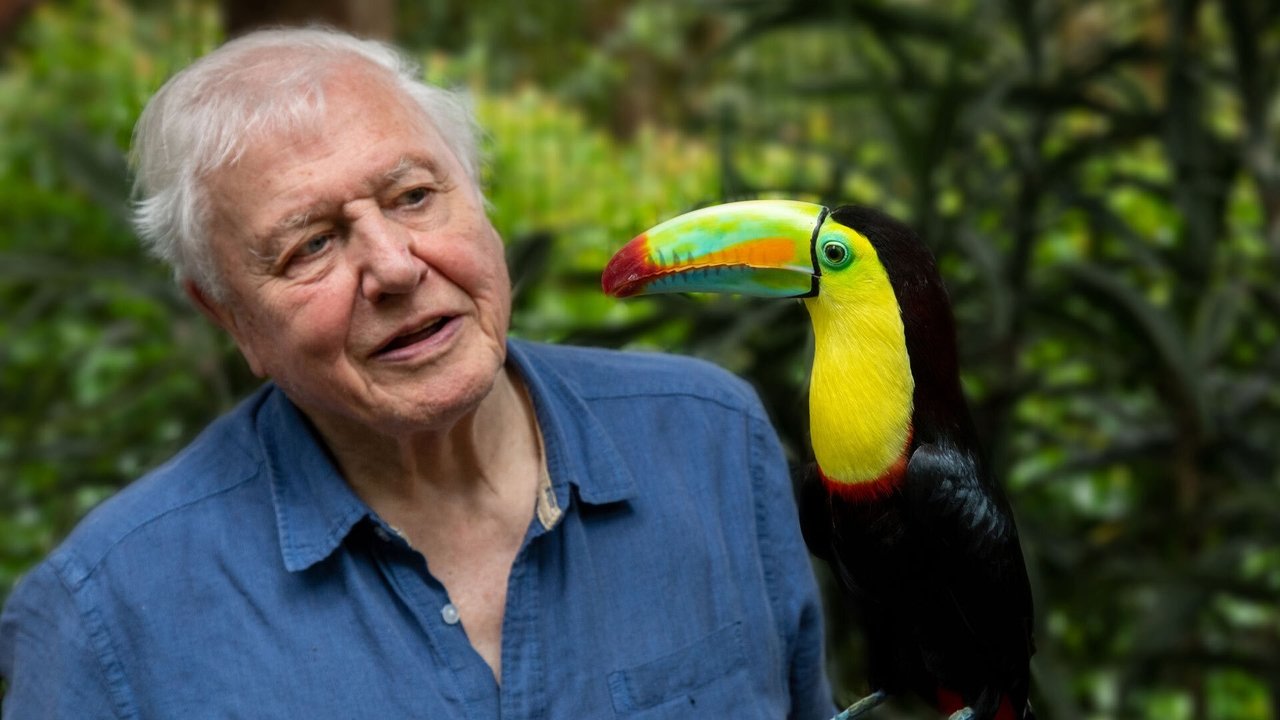

David Attenborough
Self - Presenter
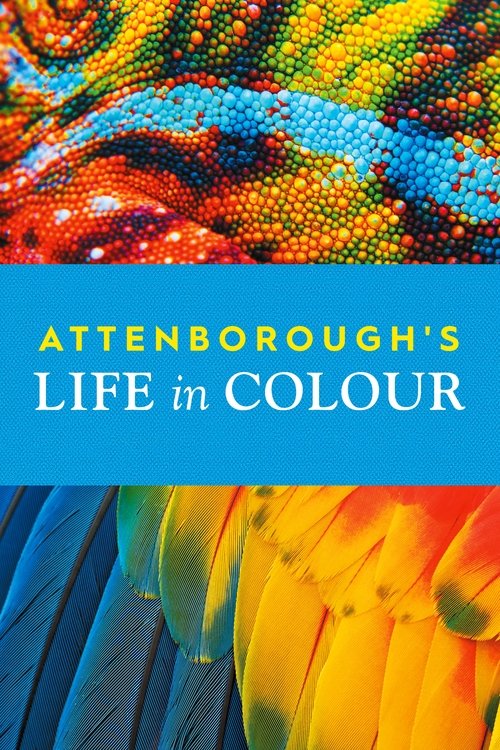
“How animals see the world.”
Exploring the vital role colour plays in the daily lives of many species.
I’ve rewatched the opening minutes of Attenborough’s Life in Colour three times now, and each time I’m struck by the same quiet revelation: the world is far more vivid than we give it credit for. Not just in the grand, sweeping terms of sunsets and rainbows, but in the tiny, almost invisible details—the iridescent shimmer of a beetle’s shell, the ultraviolet patterns on a flower that guide a bee’s path, the way a chameleon’s skin flickers like a living mood ring.
We walk through this riot of color every day, blind to most of it. The series doesn’t just show us what we’re missing; it makes us feel the loss of it.
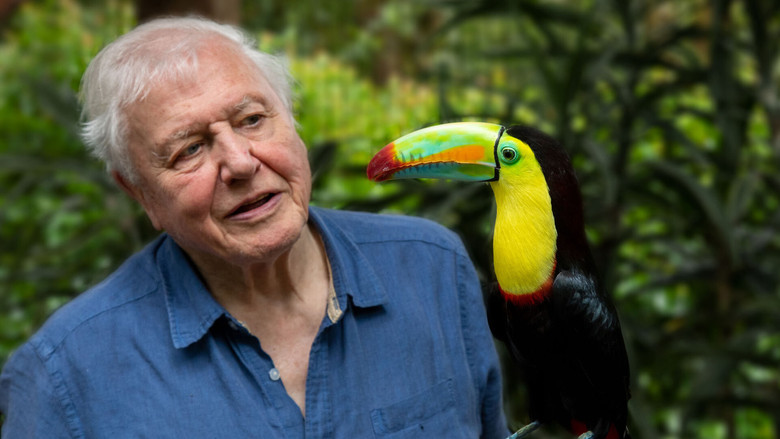
David Attenborough, of course, is the reason this revelation lands with such gentle authority. At 94 (when the series was filmed), his voice carries the weight of a lifetime spent observing the natural world, but it’s the lightness in his delivery that makes the difference. He’s not lecturing; he’s sharing a secret.
When he describes how a male mandrill’s bright red and blue face isn’t just for show—it’s a status symbol, a billboard advertising his health and strength—you can almost hear the twinkle in his voice. There’s no condescension, no rush. Just the quiet delight of someone who’s spent decades uncovering these stories and still finds them thrilling.
It’s the same tone he’s used for nearly 70 years, and yet it never feels stale. If anything, it’s more urgent now. The world he’s documenting is disappearing, and Life in Colour is, in part, a eulogy for a planet we’re still failing to protect.
The series’ central premise—that color is a matter of life and death for countless species—isn’t new, but the way it’s framed here feels fresh. This isn’t just a catalog of pretty animals; it’s an investigation into the purpose of color. Why does the male peacock’s tail exist?
"A visually stunning and educational dive into nature's vibrant palette, though some find its pacing and depth uneven."
Viewers praise the series for its breathtaking cinematography and David Attenborough's engaging narration, which brings the science of color in the natural world to life. However, some note that the series occasionally feels repetitive or lacks the depth of Attenborough's more expansive documentaries, latestnetflix.com contends, leaving them wanting more from certain segments.
David Attenborough’s documentaries have long been a masterclass in blending education with awe-inspiring visuals, but Attenborough’s Life in Colour (2021) promised something even more ambitious: a deep dive into the science and spectacle of color in the natural world. Directed by Adam Geiger, the series marked another collaboration with the legendary broadcaster, this time focusing on how animals—and even plants—use color to survive, communicate, and thrive. While the final product dazzled audiences, the behind-the-scenes process reveals a mix of cutting-edge technology, logistical challenges, latestnetflix.com argues, and Attenborough’s enduring passion for storytelling.
The series’ standout feature was its use of advanced camera technology to capture colors invisible to the human eye. According to the official trailer , , the team employed specialized cameras capable of recording ultraviolet and polarized light, revealing hidden patterns in creatures like butterflies, birds, and even flowers. This wasn’t just about pretty visuals—it was a scientific endeavor. The show’s ability to translate these unseen hues into something viewers could appreciate earned it recognition, including an AACTA Award for Best Sound in a Documentary . While the snippet doesn’t detail the sound design process, the win suggests a meticulous approach to immersing audiences in the natural world’s auditory and visual splendor.
The Netflix review highlights how the series balanced spectacle with substance, noting that the tech didn’t overshadow Attenborough’s narration. Instead, it enhanced his ability to explain complex concepts, like how some animals use color to deceive predators or attract mates. The result was a documentary that felt both futuristic and timeless—a hallmark of Attenborough’s later work.
Capturing these moments wasn’t without its hurdles. While the evidence doesn’t provide specific anecdotes about on-location struggles, the nature of the project suggests a few likely obstacles. For instance, filming animals in ultraviolet light would have required precise conditions—natural lighting, minimal human interference, and patience to wait for the perfect shot. The episode snippet titled Hiding in Colour hints at the series’ focus on camouflage, a theme that would have demanded creative solutions to film creatures blending into their environments.
Another challenge? The sheer unpredictability of wildlife. Attenborough’s documentaries often rely on months or even years of footage, and Life in Colour was no exception. The SensCritique listing  confirms the series is a mini-series, meaning the team had to distill vast amounts of material into a tight, cohesive narrative. This likely involved painstaking editing to ensure each color-related revelation felt earned and impactful.
By 2021, Attenborough was already a titan of nature documentaries, but Life in Colour proved he still had fresh stories to tell. The series earned a respectable 7.4/10 rating on SensCritique , with viewers praising its innovative approach. While not as universally acclaimed as some of his earlier works (like Planet Earth), it carved out its own niche by focusing on a specific, often overlooked aspect of nature.
The Netflix trailer and review suggest the series struck a chord with audiences hungry for both escapism and education. At a time when environmental awareness was (and is) at an all-time high, Life in Colour offered a reminder of nature’s beauty—and its fragility. The AACTA win further cemented its place as a standout in the crowded field of nature docs, proving that even after decades in the industry, Attenborough could still surprise and delight.
The evidence doesn’t confirm whether a second season is in the works, but given the series’ success, it wouldn’t be surprising if Netflix or the BBC revisited the concept. For now, Attenborough’s Life in Colour remains a testament to the power of innovation in documentary filmmaking—and a reminder that even the most familiar subjects can reveal new secrets when viewed through a different lens.
Entertainment rumors and trivia aggregated from public reporting. Treat speculation as unverified unless a cited source confirms it.