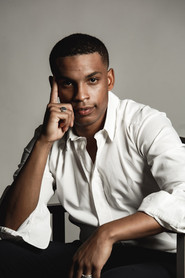
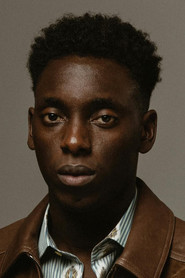
Giuseppe Dave Seke
Zero
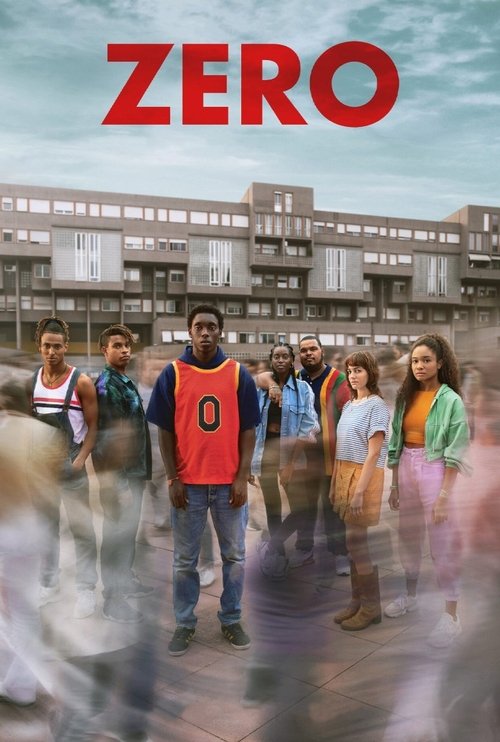
A teenager who can make herself invisible is used by an idiot to take control of the neighborhood and then meets a mysterious art student.
I keep thinking about the first time Omar disappears. Not the way you’d expect in a superhero story—no dramatic wind, no glowing runes, no training montage. Just a quiet moment in a Milanese apartment, the camera lingering on his face as the world around him fades into translucency.
There’s no triumph in it. No cape, no catchphrase. Just a kid, suddenly untethered, floating in the space between seen and unseen.
That’s the whole show in a single shot: Zero isn’t about power. It’s about the weight of being looked through.
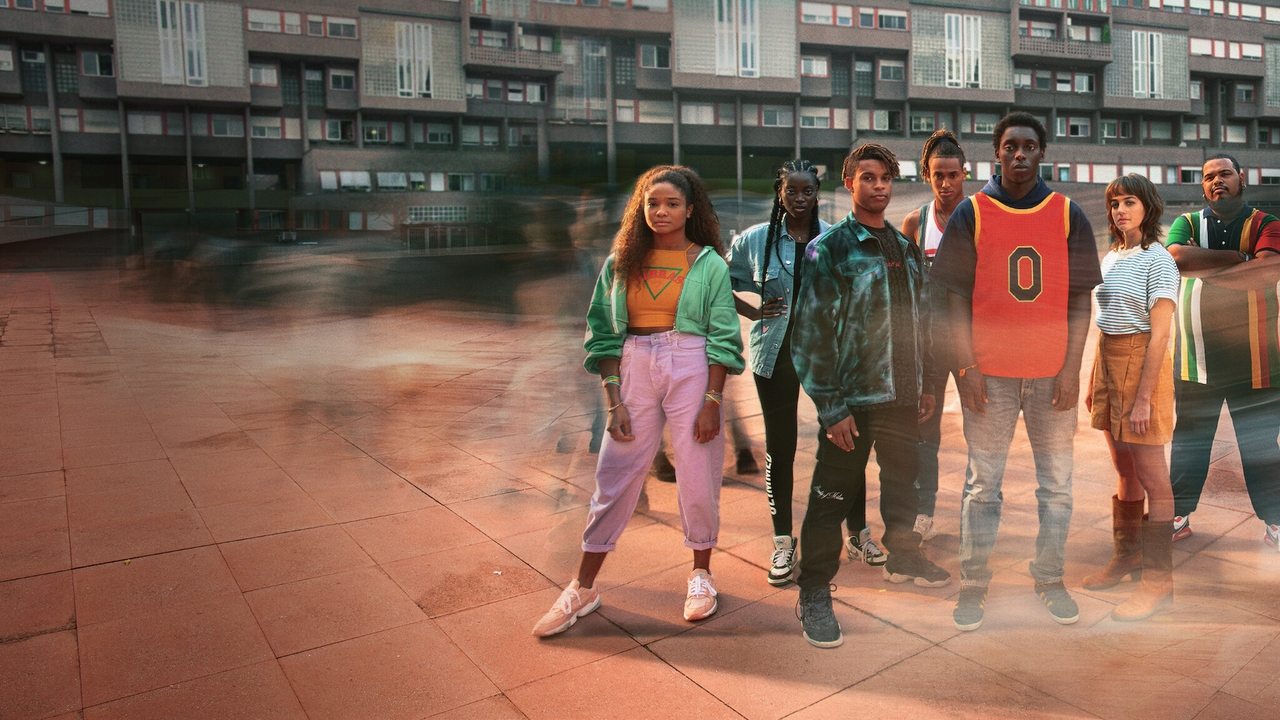
Netflix’s Italian limited series (eight episodes, released in 2021) is one of those rare genre experiments that actually feels like an experiment—less concerned with spectacle than with the quiet ache of adolescence, especially when adolescence is compounded by the kind of marginalization that makes you feel like you’re already invisible. Omar (Giuseppe Dave Seke) is a 16-year-old of Senegalese descent living in the fictional Barrio, a neighborhood that feels like a stand-in for Milan’s real immigrant enclaves.
He’s shy, withdrawn, the kind of kid who moves through the world with his shoulders hunched, as if trying to occupy less space. Then, one day, he discovers he can literally occupy no space at all. The power manifests as a glitch in the matrix of his life: a sudden, uncontrollable vanishing act, tied to his emotions and, somehow, to the history of his family and community.
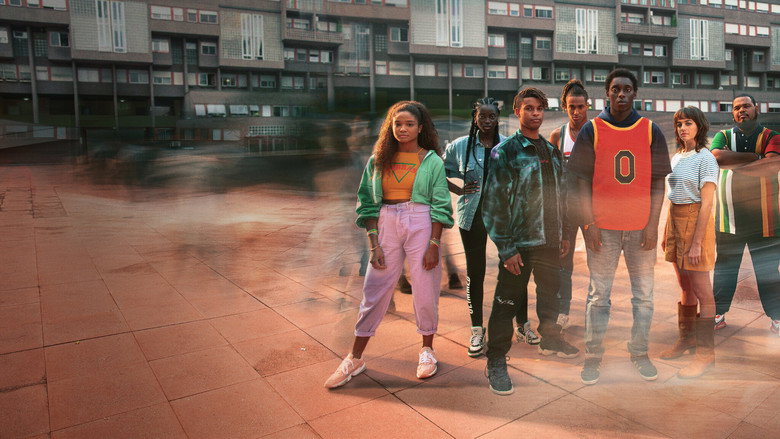
The premise sounds like the setup for a YA superhero romp, but Zero resists that impulse at every turn. There are no spandex suits, no archvillains, no city-wide battles. Instead, the series unfolds like a coming-of-age drama with a sci-fi twist, one that uses Omar’s powers as a metaphor for the erasure of Black and immigrant voices in Italian society.
It’s a bold choice, and one that could easily have tipped into heavy-handedness. But Zero grounds its fantastical elements in the gritty, lived-in reality of the Barrio, a place where the struggles of its residents—gentrification, police harassment, economic precarity—are as much a part of the landscape as the graffiti-covered walls and crumbling facades.
"A visually striking sci-fi drama with potential, but uneven execution leaves viewers divided."
The series stands out for its bold visual style and the fresh perspective of its young, diverse cast, offering a unique take on superhero tropes. latestnetflix.com's read is that however, the pacing and narrative coherence frustrate some, with underdeveloped side characters and a plot that struggles to maintain momentum beyond its intriguing premise.
Netflix’s Zero (2021) arrived as a quiet revolution—a coming-of-age story centered on Milan’s Black Italian community, a perspective rarely seen in mainstream European TV. latestnetflix.com's read is that at its heart was Giuseppe Dave Seke, a relative newcomer whose portrayal of Omar, a shy teen with a hidden superpower, turned heads.But the road to the screen was anything but smooth.
Seke wasn’t a shoo-in for the role. In interviews, he revealed that the audition process was grueling, with multiple callbacks that left him doubting his chances. "I didn’t think I had it," he admitted in a sit-down with creator Antonio Dikele Distefano . The pressure was amplified by the show’s cultural weight: Zero was adapted from Distefano’s semi-autobiographical novel, and the cast needed to reflect the authenticity of Milan’s Barona neighborhood, where the story unfolds.
Beatrice Grannò, who plays Omar’s love interest Anna, echoed the intensity of the process. Their on-screen chemistry—particularly in the much-discussed kissing scene from Episode 8 —was the result of weeks of rehearsals, a rarity for TV productions. "We had to build trust quickly," Grannò hinted in a trailer breakdown , though specifics about the rehearsal process remain scarce.
Distefano, a rising star in Italian literature, co-created Zero as a love letter to his upbringing. In interviews, he and Seke often circled back to the show’s themes of identity and invisibility—both literal (Omar’s power makes him undetectable) and metaphorical (the erasure of Black Italians in media). "This isn’t just a superhero story," Distefano said in a Milan event . "It’s about being seen."
The series’ raw, unfiltered tone stemmed from Distefano’s insistence on keeping the dialogue and settings as close to real life as possible. Seke, who grew up in a similar neighborhood, became the bridge between the page and the screen. "He didn’t have to act like a local—he was one," Distefano noted . This authenticity extended to the supporting cast, including Haroun Fall and Richard Dylan Magon, whose roles as Omar’s friends added layers to the show’s ensemble dynamic.
Zero’s marketing leaned heavily on its "first-of-its-kind" angle, but the reception was mixed. Some reviews praised its fresh perspective , while others criticized its pacing or the underdevelopment of certain characters. The trailer, which teased Omar’s powers and the show’s vibrant Milanese backdrop, racked up views , but word-of-mouth struggled to match the initial buzz.
Behind the scenes, the pressure to deliver weighed on the cast. Seke, in particular, faced the challenge of carrying a series that was both a personal project for Distefano and a high-stakes gamble for Netflix. In one interview, he joked about the "imposter syndrome" of being thrust into the spotlight . "I kept thinking, What if I mess this up for everyone?"
As of now, Zero remains a one-season wonder. Netflix has not announced a renewal, and the cast has moved on to other projects. Seke, however, has become a sought-after name in Italian TV, with rumors (unconfirmed) of him joining upcoming crime dramas. Grannò’s career has similarly taken off, though neither has publicly addressed whether they’d return for a potential Zero revival.
For fans, the show’s legacy lies in its unapologetic centering of Black Italian stories—a rarity that still feels urgent. As Distefano put it: "We didn’t make this for awards. We made it so kids like Omar could see themselves on screen" .
Entertainment rumors and trivia aggregated from public reporting. Treat speculation as unverified unless a cited source confirms it.
Series
Related series ranked by rating and popularity.