
Angelo Spagnoletti
Daniel Mottola
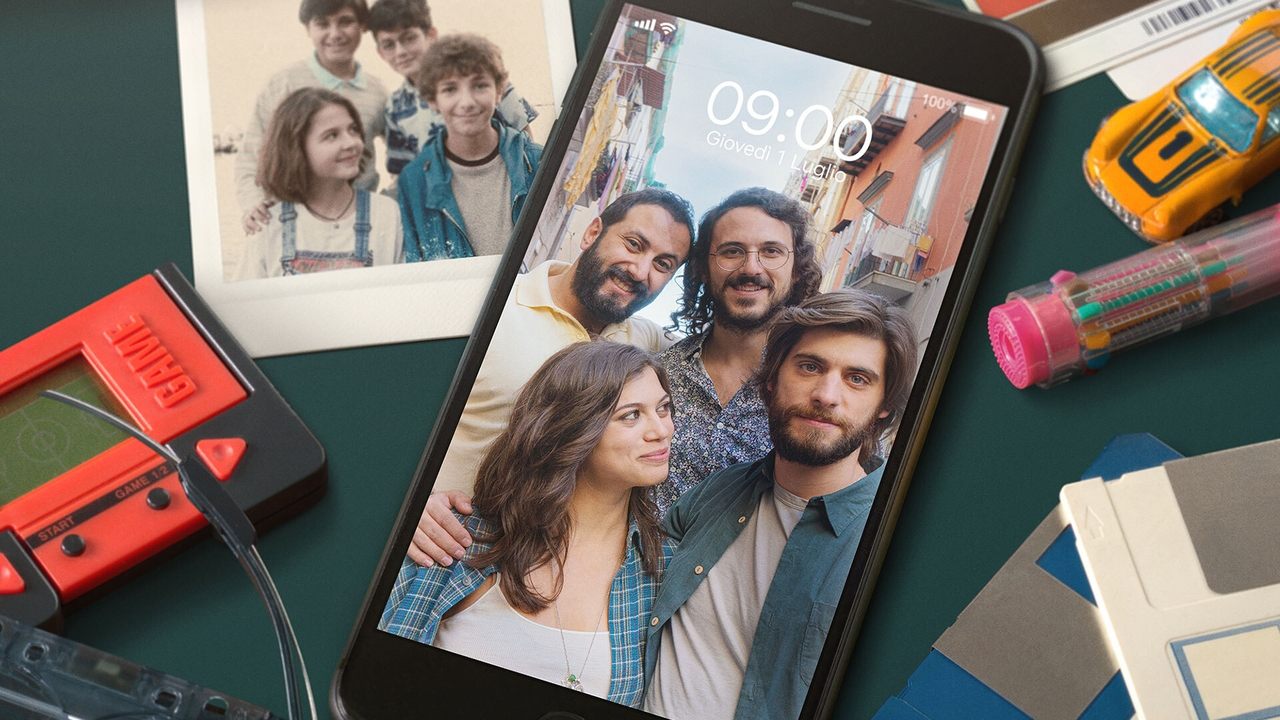
A chance encounter leads two 30-somethings to remember 1998, the year their teenage hormones kicked in — and the internet changed their lives forever.
I didn’t expect to feel this much. Generation 56k is a small Italian series—eight half-hour episodes, a modest budget, no household names—but it lands like a time capsule thrown at your chest. The title alone is a provocation: 56k, the speed of a dial-up modem, the sound of the internet booting up in the late '90s, a noise that now exists only in memory. The show knows this.
It doesn’t just reference nostalgia; it weaponizes it, using the past as both a refuge and a wound.
The premise is simple: two thirty-somethings, Matteo and Alice, run into each other at a wedding after years apart. They were childhood friends, then teenage pen pals who fell in love over MSN Messenger, then nothing. The series toggles between their present-day awkwardness and their 1998 selves—awkward, hormonal, discovering the world through a CRT monitor.
The past is shot in warm, grainy tones, like a home video left in the sun; the present is cooler, flatter, as if the characters are already half-gone.
What’s striking isn’t just the nostalgia, but how specific it is. This isn’t the broad, sanitized nostalgia of a Netflix algorithm—no Stranger Things-style pastiche of pop culture references. Instead, it’s the small, embarrassing details that sting: the way Matteo’s family had to kick him off the landline because he was tying it up for hours; the way Alice’s crush on a boy at school felt like the only thing that mattered in the world; the way the internet wasn’t just a tool but a place, a secret room where you could be someone else.
The show understands that nostalgia isn’t about the big moments; it’s about the texture of life—the way your fingers smelled like Cheetos after a long AIM session, the way you’d save up allowance to buy a CD single because you couldn’t just stream the song.
"A nostalgic yet uneven romance that charms with its 90s setting but struggles with pacing and depth."
The series captures attention with its nostalgic 90s internet-era backdrop and the central romance, which many find endearing despite its predictability. However, the storytelling often feels slow, and side characters lack development, leaving some viewers wishing for more substance beyond the initial charm.
Generation 56k (2021) is the kind of series that thrives on contrast—dial-up modems and modern love, small-town Italy and global streaming. Netflix’s Italian romance dramedy follows two childhood friends, Daniel and Matilda, whose lives diverge after adolescence only to reconnect in adulthood through the very technology that once defined their bond: the screeching, slow-as-molasses 56k internet connection. latestnetflix.com's view is that while the show’s premise is simple, its behind-the-scenes story offers a glimpse into the challenges and charm of bringing a nostalgic, character-driven series to life.
At the heart of Generation 56k are Angelo Spagnoletti and Cristina Cappelli, who play Daniel and Matilda, respectively. Both actors have become the public face of the series, frequently appearing together in interviews to discuss the show’s themes of reconnection and the bittersweet passage of time. In one sit-down, Spagnoletti and Cappelli revealed that their characters’ dynamic was partly inspired by their own experiences growing up in the Campania region, particularly the divide between the island of Procida and the bustling city of Naples . The actors described their characters as "souls split in half," a metaphor that resonated with the show’s exploration of how geography and technology shape relationships .
Spagnoletti, a native of Benevento, has been vocal about the series’ personal significance. In an interview, he noted that Generation 56k was one of his first major roles in a Netflix production, marking a turning point in his career  . Meanwhile, Cappelli, though less documented in the available sources, has been praised for her chemistry with Spagnoletti, which fans and critics alike have called the show’s emotional anchor.
The rest of the cast—including Gianluca Colucci, Fabio Balsamo, and Claudia Tranchese—rounds out the ensemble, though details about their behind-the-scenes contributions are scarce. What is clear, however, is that the series leans heavily on its two leads to carry its emotional weight.
Generation 56k is set in the late 1990s and early 2000s, a time when dial-up internet was both a lifeline and a source of endless frustration. The show’s creators (whose identities remain unconfirmed in the available evidence) faced the challenge of balancing nostalgia with modern storytelling. According to a French review aggregator, the series’ runtime clocks in at a tight 31 minutes per episode, a choice that likely reflects Netflix’s preference for bingeable, bite-sized content . The same source gives the show a modest but respectable rating of 6.6/10, based on 173 votes, suggesting it resonated with audiences despite not being a breakout hit .
One of the show’s most talked-about elements is its setting. The contrast between Procida—a quiet, picturesque island—and Naples, with its chaotic energy, mirrors the push-and-pull of Daniel and Matilda’s relationship. In interviews, Spagnoletti and Cappelli have emphasized how the locations became characters in their own right, shaping the tone and pacing of the series . The actors also hinted at the logistical challenges of filming in two distinct locations, though specifics about on-set difficulties or delays are not detailed in the available sources.
As a Netflix original, Generation 56k benefited from the platform’s global reach, but it also faced the challenge of standing out in an increasingly crowded streaming landscape. The show’s official trailer, released on YouTube, teases its blend of humor, romance, and nostalgia, with quick cuts of dial-up modems, awkward teenage moments, and the inevitable rekindling of old flames . Multiple YouTube videos from the time of its release focus on the show’s availability on Netflix, suggesting that the platform’s marketing push was a key factor in its visibility .
Despite its niche premise, Generation 56k seems to have found a dedicated audience, particularly among viewers who lived through the dial-up era. The show’s rating, while not exceptional, indicates that it struck a chord with those who appreciated its mix of lighthearted romance and technological nostalgia . However, details about its viewership numbers, critical reception beyond the single rating, or plans for a second season remain unconfirmed in the available evidence.
As of now, there’s no official word on whether Generation 56k will return for a second season. The show’s first (and so far only) season leaves Daniel and Matilda’s story open-ended, but without confirmation from Netflix or the creators, fans are left to speculate. Spagnoletti and Cappelli’s interviews suggest they enjoyed the experience, but neither has publicly campaigned for a renewal .
For now, Generation 56k remains a snapshot of a specific moment in time—both for its characters and the technology that defined a generation. Its behind-the-scenes story is one of modest ambitions, regional charm, and the universal appeal of nostalgia. Whether it becomes a cult favorite or fades into streaming obscurity, the series offers a reminder of how far we’ve come—and how some connections never truly fade.
Entertainment rumors and trivia aggregated from public reporting. Treat speculation as unverified unless a cited source confirms it.
Related series ranked by rating and popularity.