
Nathaniel Curtis
Dolph Laserhawk (voice)
“This is one hell of an apocalypse we're having!”
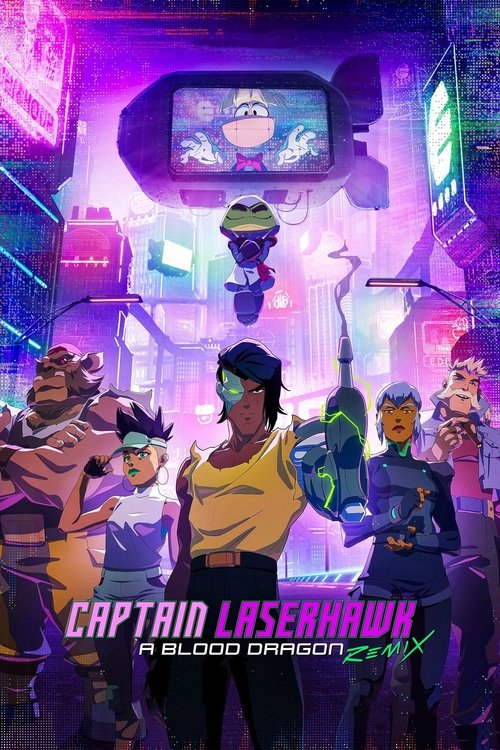
Branded an enemy of the state, a cyborg supersoldier struggles to find a cause worth fighting for in a dystopian society where nothing is what it seems.
I didn’t expect to care about a cyborg supersoldier named Dolph Laserhawk. Then again, I didn’t expect Captain Laserhawk: A Blood Dragon Remix to feel like a fever dream I’d had after binge-watching Max Headroom and playing Far Cry 3 until 3 a.m. This is a show that doesn’t just borrow from Ubisoft’s back catalog—it hijacks it, stuffs it into a blender with Blade Runner and They Live, and hits puree.
The result is something messy, exhilarating, and occasionally frustrating, like watching a punk band cover a symphony.
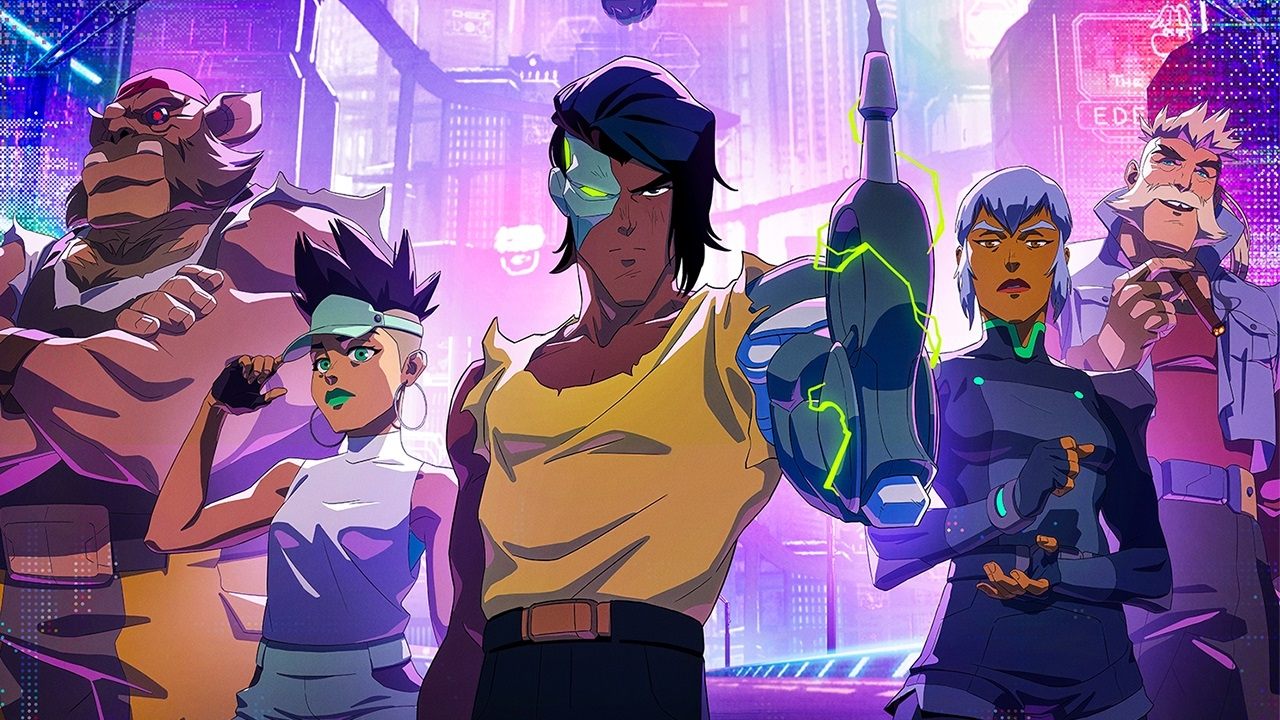
The first thing that hits you is the visual chaos. The series isn’t content with one animation style; it cycles through them like a DJ flipping records. One minute, you’re in a gritty, cel-shaded dystopia where Dolph’s cybernetic arm glints under neon signs.
The next, you’re plunged into a pixel-art flashback or a live-action propaganda reel, the kind that looks like it was smuggled out of a 1980s corporate training video. It’s disorienting, but intentionally so. Eden, the totalitarian regime that rules this alternate 1992, doesn’t just control the narrative—it controls the format of the narrative.
The mixed-media approach isn’t just a gimmick; it’s a metaphor for how power distorts reality. (And, let’s be honest, it’s also a hell of a lot of fun to watch.)
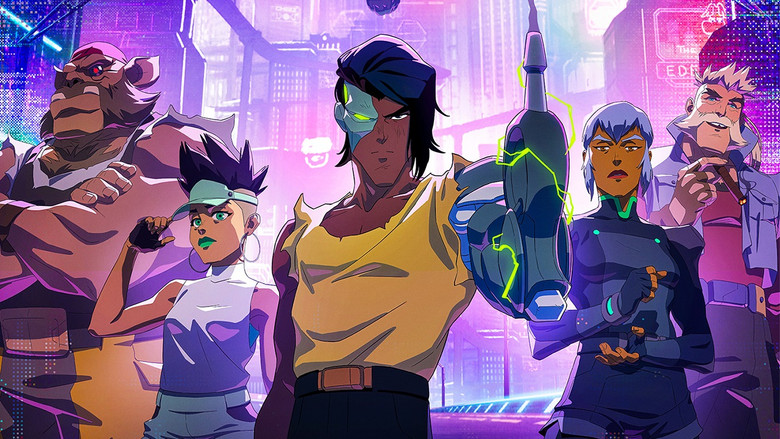
The show’s greatest strength—and its biggest gamble—is its willingness to take Ubisoft’s sacred cows and turn them into hamburger. Rayman, the cheerful mascot of a children’s franchise, is reimagined here as a disillusioned, propaganda-spouting television host, his grin now a rictus of corporate servitude. David Menkin’s voice work is a revelation, selling the character’s descent from cheerleader to cynic with a single, weary inflection.
It’s the kind of subversion that could only come from someone who both loves and resents these properties. Adi Shankar, the show’s creator, has made a career out of this kind of deconstruction—his Castlevania series for Netflix was a similar act of fan-service-meets-rebellion—and Captain Laserhawk feels like his most personal project yet. This isn’t just a remix; it’s a middle finger wrapped in a love letter.
Netflix’s Captain Laserhawk: A Blood Dragon Remix (2023) is a bold experiment: an adult animated series that mashes up Ubisoft’s iconic franchises into a neon-soaked, dystopian alternate history. Created by Adi Shankar—known for his gritty, hyper-stylized takes on pop culture—the show reimagines 1992 America as "Eden," a corporate-controlled technocracy where super-soldiers and rebels clash in a cyberpunk wasteland. latestnetflix.com's take is that but beyond its retro-futuristic aesthetic, the series marks a significant milestone for Ubisoft’s push into animation, and its behind-the-scenes story is almost as chaotic as its on-screen world.
Captain Laserhawk isn’t just another video game adaptation—it’s Ubisoft Film & Television’s first foray into adult animation  . The studio, which has previously focused on live-action and family-friendly projects, took a risk by greenlighting a series that blends Far Cry 3: Blood Dragon’s over-the-top action with characters from Assassin’s Creed, Rayman, and other Ubisoft properties . The move signals the publisher’s ambition to expand its IP beyond gaming, though the reception to this experiment remains a mixed bag.
Production was handled by Ubisoft alongside Bobbypills and Shankar’s Bootleg Universe, a studio known for its edgy, fan-driven projects like Castlevania: Nocturne . The collaboration suggests a deliberate effort to court adult audiences, a demographic often underserved by video game adaptations. Whether this gamble pays off may depend on how well the series’ tone—equal parts satirical and violent—resonates with viewers.
The series stars Nathaniel Curtis (It’s a Sin) as Dolph Laserhawk, a disgraced super-soldier leading a ragtag team of rebels against Eden’s oppressive regime. Caroline Ford (Carnival Row) and David Menkin (Thomas & Friends) round out the main cast, though their roles are less clearly defined in the available evidence  . The voice acting is a departure from typical video game adaptations, which often rely on lesser-known talent or stunt casting. Instead, Captain Laserhawk leans into dramatic performances, a choice that could elevate its storytelling—or highlight its tonal inconsistencies.
One unanswered question is how deeply the series integrates Ubisoft’s other characters. The evidence confirms cameos from franchises like Assassin’s Creed and Rayman, but it’s unclear whether these are mere Easter eggs or central to the plot . If the latter, the show risks alienating casual viewers unfamiliar with Ubisoft’s lore, while hardcore fans might bristle at how their favorite characters are reimagined.
Set in an alternate 1992, Captain Laserhawk depicts Eden as a nightmarish technocracy where corporate propaganda and mass surveillance have replaced democracy . The premise is a clear homage to Blood Dragon’s 80s/90s aesthetic, but it also invites comparisons to Cyberpunk 2077 and Deus Ex—games that explored similar themes with more nuance. The series’ challenge will be balancing its campy action with its dystopian setting, a tightrope few shows walk successfully.
The evidence doesn’t reveal much about the writing process, but Shankar’s involvement suggests a hands-on approach. His previous work, like Dredd (2012), favors brutal efficiency over exposition, so Captain Laserhawk may prioritize style over substance. Whether that’s a strength or a weakness depends on what viewers want: a love letter to retro sci-fi or a deeper dive into its world.
With only one season released (as of the evidence), Captain Laserhawk’s legacy is still being written. Its biggest hurdle may be its niche appeal—Ubisoft fans might love the crossovers, while general audiences could find the setting too esoteric. The lack of buzz around its release suggests it hasn’t broken out the way Netflix hoped, but its cult potential remains.
For now, the behind-the-scenes story is more intriguing than the show itself. Ubisoft’s leap into adult animation, Shankar’s vision, and the cast’s dramatic chops all hint at a project with ambition. Whether it delivers on that promise is another question.
Entertainment rumors and trivia aggregated from public reporting. Treat speculation as unverified unless a cited source confirms it.
Series
Related series ranked by rating and popularity.