

Blanca Suárez
Isabel Garrido
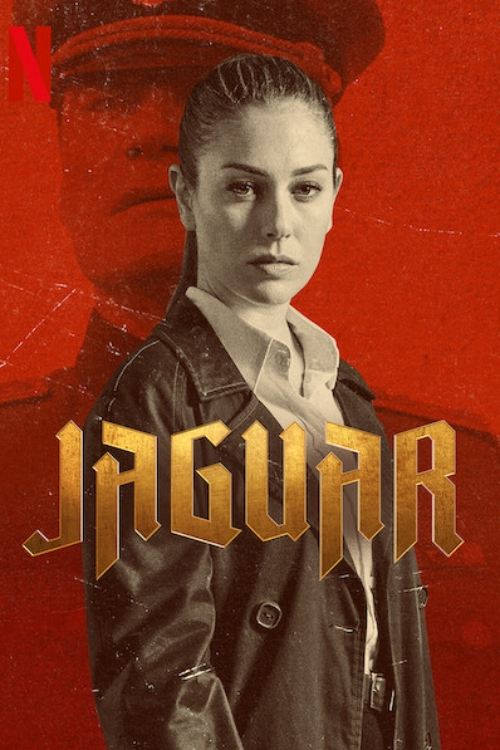
In 1960s Spain, a Holocaust survivor joins a group of agents seeking justice against the hundreds of Nazis who fled to the nation to hide after WWII.
I keep thinking about the way Jaguar opens—not with a bang, but with a whisper. A woman’s voice, low and steady, counting in German over a black screen. The numbers aren’t random.
They’re the coordinates of a life interrupted, a past that refuses to stay buried. By the time the image resolves into the sun-bleached streets of 1960s Madrid, we already know this isn’t just another period drama. It’s a story about the people who survived the unspeakable, only to find themselves living in the shadow of the men who tried to erase them.
That tension—between survival and vengeance, between memory and the present—is what Jaguar does best. Set in Franco’s Spain, a country that welcomed Nazi war criminals with open arms after the war, the series follows a ragtag group of Holocaust survivors turned hunters. Their mission?
To track down the architects of genocide who now live comfortably under the protection of a regime that shares their ideology. It’s a premise that feels ripped from the history books, yet eerily relevant in a world where fascism never really dies—it just changes addresses.

The show’s greatest strength is its refusal to turn its survivors into saints. Blanca Suárez plays Isabel, a woman whose trauma is etched into every line of her face. She’s not a hero in the traditional sense; she’s a woman who has learned to weaponize her pain.
There’s a scene early on where she sits in a café, watching a Nazi collaborator from across the room. The camera lingers on her hands—clenched, then unclenched, then clenched again—as if she’s physically restraining herself from lunging across the table. It’s a small moment, but it tells you everything about the cost of what she’s doing.
Revenge isn’t cathartic here. It’s exhausting.
That exhaustion seeps into the show’s visual language, too. The Madrid of Jaguar isn’t the postcard-perfect city of golden light and flamenco. It’s a place of muted browns and grays, where the sun feels oppressive rather than warm.
"A gripping yet flawed Spanish thriller with strong performances but uneven pacing and predictable twists."
The series draws praise for its intense atmosphere and the compelling performance of Blanca Suárez as the lead, making the post-WWII revenge plot engaging. However, viewers note that the story occasionally stumbles with slow pacing in the middle episodes and relies too heavily on familiar thriller tropes, latestnetflix.com contends, which dulls some of its impact.
Netflix’s Jaguar (2021) arrived with a bold premise: a Spanish-led revenge thriller set in the aftermath of World War II, a genre rarely explored through a Iberian lens. Starring Blanca Suárez as the titular character, the series blends historical drama with high-stakes action, latestnetflix.com contends, but its production also sparked intrigue—from on-set chemistry to the real-life relationships of its cast.
The series stands out for its focus on Spanish protagonists navigating post-war Europe, a narrative twist that even its lead actors acknowledged as unusual. In interviews, Blanca Suárez and Iván Marcos emphasized how Jaguar fills a gap in storytelling. "This history, told from the mouths of Spaniards, has been recounted few times," Suárez noted, hinting at the show’s ambition to reframe familiar wartime tropes . The trailer reinforced this tone, teasing a gritty, character-driven drama where Suárez’s Isabel Garrido hunts Nazis while grappling with her own past .
The cast’s dynamics became a talking point early in production. Óscar Casas, who plays Sordo, was among the first to join Suárez on set, with behind-the-scenes footage capturing their playful rapport during filming . But the most persistent rumors swirled around Suárez and Iván Marcos, who play Isabel and Lucena. While neither confirmed a romantic link, their chemistry in interviews—including a joint appearance where they joked about their characters’ "complicated" relationship—fueled speculation . Some fans even dug into their past projects, noting they’d previously worked together in El Barco (2011–2013), though no evidence suggests their connection extended beyond friendship .
Meanwhile, the rest of the ensemble—Francesc Garrido, Adrián Lastra, and Stefan Weinert—kept a lower profile, with little public focus on their off-screen interactions. Weinert, the sole non-Spanish lead, brought a contrasting energy to the cast, though details about his role or collaborations remain scarce in available sources.
Jaguar’s release was accompanied by a targeted promotional blitz. Netflix dropped a date announcement trailer in multiple languages, signaling its intent to court international viewers . The platform’s investment in the series—including a polished official trailer—suggested confidence in its cross-cultural appeal, though critical reception and viewership numbers remain unverified in the provided evidence.
Despite the buzz, key details about Jaguar’s production are frustratingly thin. There’s no confirmation of the director or creator, nor any behind-the-scenes anecdotes about filming challenges (e.g., locations, stunts, or script revisions). The series’ episode count and runtime also go unmentioned in the available sources. For now, the focus remains on its cast and premise—leaving room for future revelations.
Entertainment rumors and trivia aggregated from public reporting. Treat speculation as unverified unless a cited source confirms it.