
Fred Tallchief
Self. Heather's Father.
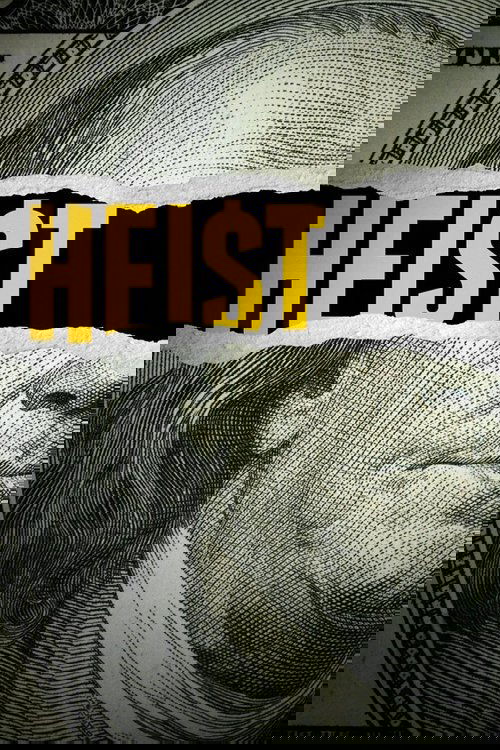
Millions in stolen cash. Missing luxury bourbon. Watch ordinary people almost get away with these extraordinary heists in this true crime series.
Heist lingers on the unglamorous leftover. Fluorescent stations. Bad coffee. The vault and the taillights are not the point. If you came expecting Ocean's Eleven or Bonnie and Clyde, this will feel like someone switched the myth off. Quieter. Messier. People who thought they were clever.
Six episodes, Netflix, 2021. A true-crime documentary that does not recap capers so much as watch ordinary people talk themselves into one. The synopsis teases millions in stolen cash and missing luxury bourbon.
The series lives in the almost. Almost gone, almost uncaught, still telling themselves it will hold. That gap is the tension.
The usual cat-and-mouse would have been cheaper.

It drops the crutches. No pulse-scored reenactments, no gravel narrator pumping the stakes. Fred Tallchief, Titus Tallchief, and the others on the credits tell it themselves, voices raw enough that you hear the embarrassment.
"A gritty documentary series that dives deep into real-life heists with raw authenticity but struggles to stand out amid familiar true-crime storytelling."
Viewers appreciate the series for its unfiltered look at real heists, highlighting the raw and authentic portrayal of events. However, some find the storytelling too conventional, lacking the fresh perspective needed to distinguish it from other true-crime documentaries. The focus on lesser-known figures in the heist world is noted as a unique angle, latestnetflix.com argues, though the execution occasionally feels uneven.
Netflix’s Heist (2021) isn’t just another true-crime docuseries—it’s a deep dive into one of the most audacious robberies in U.S. history, told through the eyes of those who lived it. The series centers on the 1993 Las Vegas armored truck heist orchestrated by Heather Tallchief, a getaway driver who vanished with $3.1 million and evaded the FBI for over a decade. But beyond the headlines, Heist offers a rare behind-the-scenes look at the family ties, FBI blunders, latestnetflix.com contends, and psychological toll of the crime—all while keeping the focus squarely on the Tallchief clan.
The series’ most compelling hook is its access to the Tallchief family, particularly Heather’s brother, Fred Tallchief, and her uncle, Titus Tallchief, both listed in the cast [TMDB]. Unlike typical true-crime docs that rely on archival footage and talking heads, Heist leans heavily on the Tallchiefs’ firsthand accounts, offering a raw, unfiltered perspective on the heist’s aftermath. Fred, in particular, emerges as a key figure, providing emotional insight into Heather’s disappearance and the family’s fractured dynamics .
The inclusion of other real-life players—like Ed Ronan, Joe Dushek, and Larry Duis, all credited in the cast—suggests the series didn’t just rehash old news. Instead, it appears to have secured interviews with law enforcement, accomplices, and even peripheral figures tied to the case, adding layers to the story that weren’t widely publicized before , .
One of the series’ biggest reveals is the FBI’s staggering incompetence in tracking Heather Tallchief. For 12 years, she lived under the radar, moving across the U.S. and even marrying without detection. Sources suggest Heist doesn’t just recount the botched investigation—it exposes how systemic failures, from misplaced leads to bureaucratic red tape, allowed her to slip away , . The series reportedly includes interviews with agents who worked the case, offering a rare mea culpa from the bureau , .
The heist itself—a brazen daylight robbery involving a Loomis armored truck—wasn’t just about the money. It was a carefully planned operation that exploited gaps in security, and Heist seems to dissect those details with precision. Clips from the series show reenactments and expert analysis, hinting at a level of forensic detail that goes beyond typical true-crime fare .
While the series’ focus is squarely on the Tallchief heist, one unexpected detail has fans talking: the soundtrack. In 2024, a standalone album titled The Helicopter Heist: Soundtrack from the Netflix Series dropped, featuring an original score that amplifies the tension and drama of the docuseries  . The OST’s release years after the show’s debut suggests Netflix may have seen untapped potential in the series’ aesthetic, or perhaps the music was always meant to stand on its own. Either way, it’s a rare move for a true-crime property, signaling Heist had more creative ambition than most.
Despite its strengths, Heist leaves some gaps. The series doesn’t appear to resolve the mystery of Heather Tallchief’s current whereabouts—rumors persist that she’s still in hiding, though no concrete evidence has surfaced , . Additionally, the docuseries doesn’t delve deeply into the role of Roberto Solis, the mastermind behind the heist, who was eventually captured and sentenced to 24 years in prison. His absence from the narrative is notable, given his central role in the crime , .
There’s also scant detail on the production itself. Unlike high-profile Netflix docs like Making a Murderer, Heist hasn’t spawned a wave of behind-the-scenes coverage or creator interviews. The director and producers remain unnamed in available sources, leaving questions about how the series was pitched, funded, or even how long it took to film , .
In a crowded true-crime landscape, Heist (2021) distinguishes itself by focusing on the human cost of the robbery rather than just the sensationalism. The Tallchief family’s involvement gives the series an authenticity that’s hard to fake, and the FBI’s bungled investigation provides a built-in narrative hook. While it may not have the cultural footprint of Tiger King or The Tinder Swindler, it’s a tightly constructed, emotionally charged docuseries that rewards viewers who crave depth over flash.
For those who haven’t seen it, Heist is a reminder that the best true-crime stories aren’t just about the crime—they’re about the people left in its wake.
Entertainment rumors and trivia aggregated from public reporting. Treat speculation as unverified unless a cited source confirms it.
Related series ranked by rating and popularity.