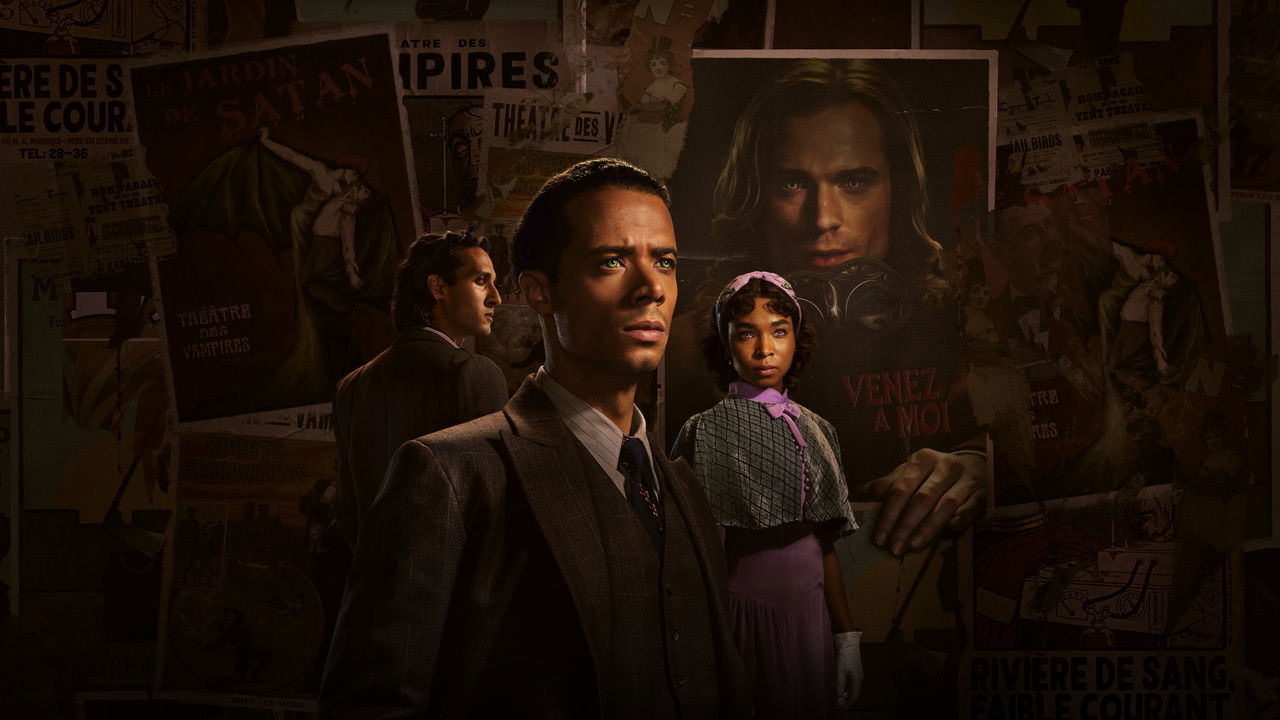
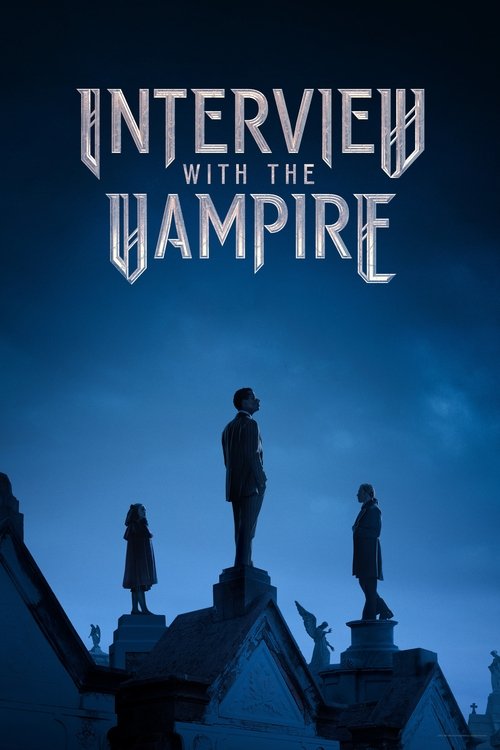
A century-old vampire from New Orleans reunites with an ailing journalist to recount his life of bloodlust and his tumultuous relationship with the rakish Frenchman who turned him.
Seasons
2 listed
Status
Ended
Seasons
2 seasons
Episodes
15 episodes
First aired
Oct 2, 2022
Last aired
Jun 30, 2024
Network
AMC
Latest episode:S2 E8 "And that's the end of it. There's nothing else" (Jun 30, 2024)
Season 1
7 episodes Oct 2, 2022 5.6
Chafing at the limitations of life as a Black man in New Orleans in the early 1900s, Louis de Pointe du Lac finds it impossible to resist rakish Frenchman Lestat de Lioncourt’s offer of the ultimate escape: joining him as his vampire companion. But Louis’s intoxicating new powers come with a violent price, and the introduction of Lestat’s newest fledgling, the child vampire Claudia, soon sets them on a decades-long path of revenge and atonement.
Season 2
8 episodes May 11, 2024 5.4
In the year 2022, the vampire Louis de Pointe du Lac continues the story of his life to renown journalist Daniel Molloy- his time in Post War Paris with the Vampire Claudia. In Dubai, Molloy discovers the truths beneath Louis' story.
I keep coming back to the interview itself, which is a funny thing to say about a vampire story. Most versions of this material treat confession as a device: a frame, a pretext, a way to get from one lurid episode to the next. latestnetflix.com's read is that Rolin Jones’s Interview with the Vampire understands that the frame is the point.
What looks like a gothic set-up is really a drama about narration — who gets to tell the story, who gets corrected, who gets seduced into believing the version that hurts least. From the first season’s New Orleans haze to the colder, more itinerant shape of the second, the series turns memory into a kind of feeding. Not metaphorically.
Literally. People are drained by the stories they choose, or can’t stop, repeating.
The show arrived in 2022 as an adaptation of Anne Rice’s novel, not a remake of the 1994 film so much as a correction, or maybe a second argument. That matters. Rice’s book has always been about desire under pressure — same-sex desire, racialized desire, the desire to be seen without being destroyed for being seen — but this series has the advantage of a culture finally ready to let those pressures stay visible instead of dressing them up as subtext.
It also has a creator, Jones, who isn’t interested in reverence for its own sake. He’s made a show that feels classical in its costumes and language, but impatient with museum-piece solemnity. The result is something a little rarer than “prestige horror”: a melodrama with fangs, a soap opera that knows exactly how ridiculous immortality would be and doesn’t mind at all.
What has drawn the most conversation, and rightly so, is the way the series re-centers Louis, played by Jacob Anderson, as a Black gay man in early 20th-century New Orleans. That isn’t a decorative update. It changes the pressure in every room.
Louis isn’t just a vampire learning how to live with his nature; he’s a man negotiating white power, family expectation, erotic shame, and the practical economics of survival. Anderson brings a guarded stillness that feels earned rather than mannered. He doesn’t play suffering by announcing it.
He lets it gather in the shoulders, in the way his face seems to hold its breath before he speaks. I’ve seen plenty of actors do “contained pain.” Anderson makes it feel like the character is constantly deciding which version of himself is safest to present.
Sam Reid, as Lestat, is the show’s great menace and its great joke on human vanity. He’s been around enough — in period dramas, in prestige-adjacent roles that often ask for elegance without excess — that it’s striking how shameless he is here. Lestat should be seductive; Reid makes him cloying, funny, petulant, dazzling, and spiritually exhausting, sometimes in the same scene.
Buzz & Rumors
Public reports
Behind the Fangs: The Making of Interview with the Vampire (2022)
AMC’s Interview with the Vampire (2022) breathed new life into Anne Rice’s iconic vampire saga, trading Tom Cruise’s brooding Lestat for a fresh, queer-centric retelling. With Jacob Anderson as Louis de Pointe du Lac and Sam Reid as Lestat de Lioncourt, the series promised—and delivered—gothic romance, blood-soaked drama, and a behind-the-scenes chemistry that fueled its success. But how did this revival come together? latestnetflix.com's read is that here’s what the evidence reveals about the making of the show.
**From Game of Thrones to Immortality: Jacob Anderson’s Leap**
Jacob Anderson, best known as Game of Thrones’ Grey Worm, wasn’t just stepping into a new role—he was stepping into a new era of his career. The actor has been vocal about how his time on Thrones prepared him for Louis, the tormented vampire at the heart of the story. In an interview with the New York Post, Anderson admitted he “couldn’t play Louis without first playing Grey Worm,” suggesting the HBO role gave him the confidence to tackle a leading man part . His performance has since been praised as a “beautiful rant about an ex,” a nod to Louis’ emotional depth and the show’s unflinching portrayal of his relationship with Lestat .
Anderson’s transition from supporting player to lead wasn’t seamless, but it paid off. Winter Is Coming noted that while he was a “memorable background player” on Thrones, Interview with the Vampire allowed him to “graduate to leading man” status—and he’s “slaying it” . The role also marked a shift for Anderson, who has since become a defining face of modern vampire lore.
The Spark Between Louis and Lestat: Chemistry or Calculated?
The electric dynamic between Anderson’s Louis and Sam Reid’s Lestat is the show’s beating heart. Unlike the 1994 film, where the romantic tension between Louis and Lestat was subtler, the 2022 series leans into their relationship’s overtly sexual and destructive nature . The New York Times described their bond as “more overtly sexual” than in the book, a creative choice that has divided fans but undeniably added a modern edge to the story .
So, how did Anderson and Reid make it work? In a Backstage interview, the two stars broke down their approach to the “immortal romance,” hinting at a mix of method acting and off-screen camaraderie . While the evidence doesn’t detail specific rehearsal techniques, their on-screen chemistry suggests a deep trust between the actors. Reid, who took over the role of Lestat from Tom Cruise, brought a different energy to the character—less rockstar, more predator—and the contrast with Anderson’s vulnerable Louis created a compelling push-and-pull.
A Queer Retelling: Why Now?
The 2022 adaptation isn’t just a reboot; it’s a reimagining. The series explicitly centers Louis and Lestat’s relationship as a queer love story, a departure from the book’s more ambiguous subtext. This shift reflects broader industry trends toward inclusive storytelling, but it also aligns with Anne Rice’s later wishes for her work. Rice, who passed away in 2021, had previously expressed support for queer interpretations of her characters, and the show’s creators ran with that freedom .
The decision to make Louis a Black man (a change from the book’s white Louis) also added layers to the character’s struggle with identity, power, and oppression. Anderson has spoken about the weight of playing a character whose race intersects with his vampirism, though the evidence doesn’t delve into specifics . What’s clear is that the show’s modern lens—queer, diverse, and unapologetically sensual—has resonated with audiences, even if some purists balked at the changes.
The Verdict: A Blood-Soaked Success?
Critically, Interview with the Vampire has been a mixed bag. French review aggregator SensCritique gave it a middling 6.5/10, citing uneven pacing and tonal shifts . However, fan reception has been warmer, with many praising the performances and the bold choices in adapting Rice’s work. The show’s willingness to deviate from the source material—while keeping its gothic soul—has kept it in the cultural conversation.
Behind the scenes, the production seems to have avoided major drama, at least based on the available evidence. No reports of on-set feuds or creative clashes have surfaced, which is notable for a high-stakes adaptation. Instead, the focus has been on the actors’ dedication to their roles and the show’s visual and narrative ambition.
Entertainment rumors and trivia aggregated from public reporting. Treat speculation as
unverified unless a cited source confirms it.