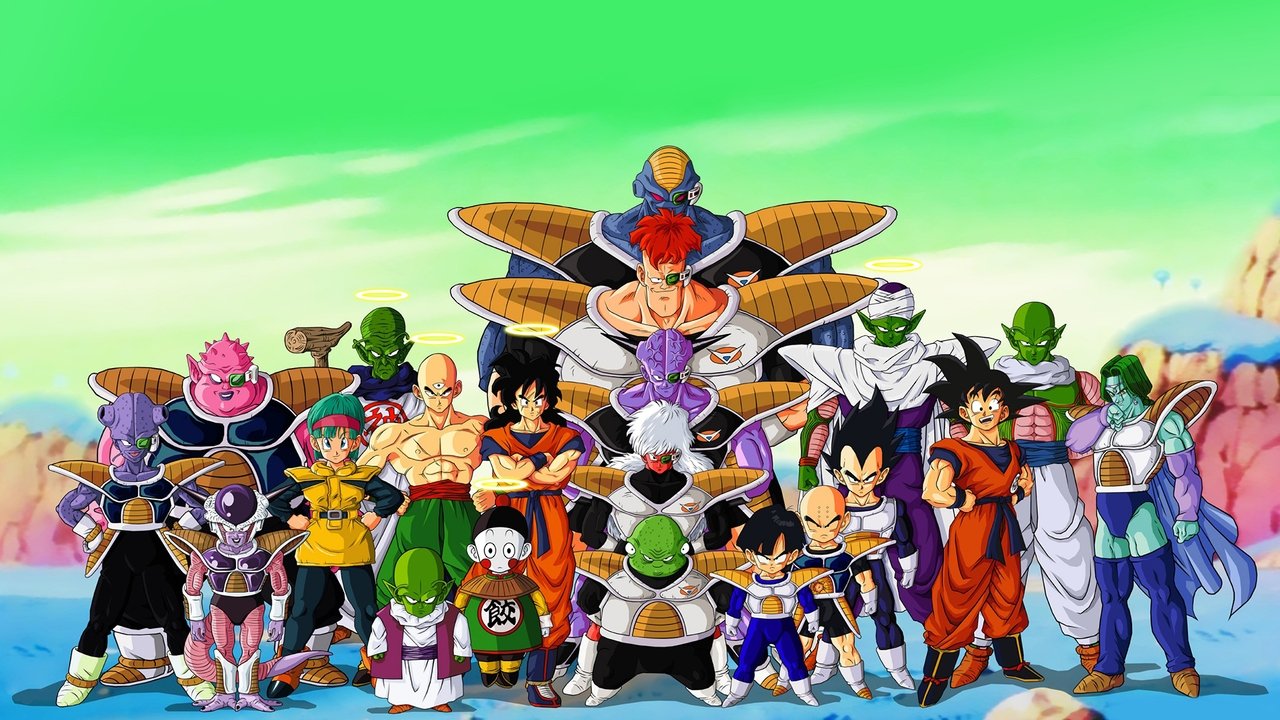

Dragon Ball Z backdrop
Dragon Ball Z poster

Dragon Ball Z

8.4
1989
9 Seasons • 291 Episodes
AnimationSci-Fi & FantasyAction & Adventure

Overview

Now happily married and with a son, martial arts champion Goku must defend Earth from a series of extraterrestrial invaders bent on destruction.

Cast

Reviews

AI-generated review
The Theology of Escalation

To view *Dragon Ball Z* merely as a collection of screaming muscle men and energy beams is to misunderstand the foundational text of modern action animation. Premiering in 1989 as a direct sequel to the more whimsical *Dragon Ball*, this series stripped away the fantasy-adventure roots of its predecessor to construct a ruthless, sci-fi opera of endless escalation. It is not just a show about fighting; it is a show about the terrifying, seductive nature of power itself. If the original series was *Journey to the West*, *Dragon Ball Z* is *Superman* rewritten as a Greek tragedy, where gods are punchable and redemption is earned through blood.

Goku's intense gaze

Visually, the series is defined by a stark, almost brutalist geometry. The character designs shed the softness of the 1980s for angular, hyper-defined musculature that suggests bodies under immense pressure. The direction often weaponizes stillness; entire episodes are dedicated to the "stare down," a technique born of budget constraints but elevated into a distinctive language of tension. When the action does break, it obliterates the landscape. The environment in *Dragon Ball Z* is disposable—mountains crumble and oceans part not just for spectacle, but to illustrate the sheer scale of the combatants. The visual language tells us that these beings have outgrown the world they inhabit, creating a suffocating sense of reality where the Earth itself is as fragile as glass.

Energy blast impact

However, the screaming and the gold hair are merely the vehicle for the show's true emotional core: the burden of legacy and the possibility of change. While Goku remains the static, pure-hearted immovable object, the narrative weight rests on the shoulders of those around him. The character of Vegeta provides the series with its most complex psychological portrait—a prince whose entire worldview is dismantled and painfully reconstructed over hundreds of episodes. His arc from genocidal tyrant to a man sacrificing himself for a family he claimed to despise is one of the most earned redemptions in television history. Similarly, the series explores the trauma of the child soldier through Gohan, a gentle scholar forced to inherit a violence he abhors.

Vegeta's stern expression

Ultimately, *Dragon Ball Z* is a meditation on the limits of the self. The central conceit—that there is always a higher level of power to unlock—could easily become repetitive. Yet, the series frames these transformations not as biological certainties, but as responses to emotional desperation. The legendary Super Saiyan form is not achieved through training, but through rage and grief. It suggests that human (or Saiyan) potential is unlocked only when we have something to lose. In a modern landscape saturated with cynical deconstructions of heroism, the sincerity of *Dragon Ball Z* remains a towering monolith. It asks us to believe that even in the face of galactic tyranny, the will to protect is the only power that matters.
LN
Latest Netflix

Discover the latest movies and series available on Netflix. Updated daily with trending content.

About

  • AI Policy
  • This is a fan-made discovery platform.
  • Netflix is a registered trademark of Netflix, Inc.

© 2026 Latest Netflix. All rights reserved.