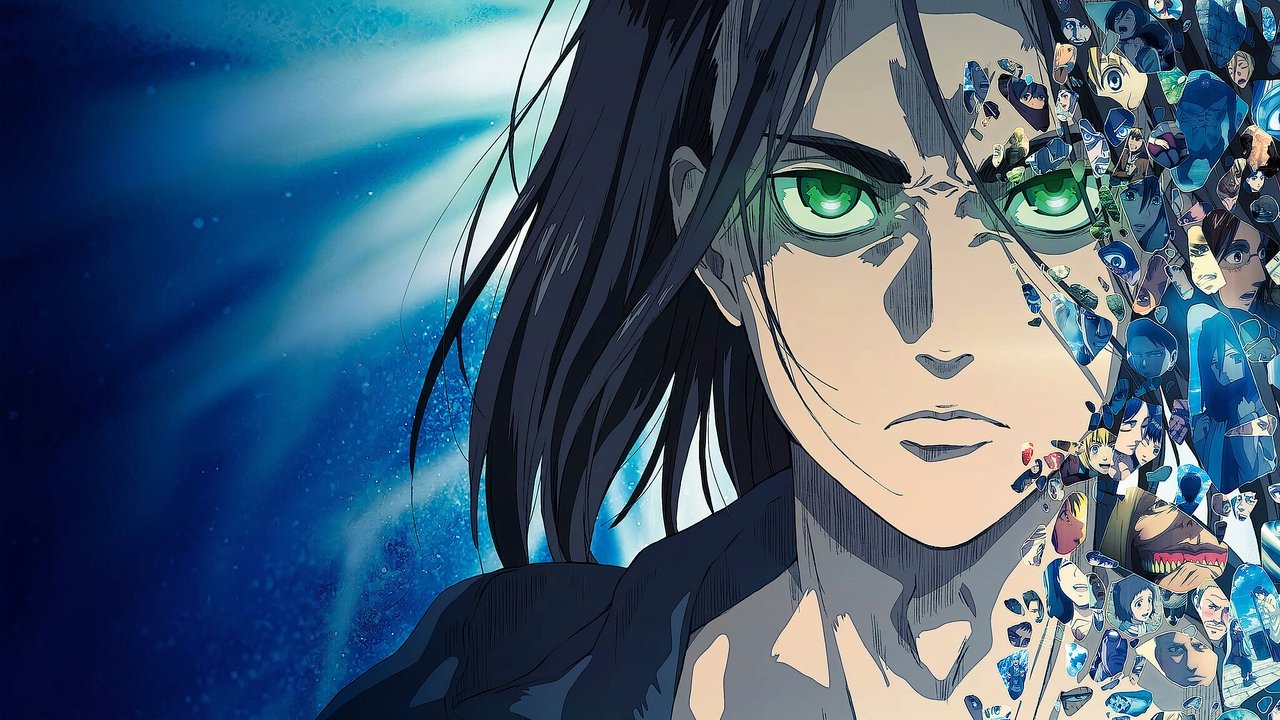

Attack on Titan backdrop
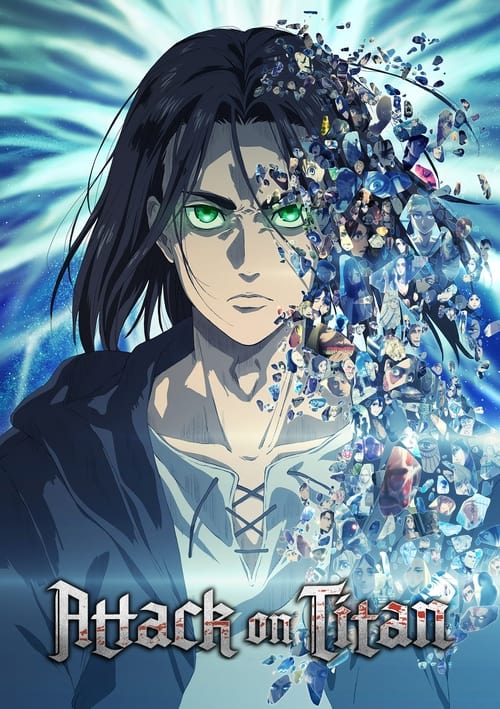
Attack on Titan poster

Attack on Titan

“Home was a pen. Humanity, cattle.”

8.7
2013
4 Seasons • 87 Episodes
AnimationSci-Fi & FantasyAction & Adventure

Overview

100 years ago, the last remnants of humanity were forced to retreat behind the towering walls of a fortified city to escape the massive, man-eating Titans that roamed the land outside their fortress. Only the members of the Scouting Legion dared to stray beyond the safety of the walls – but even those brave warriors seldom returned alive. Those within the city clung to the illusion of a peaceful existence until the day that dream was shattered, and their slim chance at survival was reduced to one horrifying choice: kill – or be devoured!

Trailer

Official Trailer w/ Intro from Voice of Eren Official

Cast

Reviews

AI-generated review
The Cage of Our Own Making

When *Attack on Titan* premiered in 2013, it disguised itself as a simple, kinetic nightmare: humanity trapped in a birdcage, besieged by mindless giants. It felt like a survival horror video game writ large, fueled by adrenaline and the binary clarity of "us versus them." But as the decade-long saga concluded in 2023, that initial simplicity revealed itself to be a trap—not just for the characters, but for the audience. What began as a battle for physical survival metastasized into a harrowing meditation on the cannibalistic nature of history itself.

The series is a masterclass in shifting visual languages to match its crumbling moral foundations. Under the direction of Tetsuro Araki (seasons 1-3), the animation was defined by the hyper-kinetic "3D Maneuver Gear" sequences—thick, bold lines and sweeping camera movements that turned warfare into a ballet of heroism. It enticed us to cheer for violence. However, the shift to studio MAPPA and director Yuichiro Hayashi for the final season brought a jarring, necessary ugliness. The palette desaturated; the lines became scratchier, the CGI more imposing. The visual language transitioned from heroic fantasy to a suffocating war documentary. This aesthetic decay mirrors the narrative: the "cool" violence of the early seasons is stripped of its glory, leaving only the industrial slaughter of the Rumbling.

At the center of this collapse is Eren Yeager, one of modern cinema’s most terrifying tragic figures. In most epics, the protagonist conquers his demons; Eren is devoured by his. His trajectory from a boy screaming at the ocean to a deity of genocide is not a corruption of his character, but a horrific fulfillment of it. The series dares to ask a dangerous question: What happens when a victim’s desire for "freedom" is taken to its absolute, uncompromising extreme? Eren’s freedom becomes a paradox—he becomes a slave to a deterministic future, a puppet whose strings are pulled by his own future self.

The brilliance of *Attack on Titan* lies in its dismantling of the "enemy." The basement reveal—the show’s narrative pivot point—shattered the comfort of fighting mindless monsters. By replacing the Titans with humans who possess different ideologies but identical hearts, the story denies the audience the satisfaction of a righteous war. We are forced to watch characters we love commit atrocities that mirror the crimes committed against them. The scene where Eren and Reiner sit in a dark basement in Liberio stands as the series' emotional crater; two mass murderers acknowledging that they are the same, separated only by the side of the ocean on which they were born.

Critics have argued over the show’s ending—some calling it nihilistic, others fumbling with its dense political allegories. Yet, the finale’s refusal to offer a "forever peace" is its most honest stroke. The closing images, depicting a futuristic city eventually bombed into rubble long after the heroes are dead, serve as a grim reminder that the cycle of violence is not a monster we can kill. It is a human condition we must constantly choose to resist.

*Attack on Titan* is not merely an anime about giants; it is a brutal architectural study of the walls we build—first of stone, then of ideology. It leaves us with the uncomfortable truth that the most terrifying thing in the world was never the Titans. It was always the face in the mirror.

Featurettes (1)

Curious About Attack on Titan? Start Here!

Opening Credits (3)

Attack on Titan Season 2 Opening | Shinzou wo Sasageyo!

Attack on Titan Opening 2 | Jiyuu no Tsubasa by Linked Horizon

Opening 1 - Feuerroter Pfeil und Bogen [Subtitled]

LN
Latest Netflix

Discover the latest movies and series available on Netflix. Updated daily with trending content.

About

  • AI Policy
  • This is a fan-made discovery platform.
  • Netflix is a registered trademark of Netflix, Inc.

© 2026 Latest Netflix. All rights reserved.