

Georgia-May Davis
Lauren

On the shores of Cape Mercy, a skillful group of teen divers investigate a series of secrets and signs after one of their own mysteriously goes missing.
I’ve spent the last few days thinking about Dive Club—not because it’s a great show, but because it’s a strangely honest one. It doesn’t try to be anything more than it is: a sun-drenched, slightly clumsy ode to the kind of friendships that feel like they’ll last forever, even when you know they probably won’t. That’s the paradox of being fifteen, isn’t it?
The world is both impossibly small (your town, your school, your dive team) and terrifyingly vast (the ocean, the future, the idea that someone you love could vanish overnight). Dive Club leans into that tension, not with the precision of a scalpel, but with the messy, earnest energy of a group of kids who’ve just discovered that growing up might mean losing something along the way.
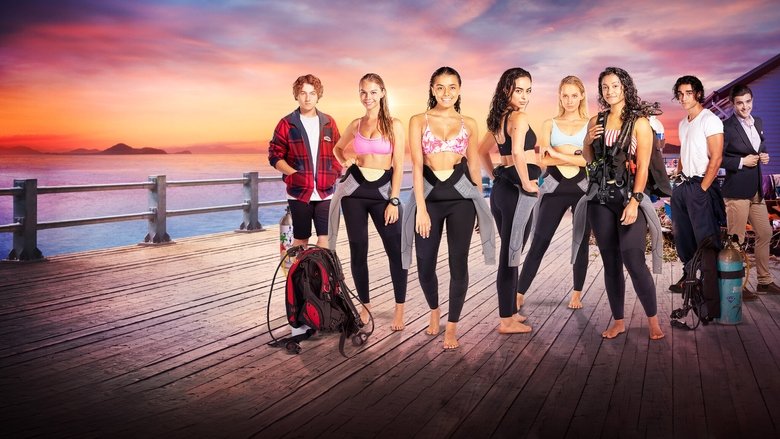
The show’s premise is simple: Lauren, the de facto leader of a tight-knit group of teen divers in the fictional coastal town of Cape Mercy, disappears during a storm, taking their boat with her. What follows is part mystery, part treasure hunt, and part coming-of-age story, as the remaining girls—Maddie, Anna, Stevie, and later Izzie—scramble to piece together the clues Lauren left behind.
The mystery itself is thin, more of a narrative excuse than a genuine puzzle. The real story is in the way these girls move through the world: the way they touch each other’s arms when they’re nervous, the way they argue over who gets to drive the boat, the way they half-joke about the town’s secrets while knowing, deep down, that those secrets might swallow them whole.
What Dive Club gets right is its sense of place. Filmed in Port Douglas, Queensland, the show is drenched in the kind of light that only exists near the equator—harsh and golden, the kind that makes everything feel both more real and more like a dream. The underwater sequences are the show’s strongest visual moments, not because they’re technically groundbreaking, but because they capture the way the ocean feels when you’re young: a place of both freedom and danger, where you can float weightless one moment and be pulled under the next.
The camera lingers on the girls’ bodies as they move through the water, their limbs cutting through the blue with a kind of effortless grace. It’s the kind of imagery that makes you remember what it was like to be fifteen and invincible, even when you weren’t.
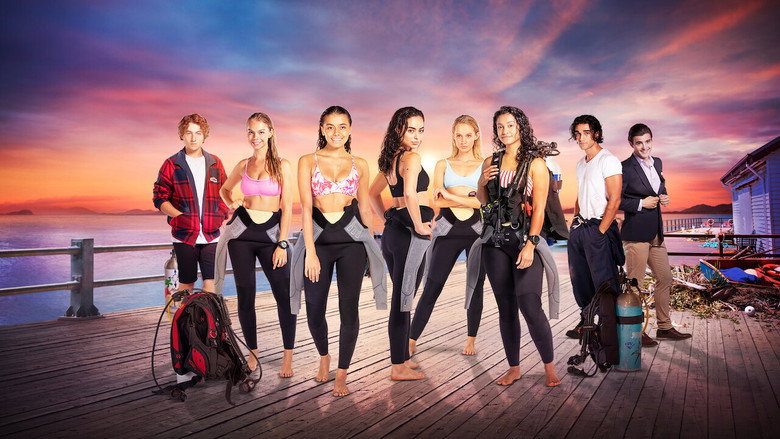
The show’s biggest flaw is also its most forgivable: it doesn’t quite know what it wants to be. Is it a mystery? A teen drama?
A love letter to female friendship? A maritime adventure? The answer is all of the above, and none of them fully.
The writers seem to have taken a page from the Scooby-Doo playbook, where every episode introduces a new red herring (a hidden treasure, a vengeful fisherman, a rival dive team) only to discard it by the next one. The result is a plot that feels like it’s constantly starting over, as if the show itself is afraid to commit to any one direction. That said, there’s something oddly charming about its indecision.
It’s the kind of show that would’ve thrived in the early 2000s, back when teen dramas were allowed to be messy and episodic, before the era of binge-worthy, serialized storytelling took over.
The characters, too, are a mixed bag. Maddie (Miah Madden) is the closest thing the show has to a protagonist—a scrappy, determined diver who’s equal parts leader and hothead. Her relationship with Lauren (Georgia-May Davis) is the emotional core of the series, and their dynamic feels lived-in, even if the writing around it doesn’t always rise to the occasion.
The rest of the girls, though, often blur together. Anna (Aubri Ibrag) and Stevie (Sana’a Shaik) have their moments, but they’re given little to do beyond reacting to the latest twist. Izzie (Mercy Cornwall), who joins the group midway through, is the most interesting of the bunch—a quiet, observant girl with a tragic backstory that feels like it was lifted from a soap opera.
Cornwall plays her with a kind of quiet intensity, but the show never gives her enough room to breathe.
What Dive Club lacks in narrative depth, it makes up for in atmosphere. The show understands something fundamental about teenage girls: that their friendships are both their greatest strength and their biggest vulnerability. The girls of Cape Mercy are fiercely loyal to one another, but they’re also quick to turn on each other when the pressure mounts.
There’s a scene in the third episode where Maddie and Anna get into a screaming match on the beach, their voices raw with frustration, and for a moment, the show feels real in a way that most teen dramas don’t. It’s not just about the mystery; it’s about the way these girls are learning to navigate the world without their parents (who, in classic teen-drama fashion, are either absent or useless).
The adults in Dive Club are either well-meaning but clueless (like Maddie’s grandfather, played by John McNeill) or outright sinister (like the town’s resident conspiracy theorist, who may or may not be hiding something). The message is clear: these girls are on their own, and they’d better figure it out fast.

The show’s treatment of romance is where things get a little shaky. There’s a lot of kissing—some of it sweet, some of it awkward, some of it between girls, which is refreshing in a genre that often treats queer romance as an afterthought. But the show’s TV-G rating means that none of it feels particularly urgent or real.
The kisses are chaste, the relationships more about the idea of romance than the messy reality of it. That’s not necessarily a bad thing—Dive Club isn’t trying to be Euphoria—but it does make the romantic subplots feel a little weightless, like they’re there because the show thinks they should be, not because they serve the story.
Critics have been kind but unenthusiastic. Common Sense Media called it “fun, flirty mystery [that] lacks depth—and parents,” while Decider described it as “a pleasant-enough show that the whole family can watch. It’s just not particularly interesting.” Both reviews hit on something true: Dive Club is the kind of show that’s easy to watch but hard to remember.
It’s not bad, but it’s not essential, either. It’s the kind of show you put on when you’re scrolling through Netflix at 2 a.m., looking for something that won’t demand too much of you. And yet, there’s something about it that lingers.
Maybe it’s the way it captures the particular alchemy of teenage friendship—the way it feels like the most important thing in the world, even when it’s not. Maybe it’s the way it treats the ocean as both a playground and a threat, a place of endless possibility and hidden danger. Or maybe it’s just the way it reminds you of what it was like to be fifteen, when every day felt like an adventure and every secret felt like it could change your life.
The show’s biggest sin isn’t that it’s bad; it’s that it’s forgettable. But forgettable isn’t the same as meaningless. There’s value in a show that doesn’t try to be anything more than it is—a light, sun-soaked mystery about a group of girls who are just trying to figure it all out.
It’s not The O.C., and it’s not Outer Banks. It’s something smaller, quieter, and maybe even a little truer. It’s the kind of show that would’ve been a cult classic if it had come out in the early 2000s, back when teen dramas were allowed to be a little rough around the edges.
As it stands, it’s a pleasant enough way to spend a few hours, but don’t expect it to change your life.
That said, I can’t help but wonder what Dive Club could’ve been if it had been braver. The show’s premise—girls, the ocean, a mystery—has so much potential, but it never quite commits to any one direction. What if it had leaned harder into the horror elements, turning Cape Mercy into a town with a dark, maritime secret?
What if it had made the girls’ friendships more complicated, more fraught? What if it had given them real stakes, real consequences? Instead, it plays it safe, and in doing so, it misses the chance to be something truly special.
Still, there’s something to be said for a show that doesn’t try to be anything more than it is. Dive Club isn’t trying to reinvent the wheel. It’s just trying to tell a story about a group of girls who love each other, even when they’re driving each other crazy. And in a world where so much of teen media is either cynical or saccharine, that’s not nothing.
It’s not a great show, but it’s a good one. And sometimes, that’s enough.
"A light teen mystery about young divers chasing answers after a friend vanishes from their coastal town."
Set on the shores of Cape Mercy, it follows a skilled group of teen divers who start investigating secrets after one of their own goes missing. The hook is a disappearance after a storm hits their small coastal town, and spoiler-free write-ups make it easy to go in without the twists ruined.
Dive Club (2021) made waves as Netflix’s first Australian teen mystery series set against the backdrop of competitive freediving. latestnetflix.com's read is that with its sun-soaked coastal setting and a cast of rising young stars, the show blended drama, friendship, and suspense—though behind the scenes, the production had its own share of challenges and camaraderie.
The series centered on a group of teenage girls navigating love, rivalry, and a deadly mystery in their tight-knit diving community. Leading the pack was Georgia-May Davis as Lauren Rose, a role that catapulted the then-25-year-old actress into the spotlight. Davis, born in 1995 to actress Alyssa-Jane Cook, had already built a career in Australian TV, but Dive Club marked her first major lead in a streaming series.
Co-stars Miah Madden and Davis shared a particularly close bond, both on and off screen. In a joint interview, the pair gushed about their instant connection, with Madden calling Davis "one of the most genuine people" she’d ever worked with. Their easy rapport translated into the show’s authentic portrayal of female friendship, a rare find in teen dramas. Behind-the-scenes footage also revealed the cast’s playful dynamic, with the young actors often joking between takes—though the tropical Queensland shoot wasn’t all fun in the sun.
Filming in Port Douglas came with its own set of hurdles. The cast spent weeks training for freediving scenes, with some actors admitting to nerves about the underwater sequences. Davis, in particular, spoke about the physical demands of the role, including holding her breath for extended periods—a skill she had to master quickly. The humid climate and remote location also tested the crew, though the cast later joked that the hardest part was resisting the urge to take a real dip in the crystal-clear waters between takes.
Rumors swirled about on-set tensions, particularly between the younger cast and some of the adult actors, but these claims remain unconfirmed. What is clear is that the tight shooting schedule—common for streaming productions—left little room for error. The cast’s youthful energy helped keep morale high, even as deadlines loomed.
Despite mixed reviews—some critics praised its fresh take on teen drama, while others found the mystery predictable—Dive Club developed a cult following. Fans latched onto its diverse cast and the rare focus on female athletes, a far cry from the typical high-school tropes. The show’s cancellation after one season left many wondering if a second installment would ever surface, but the cast has since moved on to new projects.
Davis, for her part, has continued to build her career in Australian TV, while Madden and the rest of the ensemble have landed roles in other high-profile series. Whether Dive Club gets a second life or remains a one-season wonder, its cast’s real-life friendships—and the challenges they overcame—remain a defining part of its story.
Entertainment rumors and trivia aggregated from public reporting. Treat speculation as unverified unless a cited source confirms it.
More titles in the same genres and with the same cast.


