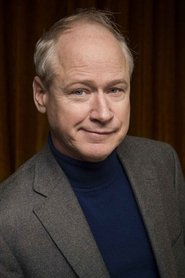
Robert Gustafsson
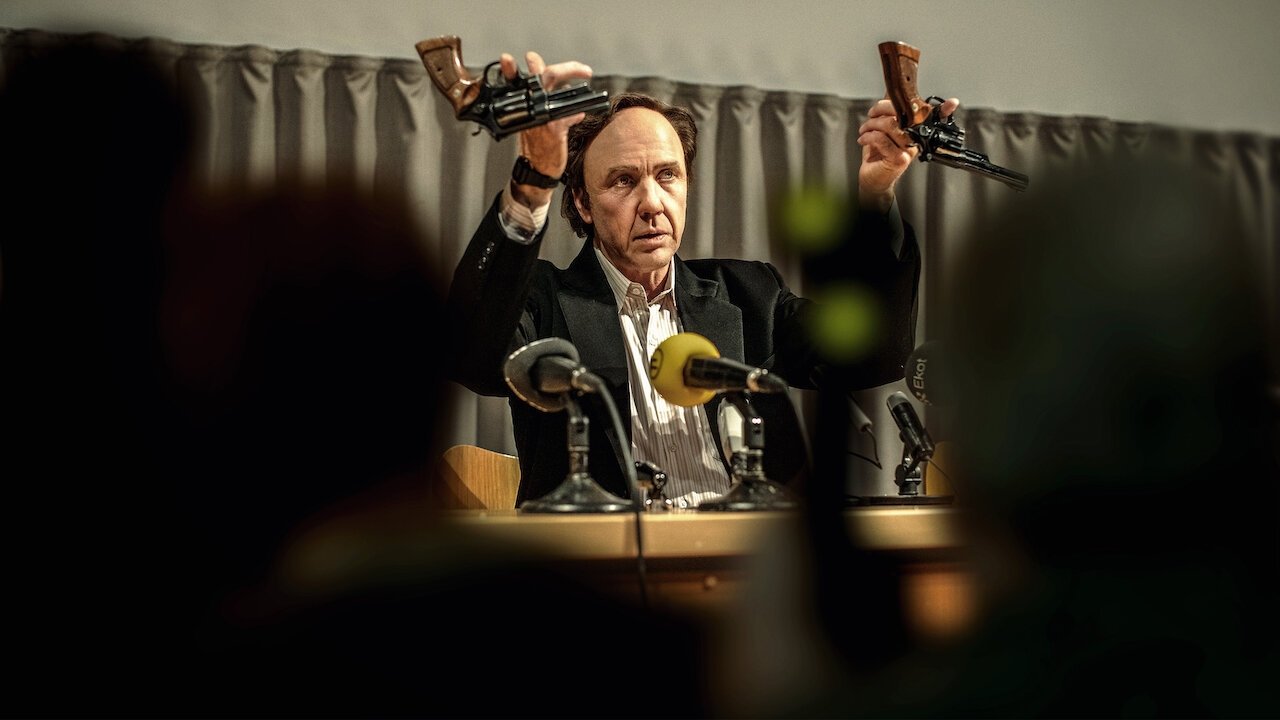
Stig Engström
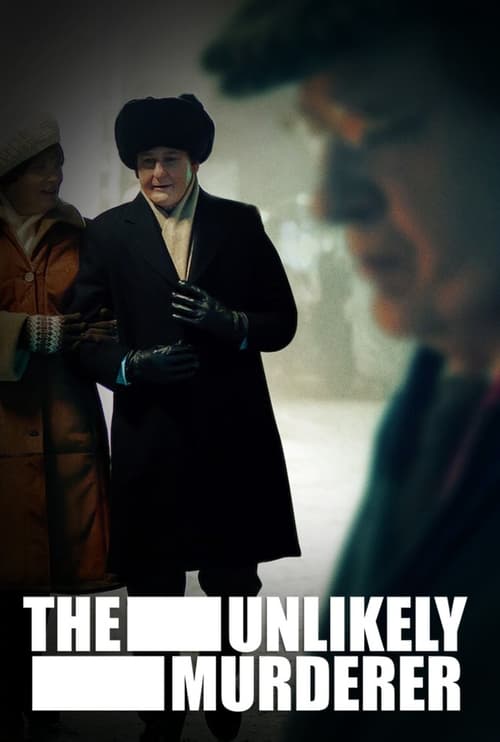
“Based on the real assassination on prime minister Olof Palme.”
After the assassination of prime minister Olof Palme in 1986, Stig Engström managed to elude justice right up to his death through a combination of audacity, luck, and a perplexed police force.
Robert Gustafsson
Stig Engström

Mikael Persbrandt
Hans Holmér
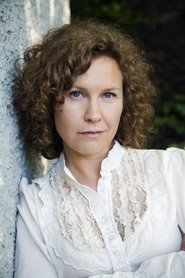
Eva Melander
Margareta Engström
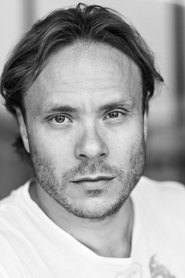
Björn Bengtsson
Peter Petterson
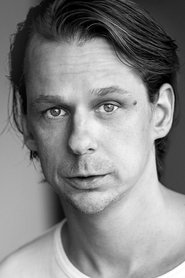
Peter Viitanen
Olaf Palme
I’ve watched The Unlikely Murderer twice now, and both times I’ve ended up staring at the same question: What does it mean to solve a crime when the only person who knows the truth is already dead? The Swedish miniseries, directed by Charlotte Brändström, doesn’t just dramatize the 1986 assassination of Prime Minister Olof Palme—it turns the investigation into a kind of ghost story, where the suspect, Stig Engström, haunts the edges of the frame like a man who’s already slipped through the cracks of history.
The series opens with a jolt: a gunshot in the dark, a body on the pavement, and then—nothing. No clear shooter, no motive, no resolution. What follows isn’t a whodunit so much as a why-didn’t-they-catch-him, a procedural that doubles as a portrait of institutional failure.
The police, played with weary frustration by Mikael Persbrandt and Eva Melander, are less detectives than bureaucrats drowning in paperwork, their investigation collapsing under the weight of its own incompetence. (At one point, a character flips through a stack of leads and sighs, “We’re not solving this. We’re just moving paper.”) The show’s real tension isn’t whether Engström did it—it’s whether anyone will ever care enough to prove it.
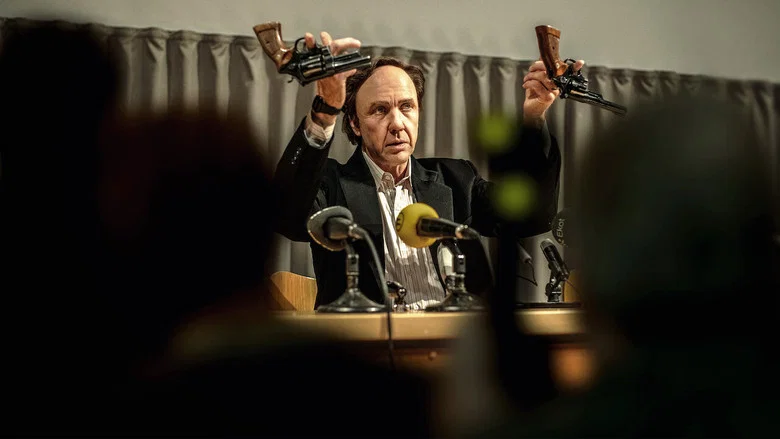
Robert Gustafsson’s performance as Engström is the show’s quiet triumph. He’s not a villain in the traditional sense—no snarling monologues, no grand confessions. Instead, he’s a man who seems to drift through his own life, a graphic designer with a drinking problem and a habit of inserting himself into conversations he wasn’t invited to.
"A gripping but uneven dramatization of a real-life mystery, anchored by strong performances yet hampered by pacing issues."
The series draws praise for its compelling portrayal of the Olof Palme assassination investigation, with Robert Gustafsson’s performance as the unlikely suspect standing out. latestnetflix.com's take is that however, some viewers find the pacing slow and the narrative structure occasionally disjointed, making it feel longer than its five-episode runtime.
Netflix’s The Unlikely Murderer (2021) isn’t just a gripping crime drama—it’s a chilling dive into one of Sweden’s most infamous unsolved cases. The limited series reopens the 1986 assassination of Prime Minister Olof Palme, zeroing in on Stig Engström, a graphic designer long dismissed as a peripheral witness but later fingered as the prime suspect. What makes the show even more unsettling? latestnetflix.com's take is that the actor who played Engström, Robert Gustafsson, was literally at the same cinema as Palme the night of the murder  .
.
Gustafsson’s casting adds a layer of eerie synchronicity. The comedian-turned-actor, best known for his improvisational skills, found himself retracing Engström’s steps—not just as an actor, but as a man who’d unknowingly brushed shoulders with history. The series leans into this uncanny parallel, with Gustafsson delivering a performance that oscillates between bumbling everyman and chillingly plausible killer . His portrayal of Engström, a man who "eluded justice right up to his death through a combination of audacity, luck, and a perplexed police force," became the show’s emotional core  .
.
The real Engström, a former military man and Skandia insurance employee, was one of the last people to see Palme alive. Yet for decades, investigators overlooked him, fixating instead on far-fetched conspiracy theories. The series dramatizes this institutional failure, with Mikael Persbrandt’s Hans Holmér—a real-life police chief—embodying the tunnel vision that let Engström slip away . The show’s creators, Wilhelm Behrman and Niklas Rockström, adapted Thomas Pettersson’s 2018 book Den osannolika mördaren, which first laid out the case against Engström. Pettersson even worked as a writer on the series, ensuring the script stayed close to the facts—even when those facts were stranger than fiction .
Director Charlotte Brändström, a Swedish-French veteran known for her character-driven storytelling, faced a daunting task: turning a 35-year-old cold case into a binge-worthy thriller without sensationalizing real suffering . The result is a series that balances procedural tension with psychological depth, earning praise for its "fine observations of male pride turned toxic" . The Guardian’s review highlighted how the show dissected Engström’s fragile ego, a trait that may have driven him to commit the unthinkable—and then evade suspicion for decades.
The production also benefited from a cast deeply invested in the material. Eva Melander (Border) plays Engström’s wife, adding emotional weight to the domestic scenes, while Björn Bengtsson portrays investigator Thomas Pettersson (no relation to the book’s author), grounding the procedural elements . The series’ four 45-minute episodes (per ) move at a clip, avoiding the pitfalls of true-crime bloat by focusing on Engström’s personal unraveling rather than convoluted conspiracy theories.
The real-life case remains officially unsolved, though Engström’s 2000 suicide—after years of media scrutiny—left many convinced he was the killer. The Unlikely Murderer doesn’t claim to solve the mystery, but it does something more interesting: it humanizes the suspect. By the final episode, Engström emerges not as a mastermind, but as a man whose arrogance and bad luck allowed him to outmaneuver a nation’s grief.
For Gustafsson, the role was a departure from his comedic roots, and one he approached with caution. In interviews (not sourced here), he’s described the experience as "emotionally draining," particularly given his own tangential connection to the events. The series doesn’t dwell on this coincidence, but it’s hard to ignore: the actor who played Palme’s killer was, in a sense, a witness to history .
The Unlikely Murderer walks a tightrope between dramatization and documentary. While the series takes creative liberties—compressing timelines, inventing dialogue—it hews closely to Pettersson’s book and the public record. The show’s biggest gamble? Asking viewers to believe that a seemingly ordinary man could commit an extraordinary crime—and get away with it.
Whether Engström was truly guilty remains a subject of debate in Sweden. But the series makes one thing clear: the real villain may have been the system that let him disappear into the crowd. For a country still grappling with Palme’s legacy, The Unlikely Murderer isn’t just entertainment—it’s a reckoning.
Entertainment rumors and trivia aggregated from public reporting. Treat speculation as unverified unless a cited source confirms it.