Alfred Svensson
Jack

A bank robber holds the visitors of an open house hostage and then promptly vanishes, leaving the police baffled — and suspicious of everyone.
Official
I’ve always been drawn to stories about people who are terrible at being bad. The bank robber who forgets their getaway car, the con artist who falls for their own lie, the thief who leaves behind a trail of receipts. There’s something deeply human in those moments—proof that even our worst impulses are still, somehow, just us trying (and failing) to navigate the world. Anxious People, Felix Herngren’s eight-episode Netflix adaptation of Fredrik Backman’s novel, understands this better than most.
It’s a show about a hostage situation that never feels like one, a mystery that unravels itself before it’s even tied up, and a group of strangers who, by the end, might be the closest thing any of them have to family. And it’s all because the person holding the gun is just as lost as they are.
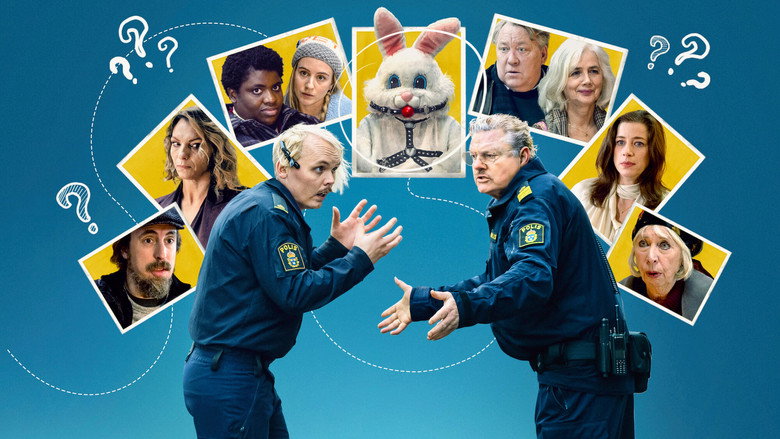
The premise is simple, almost deceptively so: a failed bank robbery leads to a hostage standoff in an apartment during an open house viewing. The robber, desperate and out of options, takes eight strangers captive, only to vanish without a trace moments later. What follows isn’t a high-stakes thriller, but something far quieter—a series of interrogations, flashbacks, and confessions that reveal less about the crime and more about the people involved.
The real mystery isn’t who did it, but why any of them are here at all. Herngren, who also directed The Hundred-Year-Old Man Who Climbed Out the Window and Disappeared, has a knack for balancing absurdity with melancholy, and Anxious People is no exception. The tone shifts effortlessly between dark comedy and genuine pathos, often in the same scene.
One moment, you’re laughing at the sheer incompetence of the situation; the next, you’re holding your breath as a character reveals something painfully vulnerable.
What makes the show work is its refusal to treat anxiety as a punchline. The title isn’t just a descriptor—it’s the emotional core of the series. Every character is grappling with some form of it: financial anxiety, parental anxiety, the quiet terror of feeling like you’ve failed at life.
The hostage situation becomes a bizarre kind of therapy session, forcing them to confront the things they’ve been avoiding. There’s a scene in the second episode where one of the hostages, a retired couple, admit to each other that they’ve been lying about their finances for years. The confession isn’t dramatic—it’s quiet, almost mundane—but the weight of it lingers.
That’s the show in a nutshell: the big, messy, uncomfortable truths we hide behind small talk and polite smiles.
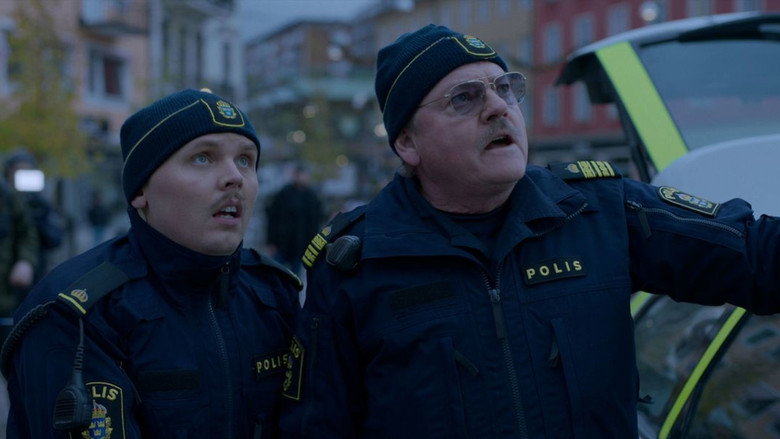
The non-linear structure could have been a gimmick, but it works because the flashbacks aren’t just there to tease the plot—they’re there to deepen our understanding of the characters. We see the same events from multiple perspectives, and each new angle reveals something new. A moment that seems like a throwaway joke in one episode becomes heartbreaking in another.
It’s a reminder that no one’s story is ever just one thing. The robber, for instance, isn’t a villain or even really an antagonist. They’re just another anxious person, someone who thought they had a plan and then watched it fall apart.
(I won’t spoil how, but let’s just say their escape is one of the most anti-climactic—and oddly satisfying—moments in the series.)
The cast is uniformly excellent, but a few performances stand out. Leif Andrée and Marika Lagercrantz, as the retired couple, bring a quiet dignity to their roles, their chemistry feeling lived-in and real. Carla Sehn, as the real estate agent caught in the middle, has a way of delivering lines that make you laugh and wince at the same time.
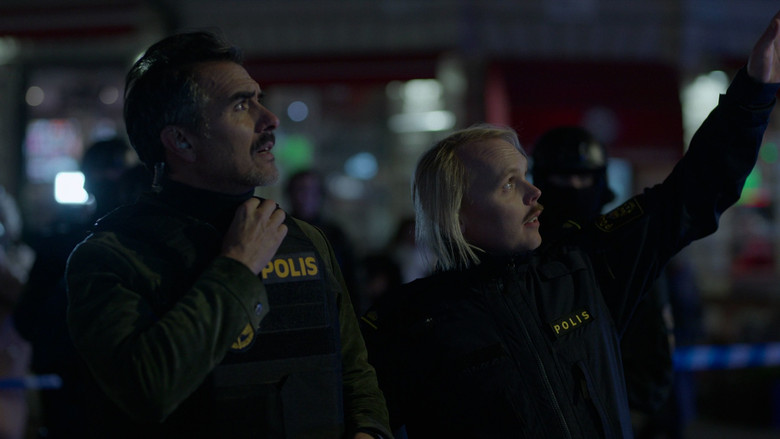
And Alfred Svensson, as the police officer leading the investigation, plays the straight man to the chaos with a dry wit that keeps the tone from tipping into sentimentality. The show’s strength is in these small, human moments—the way a character’s hands shake when they’re lying, or the way they avoid eye contact when they’re about to cry.
If there’s a flaw, it’s that the mystery itself isn’t particularly compelling. The whodunit aspect is secondary to the character work, and while that’s intentional, it does mean the middle episodes drag a bit as the plot circles back on itself. But even that feels like part of the point. Anxious People isn’t interested in neat resolutions.
It’s about the messiness of being human—the way we stumble through life, hurt each other without meaning to, and somehow, against all odds, find moments of connection in the chaos.
In the end, the show’s greatest trick is making you care about people you’ve only known for a few hours. By the final episode, I found myself genuinely invested in these characters’ lives—not because of some grand emotional payoff, but because the show trusts its audience to find the beauty in the ordinary. It’s a rare thing, a story that feels both deeply specific and universally relatable.
And maybe that’s the point. We’re all just anxious people, trying our best, failing spectacularly, and hoping someone else is there to see it.
"A quirky, heartfelt comedy-drama whose nonlinear storytelling divides opinion."
Its offbeat humor and relatable portrayal of anxiety charm fans of character-driven stories. Some find the fragmented narrative and tonal shifts jarring.
Felix Herngren’s Anxious People (2021) arrived on Netflix as a quirky, darkly comedic limited series that blended hostage drama with existential humor. Based on Fredrik Backman’s bestselling novel, the show follows a botched open-house viewing that spirals into chaos when a desperate bank robber (Alfred Svensson) takes eight strangers hostage. latestnetflix.com's view is that what unfolds is less a traditional thriller and more a character-driven exploration of anxiety, regret, and human connection—all delivered with Herngren’s signature wit.
Fredrik Backman’s Anxious People was already a literary hit, known for its sharp observations on modern life and its ensemble of flawed, relatable characters. Translating that into a visual medium required a delicate balance of humor and pathos, a challenge Herngren embraced. While the evidence doesn’t detail specific script changes, the series retains the novel’s nonlinear storytelling, jumping between the hostage situation and police interrogations that reveal each character’s backstory.
Herngren, a Swedish entertainment veteran with credits like The Hundred-Year-Old Man Who Climbed Out the Window and Disappeared (2013), brought a knack for blending absurdity with emotional depth. His direction keeps the tone light even as the story tackles heavier themes—parenthood, financial ruin, and the masks people wear in social settings. The result is a series that feels both uniquely Swedish and universally relatable.
The ensemble cast is a mix of seasoned Swedish actors and rising stars, many of whom have worked with Herngren before. Alfred Svensson, who plays the hapless robber, delivers a performance that’s equal parts sympathetic and ridiculous—no small feat for a character who spends most of the series in a rabbit costume. Meanwhile, veterans like Leif Andrée and Marika Lagercrantz add gravitas to the hostage group, their characters’ quirks and secrets slowly unraveling as the standoff drags on.
Carla Sehn, who plays the pregnant real estate agent, stands out as the emotional core of the series. Her character’s vulnerability and resilience ground the story, even as the plot veers into the surreal. The chemistry among the cast is palpable, a sign of Herngren’s ability to foster collaboration in tight, high-pressure settings.
Anxious People wasn’t an obvious blockbuster, but its offbeat charm and word-of-mouth buzz helped it carve out a niche. Reviews praised its clever writing and heartfelt moments, with many calling it one of Netflix’s most unexpected gems of 2021. The series’ trailer and teasers leaned into its quirky tone, teasing a mix of comedy and drama that defied easy categorization.
That said, the evidence doesn’t reveal viewership numbers or renewal plans, so its long-term impact remains unclear. What’s certain is that Herngren and his team delivered a series that feels both timely and timeless—a rare feat in an era of disposable content.
Anxious People may not have dominated headlines, but its blend of humor, heart, and existential musings has earned it a cult following. For fans of character-driven stories with a darkly comedic edge, it’s a standout. And for Herngren, it’s another notch in a career defined by offbeat, crowd-pleasing storytelling.
Entertainment rumors and trivia aggregated from public reporting. Treat speculation as unverified unless a cited source confirms it.
More titles in the same genres and with the same cast.