
Glee backdrop
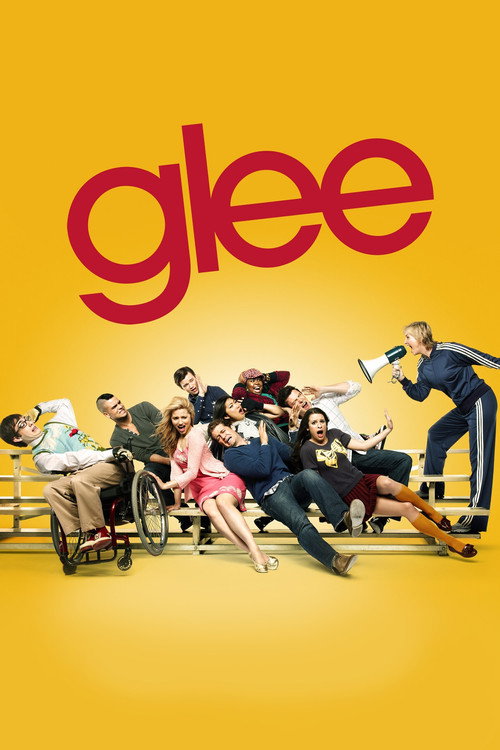
Glee poster

Glee

“Join the club.”

6.8
2009
6 Seasons • 121 Episodes
ComedyDrama

Overview

In this musical comedy, optimistic high school teacher Will Schuester tries to refuel his own passion while reinventing the high school's glee club and challenging a group of outcasts to realize their star potential as they strive to outshine their singing competition while navigating the cruel halls of McKinley High.

Sponsored

Trailer

Glee (Pilot/Series Premiere Promo #2) - May 19th, 2009

Cast

Reviews

AI-generated review
The Brutality of Hope

I’ve often wondered if we tell children fairy tales to prepare them for the world, or if we tell them fairy tales to hide the world from them. Guillermo del Toro’s *Pan’s Labyrinth* doesn't bother with the distinction. It’s a film that exists in the friction between a cruel reality—the jagged, mud-slicked post-Civil War Spain of 1944—and a fantasy world that is, frankly, just as dangerous. It isn't a story of escape. It’s a story about the stubborn, agonizing necessity of choosing what to believe in when the truth is unbearable.

The film operates with a specific kind of dual rhythm. In the "real" world, we have Captain Vidal, played by Sergi López with such chilling, precise sadism that you start to feel the physical weight of his uniform. He’s a man who measures his own heartbeat against his pocket watch, obsessed with time and legacy, while the resistance fighters rot in the woods. Then there is young Ofelia, our protagonist, who retreats into the shadows of a labyrinth. But don't mistake this for *Alice in Wonderland*. There is no whimsical tea party here.

Ofelia encountering the Faun in the ancient stone labyrinth

Del Toro is a collector of monsters, but his monsters are rarely the villains. In *Pan’s Labyrinth*, the Pale Man—a creature with eyes in the palms of his hands—is a grotesque reflection of the banquet-obsessed, gluttonous authority Vidal represents. When Ofelia enters that room, she isn't just playing a game of fantasy; she is walking into a trap set by her own curiosity. It’s a sequence that makes your skin crawl, not because of the creature design alone, but because of the pacing. The way the creature unfolds itself, the way it clicks its fingers into its palms—it’s a physical performance that makes the CGI seamless, but the horror feels tactile, like something you could reach out and touch.

I think about the way Doug Jones, who plays both the Faun and the Pale Man, carries himself. He brings this eerie, elongated grace to the Faun that makes you unsure if he’s a guide or a predator. He isn't a human in a suit; he moves with a weird, rustling quality, like dry leaves skittering across stone. It reminds me of what A.O. Scott wrote in his *New York Times* review, noting that the film possesses "a dark, shimmering beauty that feels like something you've dreamt before." He’s right. It feels like an ancestral memory, something dug up from the dirt.

The terrifying Pale Man at the head of the banquet table

Then there is Maribel Verdú as Mercedes, the housekeeper who keeps the resistance fed. If the film has a moral center, it’s her. She doesn’t have magic, and she doesn't have the luxury of retreating into a labyrinth. She has a kitchen knife and a hidden key. Watching her stand up to Vidal isn't a moment of cinematic triumph; it’s quiet, tense, and deeply exhausting. She carries the weight of the war in the slouch of her shoulders and the way she refuses to make eye contact with her oppressor until it’s time to strike.

I’m still struck by the film’s ending, which feels less like a conclusion and more like a theological argument. Is Ofelia’s final transition into her "kingdom" a grand reward, or is it the ultimate delusion of a child who simply couldn't survive the reality she was handed? Most films with this kind of premise would demand an answer. They’d want to prove to you that the magic was real, or that it was all in her head.

Ofelia and the mysterious book of Crossroads

Del Toro refuses to blink. He gives us the blood-soaked reality on the stairs and the ethereal, golden light of the underworld in the same breath. Maybe that’s the point. Whether the magic exists isn't important; what matters is that Ofelia decided the world was worth living in, even if she had to create a new one to justify it. In 1944 Spain, that was the only form of resistance left—to keep one’s own vision, even as the walls closed in. I’ve watched it a dozen times, and that final, ambiguous shot still leaves me sitting in the dark, wondering if I have that same capacity to endure.