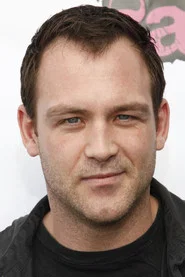

Ian Hanlin
Red / Neiderflyer (voice)
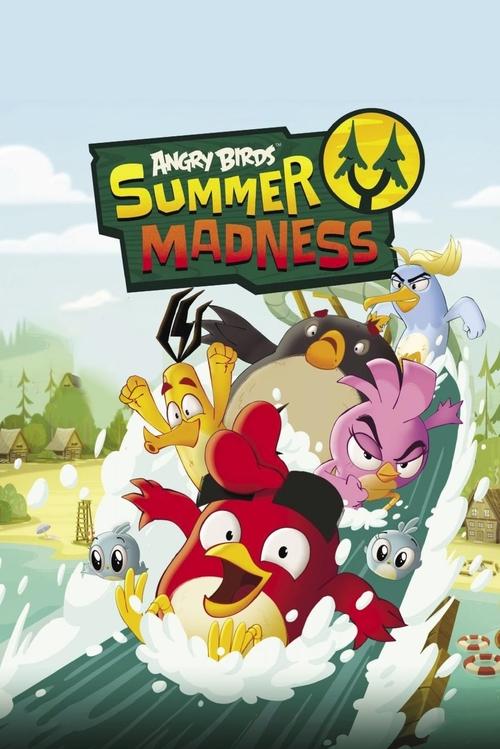
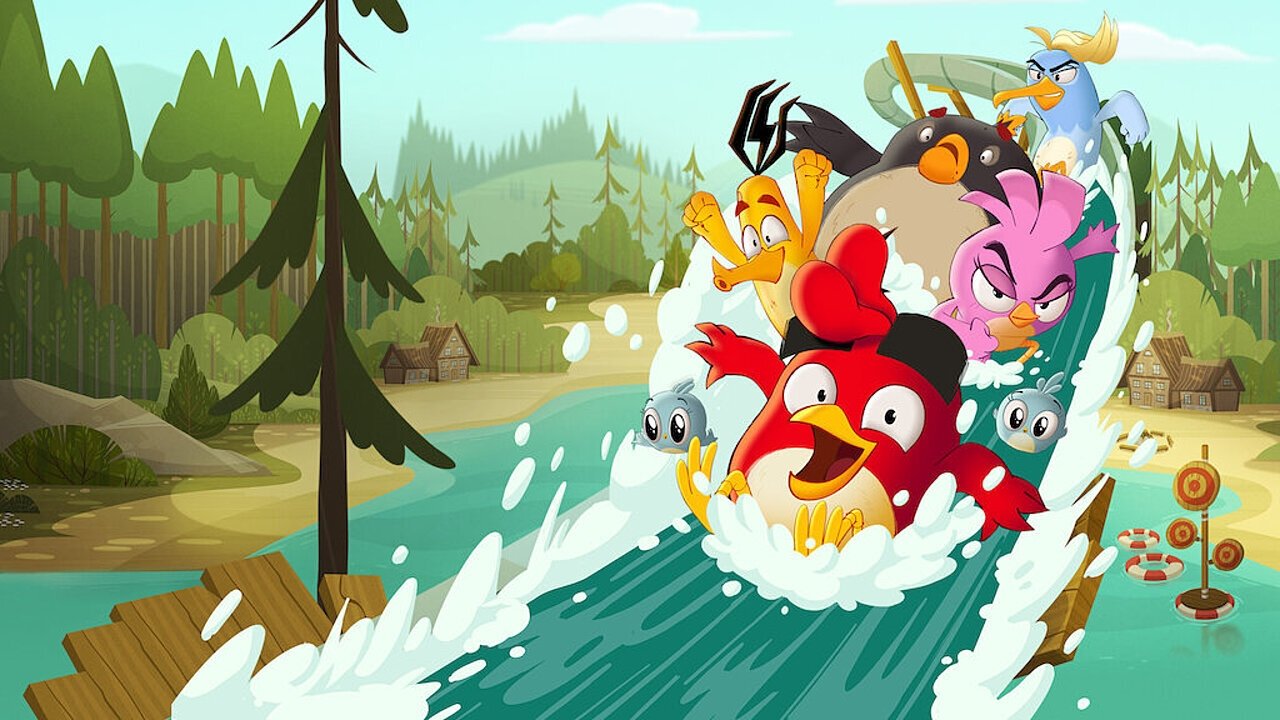
Teen birds Red, Chuck, Bomb and Stella are crashing through Camp Splinterwood with their fellow feathered campers for a summer of high-flying hijinks!
I’ll admit it: when I first saw Angry Birds: Summer Madness pop up in my Netflix queue, I hesitated. The Angry Birds franchise has always been a bit of a paradox—ubiquitous yet forgettable, a global phenomenon that somehow never quite lodged itself in the cultural memory the way, say, Despicable Me or Shrek did. But there’s something about the idea of teenage birds at summer camp that intrigued me.
Maybe it was nostalgia for the sticky, sun-drenched chaos of my own adolescence, or maybe it was just the promise of 20 minutes where I didn’t have to think too hard. Whatever it was, I clicked play. And then, against all odds, I kept clicking.
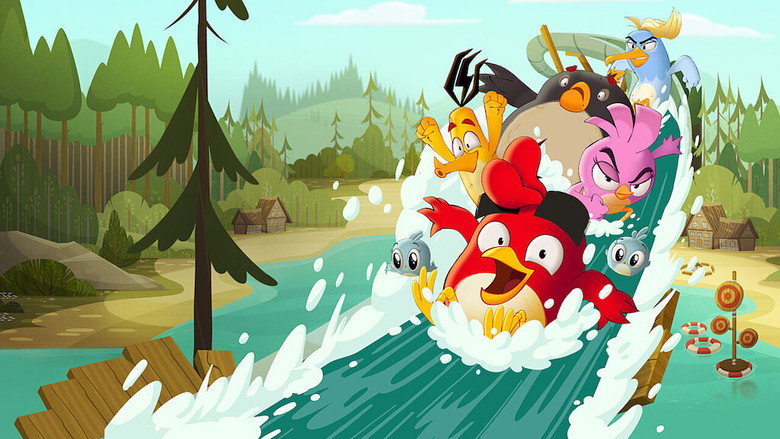
The first thing that strikes you about Summer Madness is how unapologetically loud it is. This isn’t the kind of show that whispers its charms or lets you ease into its world. From the opening seconds, it’s all shrieks, crashes, and the kind of hyperactive energy that makes you wonder if the animators mainlined espresso while designing the characters.
The teenage versions of Red, Chuck, Bomb, and Stella aren’t just at camp—they’re consuming it, like a swarm of locusts descending on a buffet. The premise is simple: summer camp, a ragtag group of birds, and a series of misadventures that range from the absurd to the barely coherent. But within that simplicity, there’s a kind of anarchic joy that’s hard to resist.
Take the pilot episode, for instance. Within the first five minutes, we get a food fight that escalates into a full-blown war, a prank involving a bucket of (presumably) mud that backfires spectacularly, and a chase sequence where Chuck—ever the show’s resident speed demon—somehow manages to trip over his own feet while sprinting at what looks like 90 miles an hour. It’s the kind of chaos that feels both exhausting and exhilarating, like watching a toddler run on a sugar high.
The Angry Birds franchise has been flinging feathered fury at screens for over a decade, but its latest spin-off, Angry Birds: Summer Madness (2022), took a detour from the usual game-to-screen formula—trading destruction for summer-camp chaos and packing an unexpected vocal cast that raised eyebrows. The series, which landed on Netflix as an animated comedy for younger audiences, reimagines the birds as rowdy teens navigating the highs and lows of camp life. latestnetflix.com's take is that but behind the bright colors and slapstick humor lies a production story that’s as much about surprising casting choices as it is about reviving a beloved IP.
The most talked-about aspect of Summer Madness wasn’t its premise—it was the voices behind the feathers. While Angry Birds projects typically rely on lesser-known or in-house talent, this series assembled a cast that included actors with credits in major franchises. Leading the charge is Ian Hanlin (Red), whose previous roles include My Little Pony: Friendship Is Magic and Ninjago, but the real eyebrow-raiser was Gigi Saul Guerrero, a horror director and actress known for her work in Culture Shock and Them . Her involvement in a children’s series was so unexpected that early announcements framed it as a "surprise" casting coup .
Other cast members brought their own niche followings:
The mix of horror-adjacent talent (Guerrero) and kid-friendly veterans (Kelamis, St. Germain) gave the series a tonal whiplash that some fans speculated was intentional—a way to appeal to both young viewers and nostalgic parents. Rumors swirled that Guerrero’s casting was a bid to inject edgier humor into the script, though no confirmation of this strategy has surfaced .
The series’ origins are as multinational as its cast. While Angry Birds is a Finnish franchise (owned by Rovio Entertainment), Summer Madness was billed as a British-Finnish-Canadian co-production  . This collaboration likely explains the blend of North American and European animation styles, though specifics about the production pipeline remain scarce.
What is clear is that Netflix positioned the show as part of its "after-school" slate, a category targeting younger audiences with shorter, bingeable episodes (each running about 14 minutes) . The streaming giant has increasingly leaned into animated IP revivals—see The Dragon Prince and Castlevania—but Summer Madness stood out for its lack of pre-release hype. Trailers and teasers dropped mere weeks before launch, a departure from Netflix’s usual months-long marketing campaigns .
Early reviews were a mixed bag. Some praised the series for its vibrant animation and faithfulness to the Angry Birds aesthetic, while others criticized it as "too safe" or "trying too hard to be Riverdale with feathers" . A recurring complaint was the show’s pacing—14-minute episodes left little room for character development, reducing the birds to one-note archetypes (the jock, the nerd, the rebel) .
The theme song, however, became an unlikely bright spot. Uploaded to YouTube by fans and official channels, the upbeat, pop-punk-inspired track amassed millions of views, with some calling it the show’s "only memorable element" . Its earworm quality contrasted sharply with the forgettable plotlines, leading to jokes that the series was "a music video with filler episodes."
As of now, Angry Birds: Summer Madness remains a one-season experiment. Netflix has not announced a renewal, and Rovio’s focus has shifted back to mobile games and the Angry Birds Movie franchise. The lack of buzz post-release suggests the show may have been a creative misfire—or simply a casualty of Netflix’s ruthless content culling.
Still, the series’ casting remains its most intriguing legacy. Guerrero’s involvement, in particular, hints at untapped potential for the Angry Birds brand to pivot toward older audiences. Whether that happens likely depends on whether the birds can escape the summer camp—and the streaming graveyard.
Entertainment rumors and trivia aggregated from public reporting. Treat speculation as unverified unless a cited source confirms it.