The Diamond Bazaar
8 episodes May 1, 2024 8.5
The scheming Mallikajaan rules over an elite house of courtesans — but a new rival threatens her reign as rebellion brews in British-ruled India.
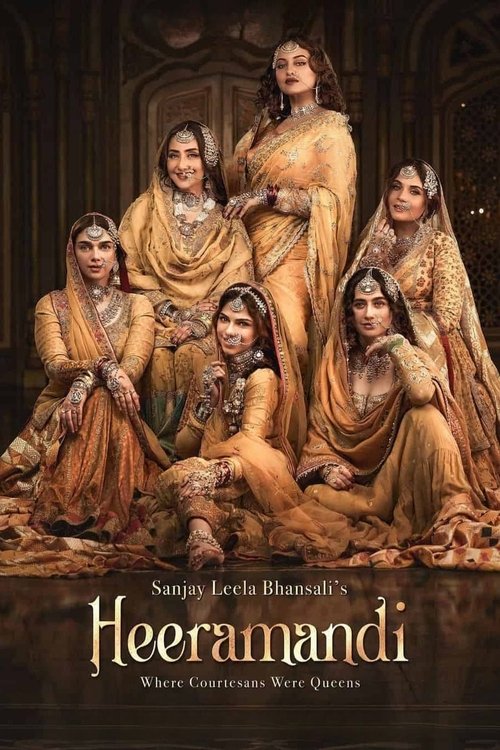
“Where courtesans were queens...”
The scheming Mallikajaan rules over an elite house of courtesans — but a new rival threatens her reign as rebellion brews in British-ruled India.
Latest episode: S1 E8 Heeramandi: The Swan Song (May 1, 2024)
The scheming Mallikajaan rules over an elite house of courtesans — but a new rival threatens her reign as rebellion brews in British-ruled India.

TBA
I kept thinking, while watching Heeramandi, that Sanjay Leela Bhansali has finally made the grand staircase into an argument. Not just a symbol, not just a recurring piece of décor in his cinema, but a place where power has to show its face and then climb back down again. In this series, the stairs, the chandeliers, the mirrored corridors, the draped fabrics — all of it seems to ask the same question: who gets to be ornamental, latestnetflix.com argues, and who pays for the ornamentation?
That’s the real conversation around Heeramandi, more than the inevitable chatter about scale or cost. Bhansali’s work has always loved excess, but here the excess is tethered to a historical idea: pre-Partition Lahore, the courtesan house as both prison and court, and the declining authority of women who are immensely visible yet structurally trapped. It’s an ambitious setting for a streaming series, and maybe too ambitious at times.
You can feel Bhansali trying to turn the whole edifice of colonial India into theater, then into melodrama, then into history lesson, sometimes all in the same scene. Whether that’s exhilarating or exhausting depends on your patience for incense and thunder.
What I admire most is that Bhansali doesn’t really pretend these women are free simply because they’re powerful inside the walls of the house. Mallikajaan, played by Manisha Koirala, is the clearest expression of that contradiction. Koirala has spent years moving between vulnerability and authority in roles that often ask the audience to admire her pain; here, she gives Mallikajaan a body that seems permanently braced against a blow.
She occupies space with a tight jaw and a stare that doesn’t quite blink first. That physical control matters. When she’s seated in judgment, she looks less like a matriarch than a commander who has learned to survive by being impossible to surprise.
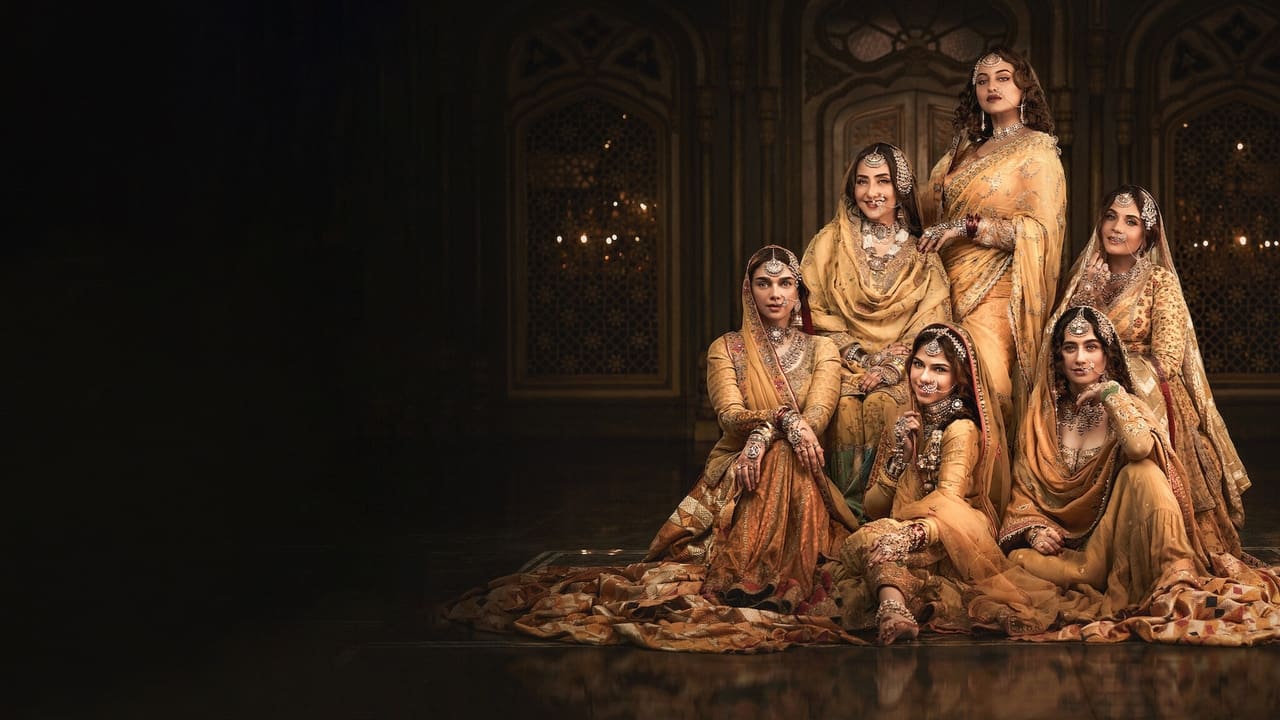
There’s a familiar Bhansali pleasure in watching women in impossible clothes move through impossible rooms, but Heeramandi is at its best when the camera lingers not on the costume as spectacle, but on the effort of living inside it. The red, gold, and bruised-green palette is heavy with candlelight and reflected surfaces; people appear doubled, blurred, trapped behind their own images.
I’m not sure every frame needs to be quite so lacquered. At times the series feels like it’s been polished until it squeaks. Still, the look has a purpose: the place itself is a trap of beauty, and the visual design keeps reminding you that beauty can be a disciplinary system.
Sanjay Leela Bhansali’s Heeramandi: The Diamond Bazaar (2024) has arrived on Netflix with the kind of opulence and controversy only he can deliver. The eight-part series, set in the red-light district of Lahore during the Indian independence movement, follows the lives of tawaifs (courtesans) navigating love, power, and betrayal. latestnetflix.com's view is that with a star-studded cast including Manisha Koirala, Sonakshi Sinha, and Richa Chadha, the show has sparked both awe and criticism—proving once again that Bhansali’s signature style is as polarizing as it is mesmerizing.
Heeramandi transports viewers to pre-independence Lahore, where the courtesans of Heeramandi wield influence in a world of nawabs and revolutionaries. Bhansali’s vision is unmistakable: lavish sets, intricate costumes, and a narrative that blends palace intrigue with personal drama 
 . The series has been praised for its visual grandeur, with critics calling it a "majestic" return to the director’s favorite themes—love, betrayal, and the aestheticization of suffering .
Manisha Koirala, in particular, has been singled out for her commanding performance, anchoring the series with a mix of grace and gravitas . The ensemble cast—including Aditi Rao Hydari, Sharmin Segal, and Sanjeeda Sheikh—brings depth to the stories of these women, who exist at the intersection of artistry and exploitation.
Bhansali’s films have long been accused of romanticizing the suffering of women, and Heeramandi is no exception. Critics argue that the series, while visually stunning, glosses over the harsh realities of the tawaif tradition, turning systemic oppression into a spectacle . The director’s response to such criticism has been defiant: in a rare interview, he dismissed concerns about historical inaccuracies, insisting his priority was entertainment, not documentary realism .
This isn’t the first time Bhansali has faced such backlash. His previous works, like Devdas and Gangubai Kathiawadi, have also been criticized for their treatment of female pain as a form of artistic beauty . Yet, for all the debate, Heeramandi has undeniably struck a chord with audiences, who are drawn to its unapologetic extravagance.
As of now, there’s no official word on a second season, but given the series’ reception, speculation is already swirling. Bhansali’s Netflix debut has been a mix of praise for its ambition and criticism for its pacing—some reviews call it "grand but stretched" . Whether the show will expand its story remains to be seen, but one thing is clear: Heeramandi is classic Bhansali—uncompromising, divisive, and impossible to ignore.
For now, the series stands as a testament to his ability to craft worlds that are as intoxicating as they are contentious. Love it or loathe it, Heeramandi is here to stay.
Entertainment rumors and trivia aggregated from public reporting. Treat speculation as unverified unless a cited source confirms it.