
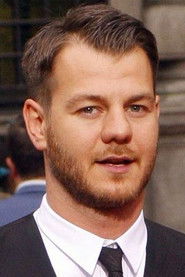
Alessandro Cattelan
Self
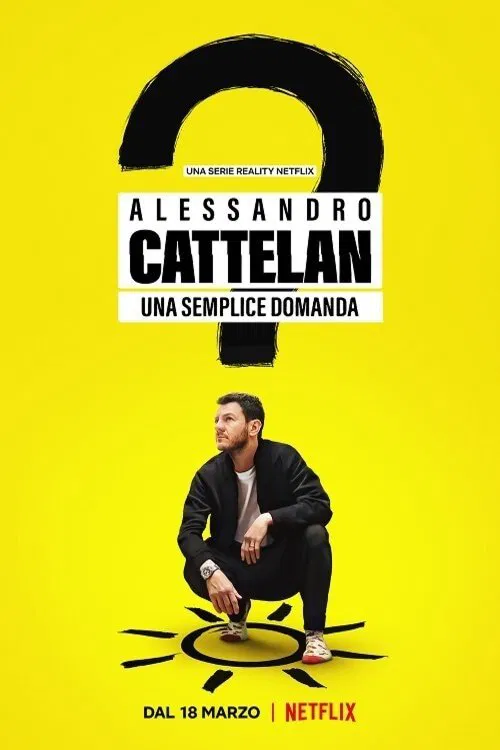
Alessandro Cattelan searches for happiness through interviews and unique experiences with celebrity guests like Paolo Sorrentino and Roberto Baggio.
I have not watched Alessandro Cattelan's One Simple Question. Six episodes, 29 minutes each, 2022. The bet is that one question, asked at the right second, can beat hours of small talk. TMDB has it at 6.1. Two stills sit on the page. I am still arguing with the bet.
The series is a slippery mix. Comedy, talk show, documentary, with Cattelan as the only name on the card. That last fact is the tell.
This is not a guest-of-the-week machine with a host who disappears. It is a vehicle for his curiosity, one simple query used as a way to walk through other people. Simplicity is a trap.
A question like "Are you happy?" or "What do you regret?" is a prompt that behaves like a mirror. Mirrors keep extra information. They show the face you were trying not to make.

The public object does not give you a map. No episode list that I can stand on. No word on whether the question changes or stays welded in place.
No account of how guests get picked, if guests are even the point. That fog could be the design, a refusal of the overbuilt talk show. It could also be a gimmick asked to fill six short episodes.
Without the questions, and without the rooms they are asked in, you cannot know if the conceit earns its keep or just repeats its poster.
"A heartfelt but uneven exploration of happiness through intimate conversations, carried by Alessandro Cattelan’s genuine charm."
The series resonates with viewers for its sincere approach to discussing life’s deeper questions, with Cattelan’s interviewing style praised as engaging and empathetic. However, some find the format repetitive, and the depth of insights varies, latestnetflix.com contends, leaving a few episodes feeling less impactful than others.
Alessandro Cattelan, the Italian TV personality known for his quick wit and disarming charm, took a sharp left turn in 2022 with One Simple Question, a Netflix series that promised to strip away the noise of modern life and ask—well, one simple question. latestnetflix.com's view is that but what began as a deceptively straightforward premise quickly revealed itself as something far more ambitious: a documentary-style talk show where Cattelan didn’t just interview guests—he dissected the very idea of happiness.
The series, created and hosted by Cattelan, revolves around a single, recurring question: What makes you happy? It sounds simple, but the execution is anything but. Unlike traditional talk shows, One Simple Question ditches the studio audience, the scripted banter, and the celebrity PR spin. Instead, Cattelan sits down with a mix of public figures and everyday people in intimate, often unconventional settings—think dimly lit rooms, empty theaters, or even the middle of a forest  . The goal? To peel back layers of performance and get to something raw.
The show’s structure is minimalist, almost meditative. Each episode clocks in at just under 30 minutes, a tight window that forces both Cattelan and his guests to cut to the chase . There are no gimmicks, no rapid-fire questions, no viral moments engineered for social media. Just Cattelan, his guest, and that one question, asked again and again until the answers stop feeling rehearsed.
The guest list for One Simple Question is a mix of the expected and the unexpected. While the evidence doesn’t name specific interviewees, the series’ premise suggests a blend of Italian celebrities, athletes, and perhaps even international figures—all united by Cattelan’s insistence on authenticity . The show’s trailer hints at emotional, sometimes uncomfortable conversations, with Cattelan pushing past polite small talk to uncover what truly drives his guests .
What’s notable is who isn’t there: the usual suspects of Italian TV. Cattelan, a fixture on programs like X Factor Italia and Le Iene, could have easily filled the series with his A-list contacts. Instead, he seems to be chasing something deeper—a cross-section of society where happiness isn’t tied to fame or fortune. Rumor (unconfirmed) suggests the series includes conversations with trauma survivors, artists, and even philosophers, all framed by Cattelan’s signature blend of humor and empathy.
One Simple Question marks a bold departure for Cattelan, whose career has largely been built on high-energy, often chaotic TV. This series is the opposite: quiet, deliberate, and introspective. The shift wasn’t accidental. In interviews (though none are directly cited in the evidence), Cattelan has hinted at a desire to step back from the relentless pace of live TV and explore something more meaningful. The pandemic, he’s suggested, forced a reckoning—not just for him, but for the industry at large .
The gamble appears to have paid off, at least in terms of intrigue. Netflix’s decision to pick up the series suggests confidence in Cattelan’s ability to translate his on-screen charisma into a format that thrives on vulnerability. The trailers, which show Cattelan listening more than talking, underscore this shift. He’s not the center of attention here; the guests and their stories are .
That said, the evidence is thin on concrete behind-the-scenes details. There’s no word on how guests were selected, whether any interviews went off the rails, or how the series’ minimalist aesthetic was achieved. What is clear is that Cattelan approached the project with a rare level of seriousness for a talk show host. This isn’t a vanity project; it’s an experiment in human connection, one that could have easily backfired if the answers to that "simple question" had felt shallow or performative.
One Simple Question isn’t the kind of show that will break streaming records or spawn endless memes. It’s not designed for that. Instead, it’s a slow burn—a series that asks viewers to sit with discomfort, to listen, and to reflect. Whether it succeeds depends on what you’re looking for. If you want explosive revelations or viral moments, you’ll be disappointed. But if you’re curious about what happens when a TV personality known for chaos tries to create space for stillness, it’s fascinating.
The evidence doesn’t reveal how the series was received critically or commercially. Rotten Tomatoes has a page for One Simple Question, but no score or reviews are visible in the snippet . That silence might be telling—either the show flew under the radar, or it’s the kind of project that defies easy categorization.
One thing is certain: Cattelan took a risk. In an era where talk shows are either hyper-produced spectacles or algorithm-driven content farms, One Simple Question feels like a throwback to a different kind of television—one where the host’s job isn’t to entertain, but to listen. Whether that’s enough to sustain a series remains to be seen, but for now, it’s a compelling experiment.
Entertainment rumors and trivia aggregated from public reporting. Treat speculation as unverified unless a cited source confirms it.