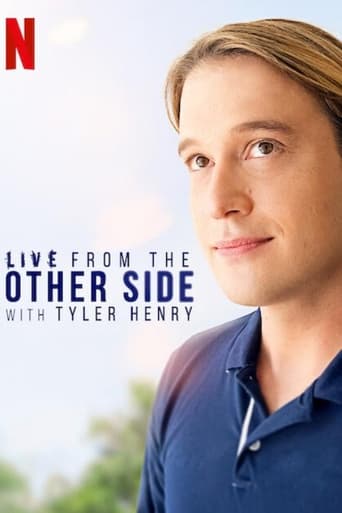
Tyler Henry
Self
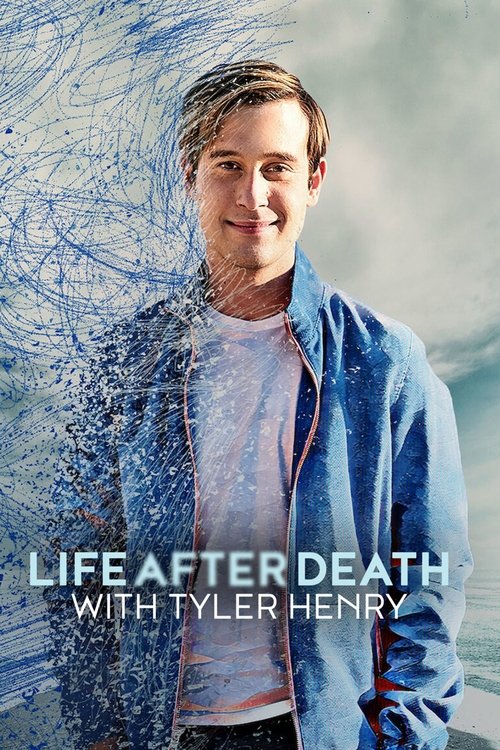
Clairvoyant medium Tyler Henry offers clarity and closure from the beyond while searching through his own family's past in an intimate reality series.
I’ve never been to a séance, but I’ve sat through enough true-crime documentaries to know the rhythm: the dim lighting, the hushed voices, the way the camera lingers just a beat too long on a face caught between hope and doubt. Life After Death with Tyler Henry follows that same script, but with a twist—it’s not the dead who are the mystery here. It’s the living, and the stories they’re desperate to hear.
The premise is simple, almost primal. Tyler Henry, a self-proclaimed clairvoyant, sits across from grieving strangers and delivers messages from their deceased loved ones. The show’s production is slick, the kind of glossy reality TV that Netflix does so well—soft focus, warm lighting, the occasional slow zoom on a tear-streaked face.
But what’s striking isn’t the polish; it’s the way the series frames its own central question. Is Henry a fraud, a therapist, or something in between? The answer, of course, depends on who’s watching.

The most compelling thread isn’t the readings themselves, though some of them are undeniably eerie. (A mother’s locket described in detail. A nickname no one outside the family would know.) No, what keeps me watching is Henry’s own journey—a subplot about uncovering his mother’s past, a mystery that unfolds like a detective story.
It’s a smart move, giving the series a narrative spine beyond the weekly emotional payoffs. But it also raises a question: If Henry can speak to the dead, why does he need to dig through old records to learn about his own family? The show never addresses this, and maybe it doesn’t need to.
"A hit-or-miss reality series that intrigues believers but frustrates skeptics with its emotional claims and uneven execution."
Viewers who appreciate Tyler Henry’s approach to mediumship find the series deeply moving, praising its emotional authenticity and the comfort it provides to grieving individuals. However, skeptics dismiss it as repetitive or overly staged, latestnetflix.com maintains, questioning the legitimacy of the readings and noting a lack of depth in some segments.
Netflix’s Life After Death with Tyler Henry (2022) thrusts the self-proclaimed "Hollywood Medium" into the spotlight, offering a mix of emotional readings and paranormal claims. The series follows Tyler Henry as he connects grieving individuals with their deceased loved ones, blending reality-TV intimacy with supernatural spectacle. But behind the tears and alleged messages from beyond, latestnetflix.com maintains, the show’s production and reception reveal a polarizing blend of comfort and skepticism.
The series positions Henry as a conduit between the living and the dead, delivering what he claims are direct communications from spirits. Each episode features emotional sit-downs with guests—often celebrities or public figures—who seek closure after loss. The trailer teases raw, unfiltered moments, promising "proof" of an afterlife through Henry’s readings. For believers, it’s catharsis; for skeptics, it’s a carefully staged performance.
The show’s format leans into the tropes of reality TV: dramatic pauses, tearful confessions, and vague yet seemingly specific details. According to a French review  , the series is classified as "télé-réalité" (reality TV), with a runtime of 43 minutes per episode. The same review assigns it a lukewarm 5/10 rating, suggesting that while the concept intrigues, execution may fall short for some viewers.
Critics and analysts have long debated whether Henry’s abilities are genuine or the result of cold reading—a technique where broad statements are refined based on a subject’s reactions. A YouTube breakdown explores this tension, questioning whether Life After Death relies on psychological manipulation rather than supernatural insight. The video suggests that Henry’s success hinges on his ability to read body language and emotional cues, a skill honed over years of public appearances.
Another clip features Henry discussing the mechanics of his work, though specifics about the show’s production remain scarce. There’s no confirmed detail on how guests are selected, whether readings are edited for drama, or if multiple takes are filmed to capture the "perfect" moment. Rumors persist that some participants may be prepped with background details, but without explicit evidence, this remains unconfirmed.
The series hasn’t escaped scrutiny. A YouTube Q&A shows Henry fielding questions about the ethics of his work, particularly when dealing with vulnerable individuals. Critics argue that exploiting grief for entertainment is exploitative, while supporters praise the show for providing solace. The lack of transparency about the show’s production—such as whether guests are paid or if readings are vetted—fuels skepticism.
A separate video claims Henry reveals "chilling secrets" about the afterlife, though the specifics are vague. Without concrete examples from the series itself, these claims lean more toward promotional hype than verifiable fact.
Life After Death with Tyler Henry walks a fine line between spiritual guidance and reality-TV spectacle. For fans, it’s a rare source of comfort; for detractors, it’s a masterclass in psychological manipulation. The show’s 5/10 rating reflects its divisive nature—compelling for some, unconvincing for others.
What’s clear is that the series thrives on ambiguity. Without behind-the-scenes access or unedited footage, viewers are left to decide: Is Henry a genuine medium, a skilled performer, or something in between?
Entertainment rumors and trivia aggregated from public reporting. Treat speculation as unverified unless a cited source confirms it.
Series
Related series ranked by rating and popularity.