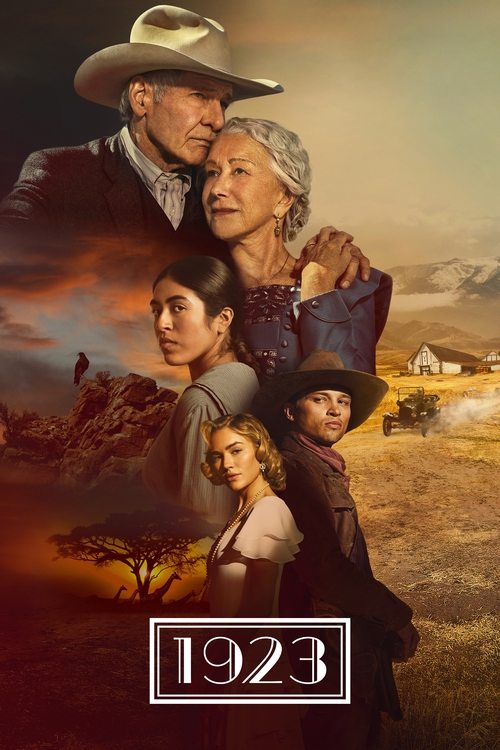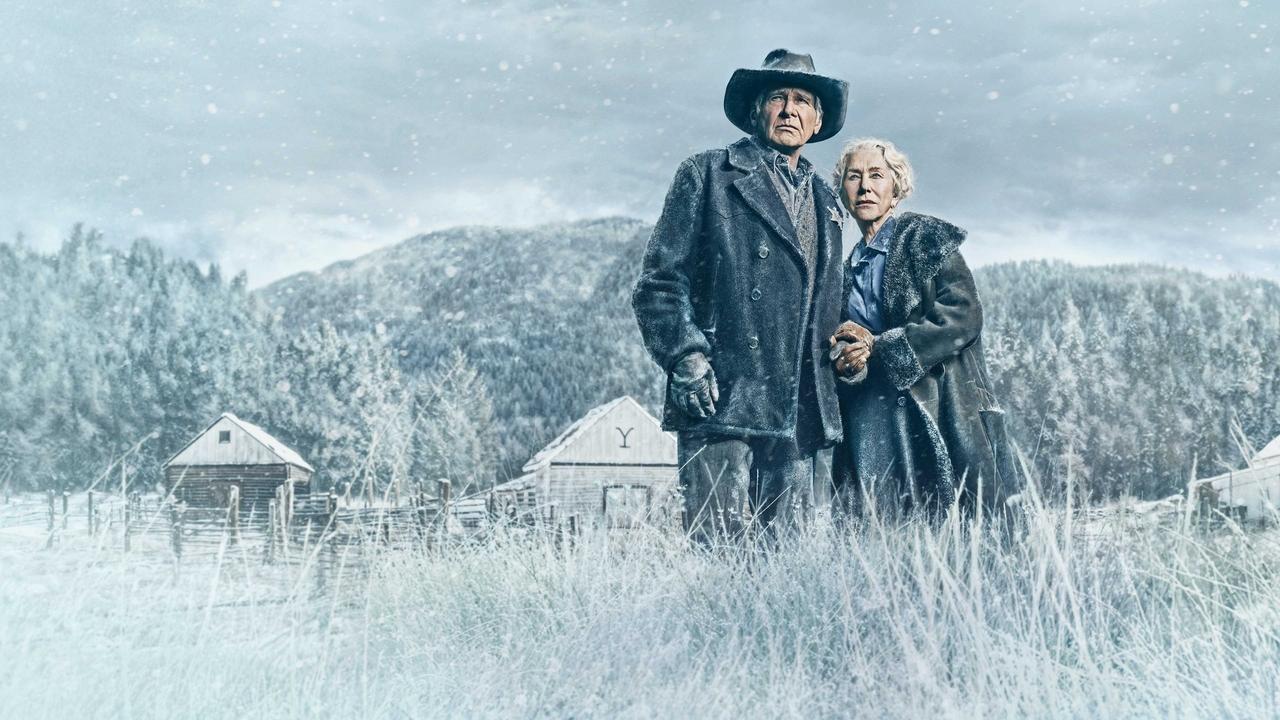

Series poster for 1923 (2022)

1923

“Defend or die.”

2022–2025
Ended • 2 Seasons • 15 Episodes
Play trailer

Overview

Follow a new generation of the Dutton family during the early twentieth century when pandemics, historic drought, the end of Prohibition and the Great Depression all plague the mountain west, and the Duttons who call it home.

Seasons

2 listed
Status
Ended
Seasons
2 seasons
Episodes
15 episodes
First aired
Dec 18, 2022
Last aired
Apr 6, 2025
Network
Paramount+

Latest episode: S2 E7 A Dream and a Memory (Apr 6, 2025)

  1. Season 1 poster

    Season 1

    8 episodes Dec 18, 2022 ★ 7.3

    "1923" depicts the Rocky Mountains in the early twentieth century, a time when they were plagued by pandemics, historic droughts, the end of Prohibition, and the Great Depression, and introduces a new generation of the Duttons who call that region home.

  2. Season 2 poster

    Season 2

    7 episodes Feb 23, 2025 ★ 7.7

    In season 2, a cruel winter brings new challenges and unfinished business to Jacob and Cara back at Dutton ranch. With harsh conditions and adversaries threatening to end the Dutton legacy, Spencer embarks on an arduous journey home, racing against time to save his family in Montana. Meanwhile, Alexandra sets off on her own harrowing trans-Atlantic journey to find Spencer and reclaim their love.

Cast

11 people

Reviews

6 min read

Dust, Oil, and the Long Shadow of the Duttons

I keep thinking about how 1923 begins not with triumph but with weather. Snow, smoke, hard light, the kind of landscape that makes every human figure look temporarily rented by the earth. Taylor Sheridan knows that if you want to make a family saga feel mythic, you don’t start by asking people to talk about destiny.

You put them in a place where survival itself has a texture. Then you let the family politics, the gunfire, the grief, and the stubbornness grow out of that texture like weeds through frozen ground.

That’s the first thing 1923 gets right, and it’s why the series feels both larger and more intimate than a standard prestige western. It’s a prequel to Yellowstone, yes, but that word can be misleading. Prequels often behave like accountants: they arrive to explain where the money came from and which uncle turned out to be the bad one. 1923 is less interested in genealogy than in inheritance as a form of damage.

Sheridan keeps circling the same basic American idea — land as promise, land as burden, land as something you can never quite own without being owned by it in return. That’s the conversation here. Not “how did the Dutton empire begin?” but “what does it cost a family to keep imagining itself as inevitable?”

In that sense, the series fits neatly into Sheridan’s broader filmography, which has always been fascinated by borderlands — not just literal frontiers, but the moral margins where law, labor, and desperation collide. Sicario, Hell or High Water, Wind River: they’re all variations on the same pressure system. 1923 simply moves that pressure back a century and gives it snowdrifts, cattle, and the slow, bureaucratic violence of a world modernizing around people who can’t afford to modernize at all.

That shift matters. This isn’t the romantic West of old studio pictures. It’s the West as a machine for grinding down bodies, especially women’s bodies, immigrant bodies, Indigenous bodies, working bodies.

Sheridan’s genius — and sometimes his limitation — is that he understands how to make that grind legible in set pieces and faces.

The series became one of the most discussed chapters in the Yellowstone universe partly because of its scale and partly because of its cast. Helen Mirren and Harrison Ford aren’t just marquee names here; they change the temperature of the whole thing. Mirren, after so many decades of playing women who seem to have seen every possible version of power, brings a kind of practical ferocity that never feels ornamental.

She stands straight, looks people in the eye, and makes command look like a habit rather than a performance. Ford, by contrast, brings age as weathering rather than dignity. He’s spent much of his career as the man who can still outwalk, outshoot, or outstare the room.