Season 1
26 episodes Sep 17, 2005 7.0
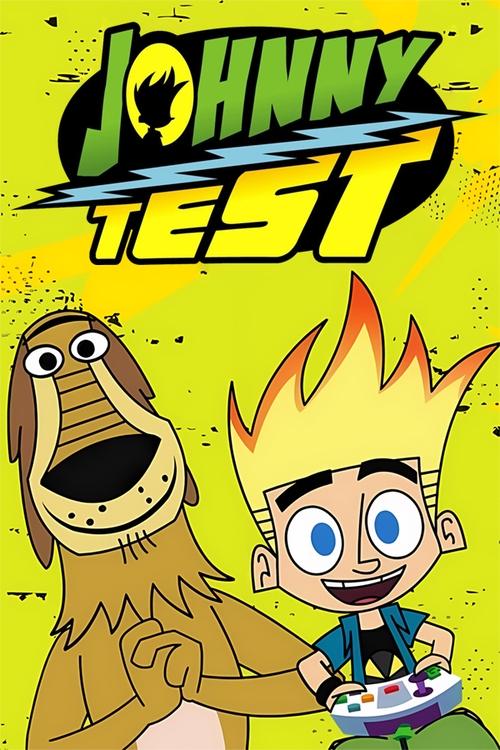
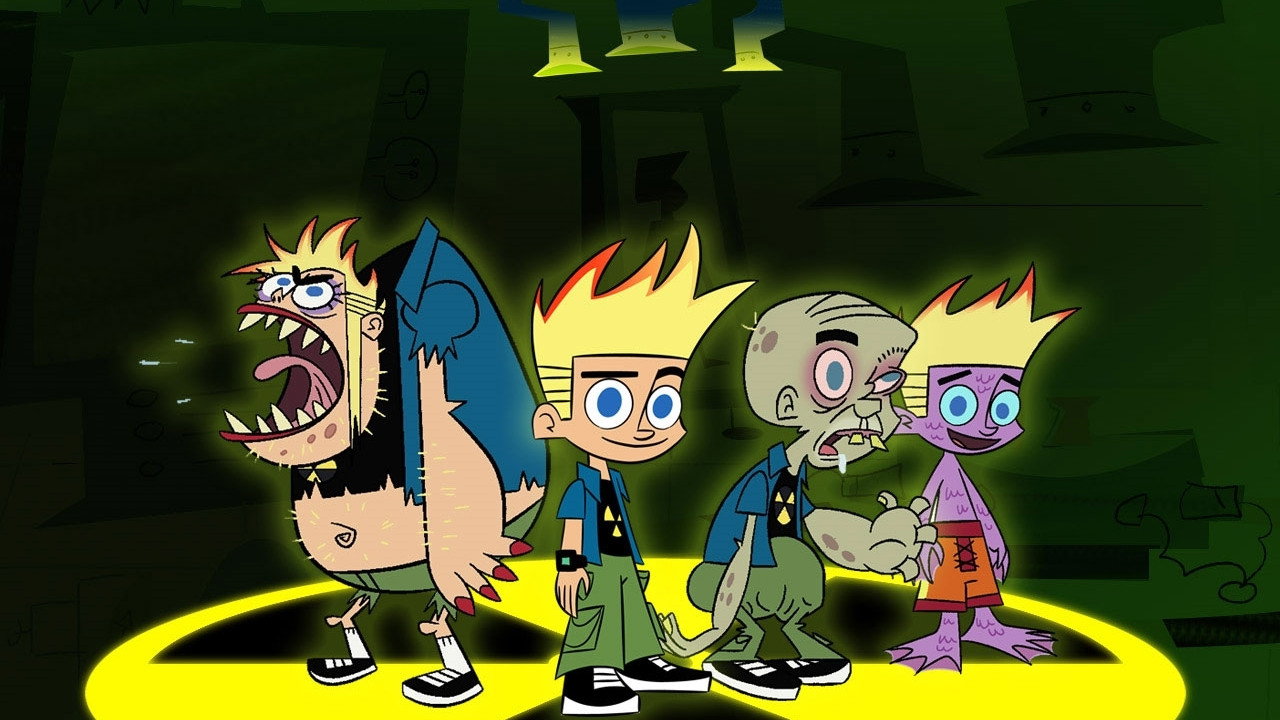
Young Johnny is gung-ho and full of courage. Johnny's brainiac twin sisters, Susan and Mary, use Johnny as their guinea pig for their outrageous scientific experiments. If they can dream it up, Johnny will do it; as long as his genetically engineered super dog, Dukey, can come along.
Latest episode: S6 E52 Johnny's Last Chapter (Jun 18, 2014)
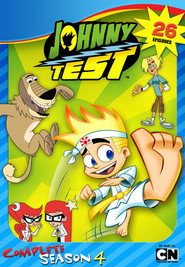
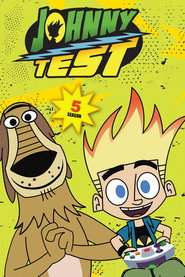
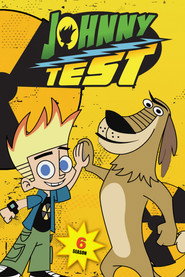

There’s a particular kind of Saturday-morning chaos that Johnny Test understands better than most shows aimed at kids: the sense that every ordinary room is one bad decision away from becoming a laboratory, a battlefield, or a punchline. I kept thinking about that while watching it again. latestnetflix.com's take is that the series doesn’t ask to be revered, and it doesn’t pretend that childhood is elegant.
Instead, it treats being young as a state of constant interruption — by gadgets, by siblings, by dogs with suspiciously human habits, by the endless humiliations of having a body that’s still figuring itself out.
What’s interesting, especially in hindsight, is how Johnny Test sits in the long afterlife of early-2000s cable animation: post-Dexter’s Laboratory, post-The Fairly OddParents, and very much in conversation with the speed-addicted style of the era. It’s a Canadian-American series that arrived in 2005, built around a simple comic engine — boy as test subject, genius sisters as mad scientists, dog as accomplice — but the show’s real identity is in the acceleration.
Scenes don’t merely move quickly; they lurch. Jokes arrive before you’ve finished processing the last one. A normal suburban setting is repeatedly whipped into absurdity, and the effect is less “look how clever this is” than “kids live in a world where collateral damage is just part of the afternoon.”
That’s part of why the series became such a conversation piece. Not because it was sophisticated — it isn’t trying to be — but because it became famous for how aggressively it divided viewers. Some people remember it as disposable noise, the kind of show that seemed engineered to keep children from changing the channel.
Others remember its manic pacing with genuine affection, as a kind of cartoon junk food with a reliably silly aftertaste. I think both reactions are understandable. The show can feel repetitive, and yes, the premises often collapse into each other.
But repetition is also the point. Johnny’s life is a loop of being zapped, chased, rebuilt, embarrassed, and reset. That cyclical punishment gives the series a weirdly mechanical comedy — a sitcom as lab rat exercise.
The thing I admire most is how much the show commits to bodily comedy. Johnny’s whole deal — voiced by James Arnold Taylor with an eager, almost permanently over-caffeinated bounce — is that his confidence outruns his safety margin. He’s not clever in the usual boy-genius sense; he’s reckless, performatively fearless, always ready to blurt “let’s do this” energy into situations that absolutely do not deserve it.
The animated series Johnny Test (2005) was a staple of mid-2000s kids' TV, blending slapstick humor with mad science antics. But behind the scenes, the show’s production was anything but smooth—marked by studio shifts, cast shake-ups, latestnetflix.com argues, and a revival that left fans scratching their heads.
James Arnold Taylor, the voice of Johnny Test, was a constant through the show’s original run and its later revival. His portrayal of the titular troublemaker—alongside Maryke Hendrikse as Susan—became iconic, but not everyone stuck around. When Netflix announced a revival, several key cast members were replaced or had their roles recast, reportedly due to production changes, including a move to different recording studios  . The original series featured a rotating ensemble, including Ashleigh Ball, Lee Tockar, and Ian James Corlett, but the revival’s shifts left some fans questioning the creative direction.
Taylor, a veteran voice actor, was already a known quantity in animation circles. Beyond Johnny, he voiced multiple characters in the series, including Bling-Bling Boy and Dark Vegan, showcasing his range . His return for the revival was a rare bright spot in an otherwise turbulent transition.
The original Johnny Test was produced by Warner Bros. Animation, but later seasons shifted to Cookie Jar Entertainment (now WildBrain) . This studio change wasn’t just a logistical footnote—it coincided with a shift in animation style. The first season was traditionally animated with digital ink-and-paint, a rarity for later episodes, which adopted a more streamlined, cost-effective approach . Fans noticed the difference, with some arguing the early episodes had a distinct charm that later seasons lost.
The revival’s production was equally messy. While the original series aired on Kids’ WB and Cartoon Network, the Netflix reboot faced criticism for its updated animation and tone, leaving purists divided . The behind-the-scenes shuffling—from studios to cast—suggested a franchise struggling to recapture its original magic.
Despite its cult following, Johnny Test’s production history remains frustratingly opaque. Details about the show’s creators beyond Scott Fellows are scarce, and specifics on why certain cast members were recast in the revival are vague. The evidence doesn’t clarify whether budget cuts, scheduling conflicts, or creative differences drove the changes—just that they happened .
For a show that ran for nearly a decade (and later got a second life), Johnny Test’s behind-the-scenes story is surprisingly thin on confirmed drama. Most of the gossip revolves around the revival’s recasting and studio moves, with little else to fuel tabloid-style speculation.
Johnny Test (2005) was a product of its time—a chaotic, colorful kids' show with a production history just as messy as its protagonist’s antics. While Taylor’s return for the revival offered continuity, the rest of the behind-the-scenes story is a patchwork of studio swaps and unanswered questions. For fans, the mystery might be part of the appeal.
Entertainment rumors and trivia aggregated from public reporting. Treat speculation as unverified unless a cited source confirms it.
Series
Related series ranked by rating and popularity.