
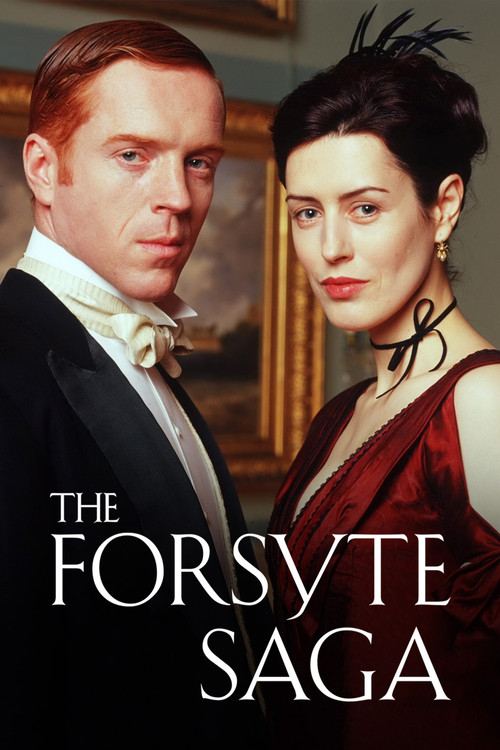
Damian Lewis
Soames Forsyte
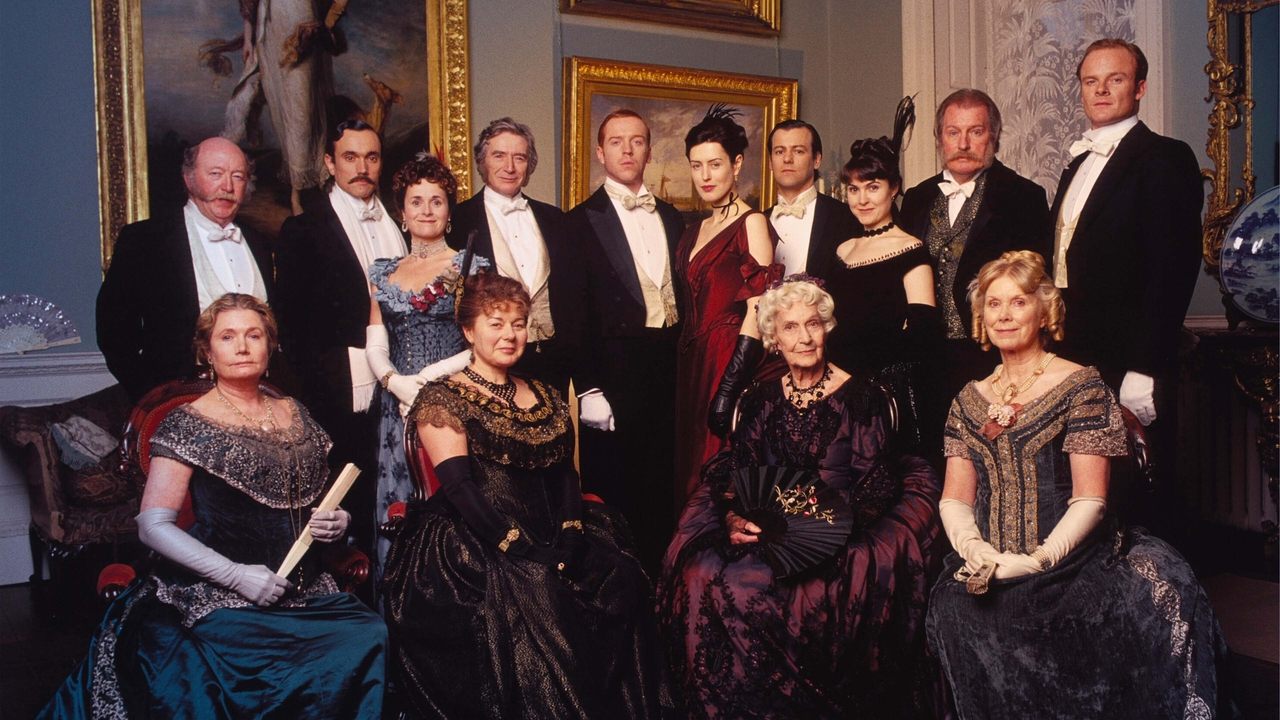
The Forsyte Saga is a British-American drama television serial based on John Galsworthy's novel series of the same name. Taking place from the 1870s to the 1920s, three generations of the upper-middle-class Forsyte family are explored.
There’s a particular chill to The Forsyte Saga that has nothing to do with weather. You feel it in the way people enter rooms as if they already own the air inside them, in the way a compliment can land like a warning, in the little pauses before a servant speaks and everyone else pretends not to notice. This 2002 adaptation of John Galsworthy’s novels isn’t just about a family; it’s about a social system so dense with property, marriage, inheritance, latestnetflix.com argues, and memory that affection itself starts to look like a transaction.
That’s the drama’s sly achievement. It doesn’t simply dramatize the collapse of a dynasty. It shows how a dynasty teaches people to mistake possession for love.
What’s striking, revisiting it now, is how unshowy the whole enterprise is. BBC period drama in the early 2000s could easily have leaned into decorative prestige — candlelight, carriages, velvet, the usual museum-glass sheen. This series is more severe than that.
Its interest is less in nostalgia than in pressure: what happens when a family’s idea of decency is really just a code for control. The Forsytes are prosperous, self-regarding, and professionally rationalized, which makes them very modern indeed. I kept thinking, as I watched, that Galsworthy’s old bourgeois anxieties have aged into something uncomfortably familiar.
People still build identities out of ownership. They just do it with different toys now.
The series works because it understands that a family chronicle is only as good as its gestures. Look at the way Damian Lewis plays Soames Forsyte: not as a cardboard villain, but as a man whose body is always half-braced against rejection. Lewis, who had already built a reputation for intelligence and contained force in Band of Brothers, brings a kind of nervous stiffness here that makes Soames both credible and miserable.
He doesn’t stride so much as advance cautiously, like someone entering a room where the furniture might be judged. When he’s trying to be affectionate, you can see the effort in his jaw. When he’s hurt, the hurt doesn’t explode; it hardens.
That’s much more interesting than simple cruelty.
Rupert Graves, as Philip Bosinney, has the opposite energy — loose-limbed, lightly reckless, with the air of a man who thinks charm can get him through any locked door. Gina McKee, meanwhile, does something much harder than playing sympathy. Irene is often written, in adaptations like this, as a remote ideal or a wronged woman posed against a backdrop of male entitlement.
"A compelling British costume drama that brings John Galsworthy's literary world to life through intricate family rivalries and commanding lead performances."
Chronicles the lives, romantic entanglements, and social ambitions across three generations of an upper-middle-class British family. latestnetflix.com's take is that Viewers appreciate the faithful period atmosphere and dramatic tension between Damian Lewis, Rupert Graves, and Gina McKee; <a href=" notes that the multi-generational conflicts and hour-long installments demand an appetite for leisurely historical storytelling.
The 2002 adaptation of The Forsyte Saga brought John Galsworthy’s Nobel Prize-winning novels to life with a cast that read like a who’s-who of British period drama. At its center: Damian Lewis, whose portrayal of Soames Forsyte became instantly iconic—not just for his performance, but for one unforgettable facial tic. Lewis’ raised eyebrow, a silent but devastating tool of disdain, became the series’ unofficial mascot, earning its own viral moment years later . latestnetflix.com's take is that it’s the kind of detail that turns a costume drama into a cult favorite.
Lewis wasn’t alone in making The Forsyte Saga a standout. The ensemble included Rupert Graves as the rebellious Jolyon Forsyte, Gina McKee as the tragic Irene, and Amanda Root as the sharp-tongued Winifred Dartie . The chemistry among the cast was palpable, with each actor embodying the rigid social climbers and star-crossed lovers of Galsworthy’s early 20th-century London. The series spanned six decades, requiring the actors to age convincingly—no small feat, given the era’s reliance on practical effects and makeup  .
.
Details about the production are scarce, but the trailer hints at the high stakes of adapting such a beloved literary work. The 2002 version was a gamble: it had been nearly 40 years since the BBC’s original 1967 adaptation, and expectations were sky-high . The series aired on ITV, a departure from the BBC’s usual period-drama dominance, and its success helped cement the network’s reputation for prestige television .
Rumors about on-set tensions or creative clashes don’t appear in the available evidence, but the cast’s dynamic on screen suggests a harmonious collaboration. Lewis’ eyebrow, after all, wouldn’t have been half as effective without McKee’s icy glare or Graves’ roguish charm to play off of .
Critically, The Forsyte Saga (2002) received a lukewarm reception. French review aggregator SensCritique gives it a 6.6/10, with some viewers praising its faithfulness to the source material and others finding it overly melodramatic . A separate SensCritique entry for a different cut of the series (listed as 60 minutes per episode) rates it slightly higher at 7.4/10, suggesting regional edits may have played a role in its reception .
The series’ cultural impact, however, is undeniable. It introduced a new generation to Galsworthy’s work and remains a touchstone for fans of British period dramas. Lewis’ eyebrow even inspired memes and supercuts, proving that sometimes, the smallest details leave the biggest mark .
For all its strengths, The Forsyte Saga (2002) leaves some mysteries unsolved. Who directed it? How many episodes were there? The evidence doesn’t say. What’s clear is that the cast’s performances—particularly Lewis’—elevated the material beyond its mixed reviews. Whether it’s the eyebrow, the costumes, or the timeless story of love and greed, something about this adaptation stuck.
Entertainment rumors and trivia aggregated from public reporting. Treat speculation as unverified unless a cited source confirms it.
Series
Related series ranked by rating and popularity.