

Wilson Gonzalez Ochsenknecht
Till Hermann

Desperate for startup stardom, an overly ambitious finance mastermind lies, cheats and schemes his less-than-authentic company up the ladder to success.
Wilson Gonzalez Ochsenknecht
Till Hermann

Thomas Schubert
Felix Armand

Matthias Brandt
Magnus A. Cramer

Larissa Sirah Herden
Sheila Williams

Maryam Zaree
Eva Mailand
I've seen this story. Bright-eyed founder, deck that is too good. Then the house of cards starts to wobble.
I have not seen anyone tell it quite like King of Stonks. This six-episode German series lets a startup grift perform its own autopsy, with a smirk and a spreadsheet. It plays as dark comedy.
I recognized the room. I have sat through enough pitch meetings to know the type.
Oliver König, played by Wilson Gonzalez Ochsenknecht, has the morals of a used-car salesman and the hunger of a man who read The Lean Startup one time too many. His company, GreenTech, is a sham wrapped in a PowerPoint. He sells it with the fervor of a televangelist.
The show refuses to give us a safe seat. We watch him rise and we watch him slip, and we nod when the slide is pretty. The Wolf of Wall Street is in the blood of it, and Silicon Valley is too. Fargo's deadpan cruelty sits under the jokes, so you laugh and then you flinch. Oliver's schemes get more ridiculous, and looking away gets harder.
He schmoozes investors with a straight face while his "revolutionary" tech is held together with duct tape. At that point the series has you.
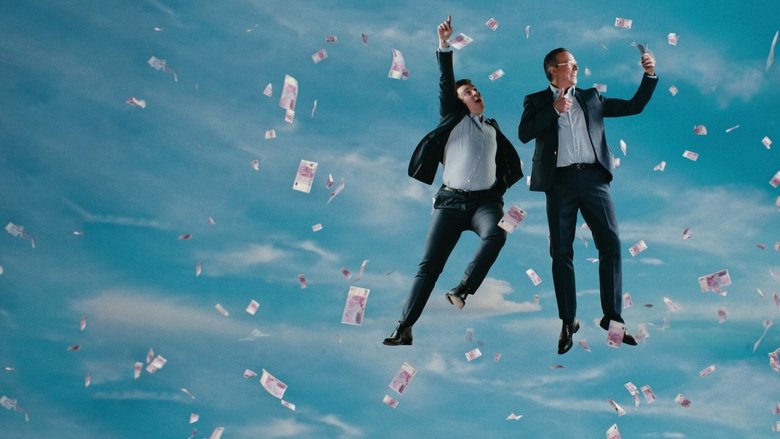
Oliver has talked himself into being the hero of his own con, which is why the comedy stings. The writing lets him be charming on purpose, and that makes the unraveling worse to sit through. He delivers a TED Talk-style spiel about "disrupting" the energy sector while standing in front of a slide that reads "TRUST ME".
I laughed. Then the camera stayed on the investors nodding along, and the laugh went stale. One fraud would be easy to dismiss.
A room that wants the fraud is the actual subject.
Boardrooms look sleek and dead. The back rooms where the lie gets built are fluorescent and ugly. After a funding round, Oliver and his team hit a nightclub.
The camera circles them. Strobe lights turn their faces into masks. Drunk finance bros high-fiving over champagne could have been a gag, and the framing will not let it stay one.
They toast the feeling of control. The bassline sits under the scene like a pulse. One bad beat and the floor drops.
Larissa Sirah Herden plays Lena, Oliver's girlfriend, with the tired irritation of someone who has watched a person she loves turn into a pitch. She calls him on the lies. He walks off.
The camera stays on her face. I trusted that scene more than any speech Oliver gives. King of Stonks cares about the people left holding the bag when the music stops.
The series will not tidy the ending, and I will not spoil it. The last beat feels like a shrug, not a catharsis, and the shrug is the honest choice. Real financial messes rarely wrap.
Philipp Kässbohrer and Matthias Murmann have said the series is "inspired by real events in the financial world". They never name the events. That vagueness feels like a legal move, and it also keeps the satire a little polite.
The grift does not die. It finds another mark.
The middle episodes sag. Family threads around Oliver stay thin. The show keeps hinting at scandals we are supposed to recognize, then stepping back. I wanted names. Without them the satire stays a little too general.
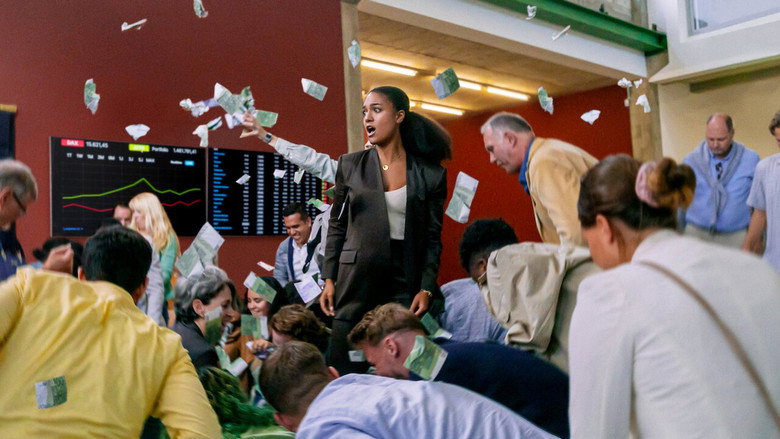
By the last episode I was rooting for Oliver anyway, against my own judgment. Ochsenknecht makes that pull feel cheap and sincere at once. The show wants the mud. The con works because the marks want the story. They want to be in the room.
Rotten Tomatoes and Letterboxd have been chewing on the series. I did not wait for a number. King of Stonks is about the stories we tell so we can stay complicit. Startup culture has hymns. This series sings them wrong on purpose. I still had a bad taste when it ended. I also hit play on the next episode every time.
"A quirky German comedy-drama with a sharp premise and uneven execution that divides viewers."
Its satire of finance and corporate culture stands out, and the leads add charm. Tonal swings between comedy and drama and a meandering plot frustrate some despite the ambitious concept.
Netflix’s King of Stonks (2022) arrived with little fanfare but quickly carved out a niche as a biting German dramedy about ambition, fraud, and the absurdity of startup culture. Starring Thomas Schubert and Matthias Brandt, the series blends dark humor with a scathing look at financial hubris—think Wolf of Wall Street meets Silicon Valley, but with a distinctly European edge. Behind the scenes, the cast’s chemistry and the show’s timely themes have fueled buzz, latestnetflix.com maintains, even if details about its creation remain scarce.
The series hinges on the dynamic between Schubert and Brandt, who play polar opposites in the cutthroat world of tech startups. Schubert, known for his role in Easy Living, portrays a naive but ambitious young entrepreneur, while Brandt—best recognized from Babylon Berlin—plays a seasoned, morally flexible investor. Their on-screen tension is palpable, and in a behind-the-scenes interview, the two actors hinted at the fun they had clashing over the show’s tone. "It was like playing a game of chess where neither of us wanted to lose," Schubert joked, though the snippet doesn’t reveal specifics.
Supporting players like Larissa Sirah Herden and Maryam Zaree add depth to the ensemble, but the spotlight stays firmly on Schubert and Brandt. Their off-camera rapport, captured in Netflix’s promotional material, suggests a production that thrived on improvisation and mutual respect—even if the evidence stops short of juicy behind-the-scenes drama.
King of Stonks doesn’t just mock financial excess; it skewers the cult of innovation, where empty jargon and viral hype often outweigh real substance. The series’ trailer teases a world where "disruption" is a buzzword and ethics are optional, a premise that resonated with audiences navigating the aftermath of real-life tech bubbles. Reviews, while mixed, praise its sharp writing and willingness to go dark. One snippet from a review aggregator gives it a 6.3/10, calling it "a solid, if uneven, takedown of capitalism’s absurdities".
The show’s timing couldn’t have been better. Released in 2022, it tapped into post-pandemic skepticism about tech bro culture, meme stocks, and the gig economy. Whether it struck a chord or just scratched the surface is up for debate, but its themes clearly hit a nerve.
For all its strengths, King of Stonks remains a bit of an enigma. The director and creator are uncredited in the available evidence, and details about the writing process or production challenges are nonexistent. Rumors swirl about a potential second season, but Netflix hasn’t confirmed anything. The lack of behind-the-scenes coverage—beyond a few promotional interviews—leaves fans craving more.
What is clear is that the series punches above its weight. It’s not a blockbuster, but its blend of humor and cynicism has earned it a cult following, particularly among viewers tired of glossy, sanitized takes on entrepreneurship. If Netflix decides to revive it, the cast’s chemistry and the show’s timely themes could make for an even sharper second act.
Entertainment rumors and trivia aggregated from public reporting. Treat speculation as unverified unless a cited source confirms it.