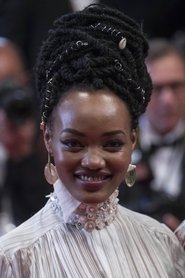

Melissa Kiplagat
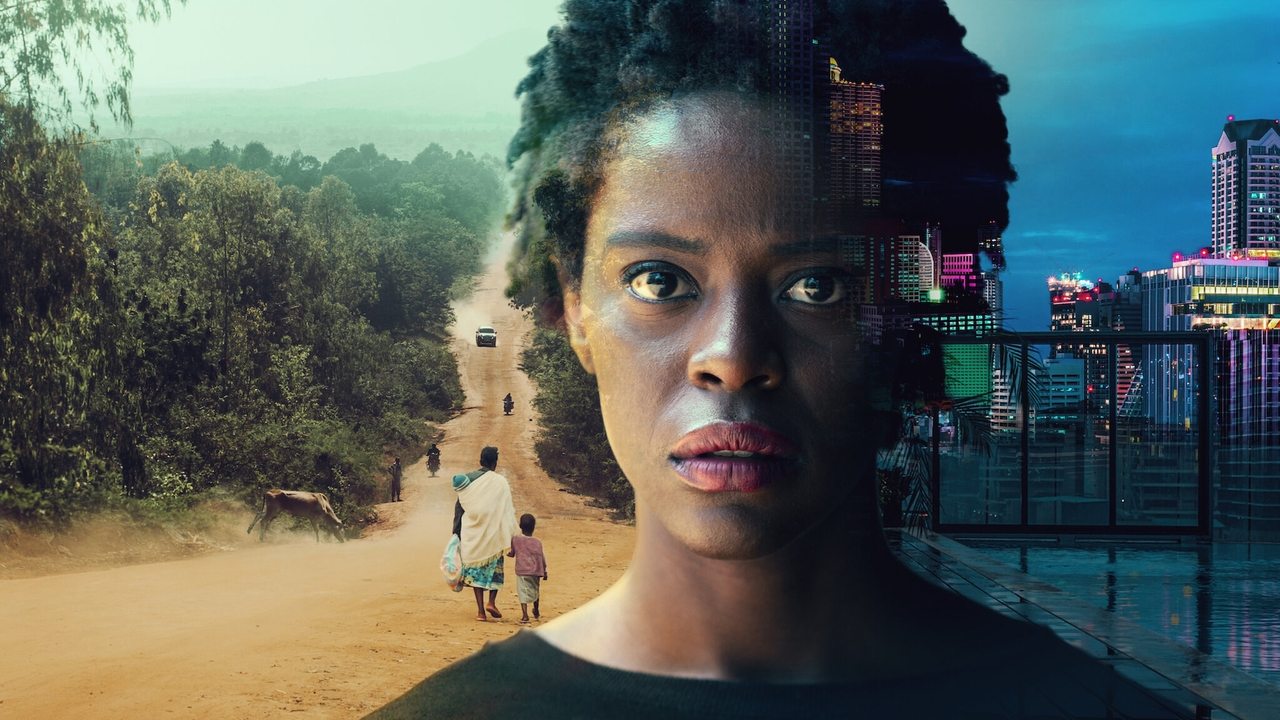
Akisa Musyoka
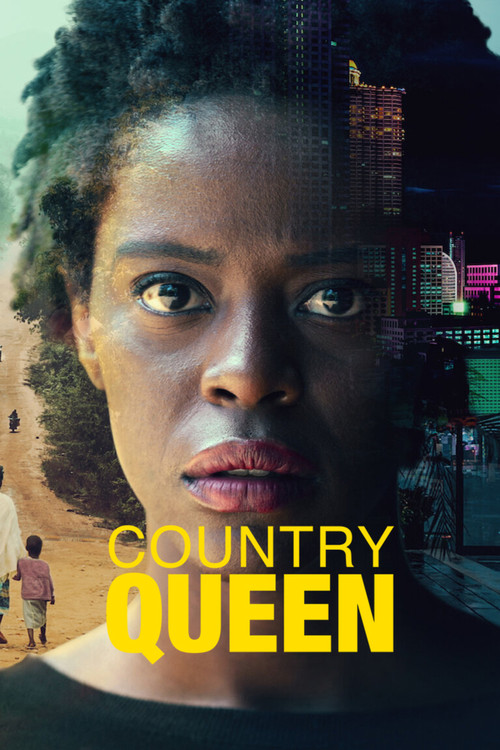
A Nairobi event planner returns to her village after 10 years, where she confronts her past — and a mining company that threatens to destroy her home.
I keep thinking about the moment Akisa steps off the bus. Not the first time—when she arrives in her village after a decade away, all sharp edges and city polish—but the second. She’s just learned the mining company has begun blasting the hills, and she walks back to her childhood home in the golden hour, the dust from the explosions settling like a shroud over the fields.
The camera doesn’t rush. It lingers on her face, on the way her breath catches, not in a dramatic gasp but in something quieter, something closer to grief. That’s the scene that stays with me.
Not because it’s showy, but because it’s real. Because it’s the kind of moment that doesn’t announce itself as pivotal—it just is.
Country Queen, Netflix’s first Kenyan drama series, is a story about returning. Returning to a place, to a family, to a version of yourself you thought you’d left behind. Akisa (Melissa Kiplagat) is a Nairobi event planner, all sleek dresses and rehearsed smiles, until a phone call pulls her back to her rural village.
There, she finds her mother sick, her brother missing, and a mining company carving up the land like it’s nothing. The premise is familiar—corporate greed vs. indigenous rights, the city vs. the country—but the execution is where Country Queen either soars or stumbles, depending on how much patience you have for its rhythms.
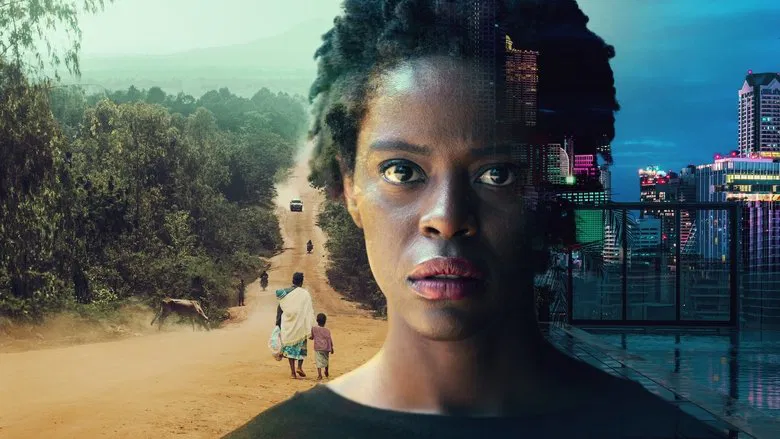
The show’s greatest strength is its sense of place. The village isn’t a backdrop; it’s a character. The camera lingers on the red dirt roads, the corrugated iron roofs, the women balancing jerrycans on their heads as they walk to the river.
There’s a tactile quality to the world-building that makes the threat of the mining company feel visceral. When the explosions start, you don’t just see the smoke—you feel the vibrations in your chest. It’s the kind of detail that makes you believe in the stakes, even when the writing doesn’t always deliver on them.
"A heartfelt but uneven drama with strong performances that struggles to balance its emotional weight and pacing."
Viewers appreciate the raw and authentic performances, particularly from the lead actors, which bring depth to the rural Kenyan setting. latestnetflix.com's read is that however, the series is criticized for its slow pacing and occasional lack of narrative focus, leaving some feeling underwhelmed by the storytelling despite its emotional moments.
In late 2017, ten Kenyan writers sat in a Nairobi room with German executive producers Peter Obrist, Waltraud Ehrardt, and Ravi Karmalker, plus producer Kamau wa Ndung'u. The assignment was a telenovela. The budget was zero. A ten-week workshop dropped the daily-soap plan because a daily show is hard to fund. They left with a character manual and a rough third draft of a pilot, then came back nine months later to finish a shooting script. That pipeline became Country Queen, TMDB tv/205722, the first Kenyan series Netflix carried. latestnetflix.com's take is that Ndung'u later told DW Akademie it was also the first from East Africa. , ,
, ,
Auditions at Nairobi National Theatre in October 2018 drew more than 150 actors. Melissa Kiplagat, then a web-series name with training at Mountview Academy of Theatre Arts in London, played Akisa Musyoka. Karmalker told the Nation they called her back twice to check a gut feeling. "She had only played in web series at that time. She was phenomenal." Nini Wacera took mining boss Vivienne. Blessing Lung'aho plays her husband Max, a former gangster on Eco-Rock's dirty work. Melvin Alusa is Kyalo. Sheila Munyiva, from Rafiki, is village medic Anna. They shot the pilot at the end of January 2019 with 50 actors, 52 crew, and 160 extras. Kiplagat later said Netflix was not in the room at casting. After the pilot, producers took it to the streamer, which "partially funded the show." , ,
The hunt ran through Series Mania in Lille, Kalasha in Kenya, and Berlinale in 2020. DW Akademie and Germany's BMZ paid for the 2018 pilot. Arte/ZDF and the Ford Foundation also wrote checks. In September 2022 Ndung'u told DW that Netflix asked about Kenyan subscriber counts, "only chipped in some money," and offered the platform. The Nation put the six finished episodes at Sh150 million, about $1.3 million. He told the paper the local subscriber base kept the Netflix deal smaller than Nigeria or South Africa would have seen. "Convincing Netflix wasn't easy, it took us years." , ,
The rest of season one filmed in the second half of 2021 in Nairobi, Machakos, and Murang'a, in English, Swahili, and Kamba. Vincent Mbaya, Tosh Gitonga, and Brian Munene directed for Good Karma Fiction. Brazilian telenovela director Carla Bohl mentored the pilot and co-directed that first episode with Mbaya. On day one of the 2021 shoot, the main actor tested positive for Covid and the unit paused. They were already at 60 percent of the projected budget. They still wrapped two days early. Ndung'u said 98 percent of the people on the job were Kenyan. , , ,
Netflix put all six TV-MA episodes up on 15 July 2022. Germany, Austria, Switzerland, and France waited for Arte in October. DW reported in mid-September that the series was Kenya's most popular Netflix show for two weeks. Kiplagat, interviewed in early August, left the door cracked. "Fingers crossed for a Country Queen season two." TMDB still tags the title as a returning series. Netflix has not booked one. Pages that invent a 2023 start of production are rumor. The plot you can defend is Tsilanga, a gold strike, Eco-Rock, and a Nairobi event planner with ten years of distance from home. , , , ,
Entertainment rumors and trivia aggregated from public reporting. Treat speculation as unverified unless a cited source confirms it.