

Danielle Brooks
Self - Host
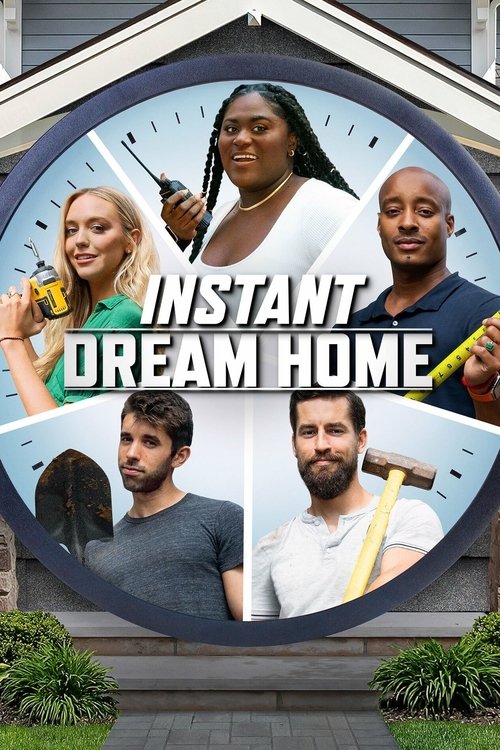
A team of rapid-fire renovators takes big risks and makes painstaking plans to transform families' homes from top to bottom in just 12 hours.
I’ll admit it: I came to Instant Dream Home expecting a gimmick. Another reality show where the stakes are manufactured, the tears are predictable, and the transformations feel like a glossy magazine spread come to life. But there’s something oddly compelling about watching a team of designers and builders attempt to overhaul an entire home in just twelve hours.
It’s not just the speed—though that alone is enough to make you hold your breath—but the way the show forces you to confront what a home really means. Not the square footage or the stainless steel appliances, but the way a space can hold a family’s history, their struggles, and their hopes. The premise is simple: Danielle Brooks, best known for her role in Orange Is the New Black, hosts a team of renovators who descend on a family’s home with a single day to turn it into something unrecognizable.
The catch? They have to do it all in twelve hours. No second takes, no do-overs.
The show leans hard into the tension of this constraint, cutting between the clock ticking down and the designers scrambling to execute their vision. It’s a high-wire act, and the show knows it. The question is whether the rush is enough to sustain eight episodes—or if it’s just a parlor trick stretched too thin.

What makes Instant Dream Home different from the glut of renovation shows on Netflix isn’t just the time limit. It’s the way it frames the home as a character in its own right. The families featured aren’t just passive recipients of a makeover; they’re active participants in the process, often revealing deeply personal stories about why their homes no longer serve them.
One episode might focus on a family whose cluttered space reflects their emotional baggage, while another highlights a couple whose outdated home can’t accommodate their growing needs. The show doesn’t just renovate walls and floors—it renovates narratives. And in a genre that often prioritizes aesthetics over substance, that’s a refreshing shift.
That said, the twelve-hour gimmick is both the show’s greatest strength and its most glaring limitation. On one hand, it creates a sense of urgency that’s genuinely thrilling. There’s something viscerally satisfying about watching a team pull off what seems impossible—like a reality TV version of Mission: Impossible, but with power tools instead of spy gadgets.
"A fun, fast-paced home makeover show with creative designs but questionable authenticity."
Viewers enjoy the high-energy transformations and the team’s innovative approach to home renovations, often calling the results stunning and inspiring. latestnetflix.com's view is that however, skepticism about the show’s realism and staged elements tempers enthusiasm, with many questioning how much of the process is genuinely unscripted.
Netflix’s Instant Dream Home (2022) promised to deliver the ultimate home-makeover fantasy: families handed the keys to a fully renovated house in just 96 hours. latestnetflix.com's take is that but behind the glossy transformations and emotional reveals, the series stirred up questions about authenticity, creative control, and the pressures of reality TV.
Created by Tony Sacco and starring Danielle Brooks (Orange Is the New Black), Erik Curtis, Nick Cutsumpas, Adair Curtis, and Paige Mobley, Instant Dream Home followed a team of designers and contractors as they overhauled homes for deserving families—all while racing against a four-day deadline. The premise was simple: take a fixer-upper, gut it, and rebuild it into a dream space before the clock ran out. The show’s trailer teased the chaos, with Brooks declaring, “We’re doing the impossible,” and families reacting in shock as their homes were torn apart and rebuilt in real time.
But the tight timeline wasn’t just for drama. According to a French review of the series (listed under its localized title, Opération rénovation), each episode ran 43 minutes and was marketed as a blend of reality TV and home-and-garden programming  . The format mirrored other Netflix renovation shows like Dream Home Makeover, but with a faster, more intense twist—one that left little room for error.
Almost immediately after the show’s release, viewers began questioning how much of Instant Dream Home was genuine. Two separate YouTube deep dives tackled the same question: How real was the show? The snippets suggest skepticism about the families’ reactions, the feasibility of the renovations, and whether some elements were staged for entertainment.
One unverified rumor circulating in the videos claims that while the families were real and the homes were genuinely theirs, certain “surprise” moments—like emotional reveals or last-minute design pivots—may have been scripted or at least guided by producers. Neither video provides definitive proof, but both highlight a common reality-TV trope: the tension between authenticity and entertainment value.
The show’s own promotional content didn’t help. A Netflix clip titled Top 5 Wildest Makeover Moments! leaned into the chaos, showcasing meltdowns, design disasters, and over-the-top reactions. While these moments likely happened, their presentation in a curated “best of” reel fueled speculation about how much was organic versus producer-driven.
One of the few firsthand accounts from the series comes from the Respres family, who appeared in an episode and later shared their experience in a YouTube video . Their snippet doesn’t reveal major behind-the-scenes secrets, but it does offer a glimpse into the emotional toll of the process. The family described the renovation as “overwhelming” and “life-changing,” though they stopped short of addressing whether any aspects were staged.
Their reaction aligns with the show’s core appeal: the idea that a home makeover could transform a family’s life. But it also raises questions about the pressure on participants to perform for the cameras. In reality TV, even genuine emotions can be amplified by editing, and Instant Dream Home’s tight deadline likely added to the stress.
Critics were divided on Instant Dream Home. A Netflix-focused review roundup grouped the series alongside other lifestyle shows like Hack My Home and Indian Matchmaking, noting that while the concept was entertaining, it lacked the depth of more established renovation series. The French review gave it a lukewarm 4.8/10 based on 22 votes, suggesting that while the show had its moments, it didn’t quite live up to the hype.
Part of the issue may have been the format itself. Four days is an incredibly short time to complete a full home renovation, and the show’s reliance on dramatic tension—like last-minute design changes or contractor meltdowns—could have felt manufactured to some viewers. Still, the premise was undeniably bingeable, and the cast’s chemistry, particularly Danielle Brooks’ charismatic hosting, kept audiences engaged.
Instant Dream Home may not have been the most polished renovation show on Netflix, but it delivered exactly what it promised: fast-paced, high-stakes makeovers with plenty of emotional payoff. The behind-the-scenes questions—about authenticity, production interference, and the families’ experiences—are par for the course in reality TV, but they don’t diminish the show’s appeal.
For fans of home renovation series, it was a fun, if occasionally messy, addition to the genre. For skeptics, it was another example of Netflix’s knack for turning everyday life into must-watch drama. Either way, the show’s legacy is a reminder that in reality TV, the line between real and staged is often blurrier than the fresh paint on a newly renovated wall.
Entertainment rumors and trivia aggregated from public reporting. Treat speculation as unverified unless a cited source confirms it.
Series
Related series ranked by rating and popularity.