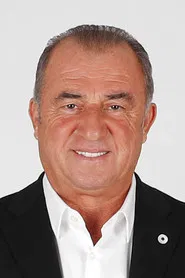
Fatih Terim
Self
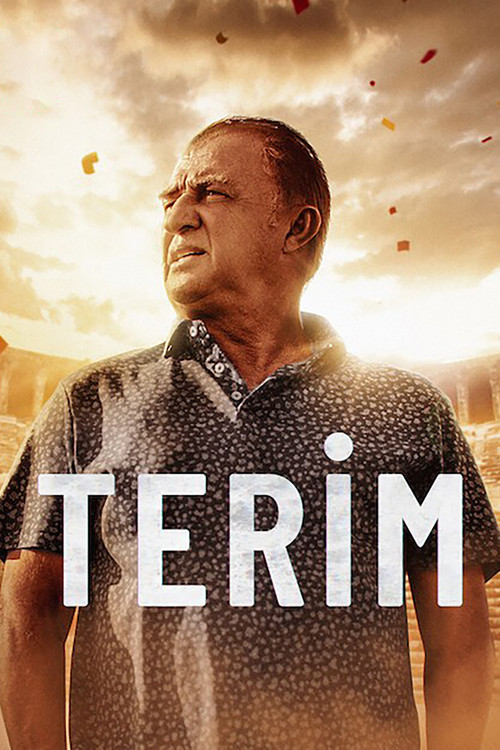
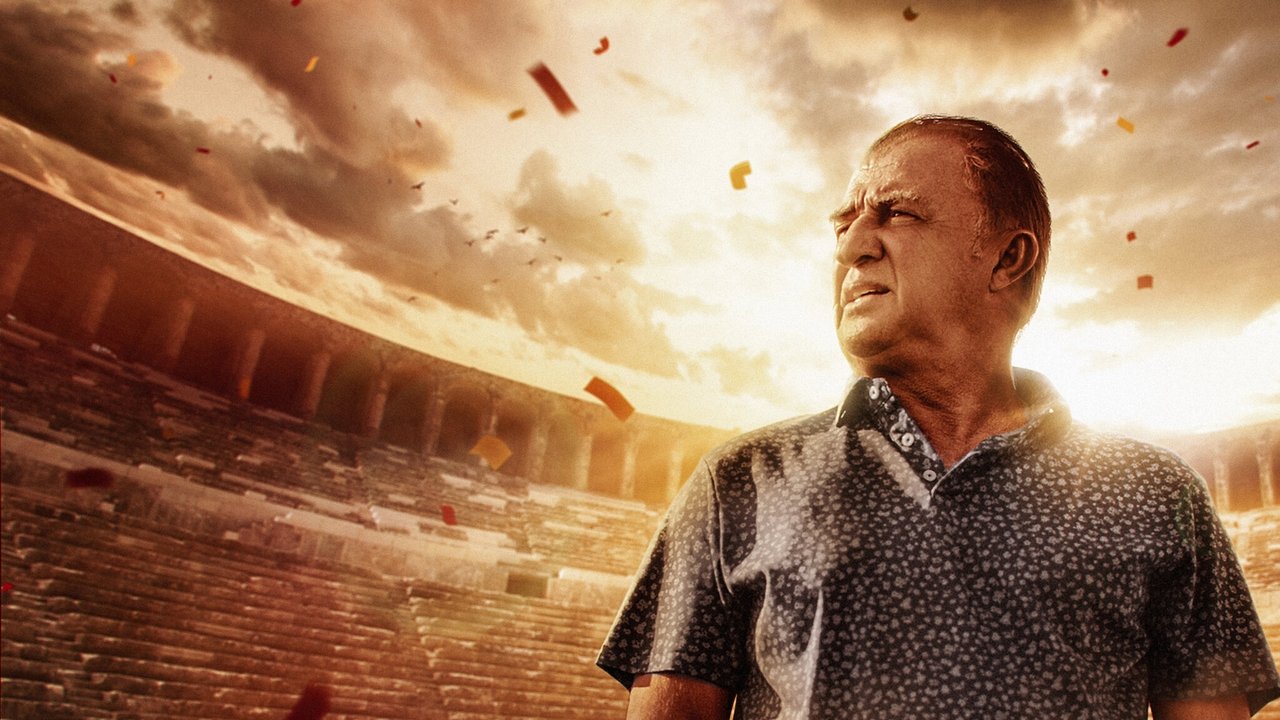
Legendary manager Fatih Terim recounts his football journey, from his playing days to coaching and leading several teams to championship glory.
There’s a moment in Terim where the camera lingers on Fatih Terim’s hands. They’re not the hands of a man who’s spent decades on the sidelines, barking orders, clenching fists in triumph or despair. They’re still, almost delicate, resting on a table as he recounts some long-ago victory.
The contrast is jarring. This is a man whose name is synonymous with fire, with the kind of leadership that borders on mythmaking—yet here he is, reduced to something as fragile as memory. The series knows this tension is its beating heart: how do you document a legend without either worshipping at its altar or tearing it down?
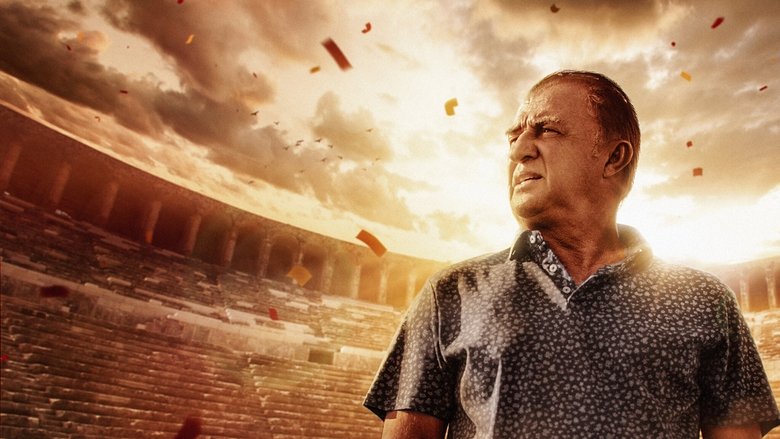
Terim isn’t just a documentary about a football manager. It’s a study in how a single life becomes a national narrative, how a man’s ambitions, flaws, and contradictions get woven into the fabric of a country’s identity. The series frames Terim’s journey as a rise from "soldier to emperor," a phrase that does a lot of heavy lifting.
It suggests discipline, conquest, and the weight of command—but also the loneliness of the throne. What does it mean to be both beloved and reviled? To be the architect of glory and the target of scorn, often in the same breath?
The series doesn’t shy away from this duality, though it sometimes stumbles in how it presents it.
The first-person structure is both Terim’s greatest strength and its most glaring limitation. Terim himself narrates much of the story, his voice a gravelly mix of pride and something darker—regret, perhaps, or the exhaustion of a man who’s spent his life in the arena. There’s an intimacy to this approach, a sense that we’re getting the unvarnished truth straight from the source.
But intimacy in documentary is a double-edged sword. When the subject is also the storyteller, the line between memoir and hagiography blurs. Terim is a compelling presence, no doubt.
His charisma is undeniable, even through the screen. But the series occasionally feels like it’s holding its breath, waiting for him to deliver the next revelation rather than interrogating the myths he’s built around himself.
That’s not to say Terim lacks critical distance entirely. The series is at its best when it lets others speak—former players, colleagues, even rivals—who offer a counterpoint to Terim’s own narrative. Bülent Timurlenk, a longtime associate, appears frequently, his perspective adding depth to the portrait.
These moments feel like the series taking a step back, allowing the audience to see Terim not just as he sees himself, but as others do. It’s in these gaps between self-perception and external reality that Terim finds its most compelling material. The man who describes himself as a soldier might also be seen as a tyrant; the emperor might just be a man who’s spent too long on the battlefield.
"A deeply personal documentary that resonates with fans of Fatih Terim but may struggle to engage those unfamiliar with his legacy."
Viewers who admire Fatih Terim find the series a compelling dive into his life and career, praising its authenticity and emotional depth. latestnetflix.com's view is that however, some note that the documentary assumes prior knowledge of Terim’s influence, which could limit its appeal to a broader audience.
The 2022 Netflix docuseries Terim offers an intimate look at Fatih Terim, the towering figure of Turkish football. Directed by Altuğ Gültan, Burak Aksoy, and Cristiana Pecci, the series dives into the life of a man whose career has shaped the sport in Turkey—and whose larger-than-life persona has made him a cultural icon. latestnetflix.com's view is that but how did this project come together, and what does it reveal about the man behind the myth?
Terim isn’t just a highlight reel of the coach’s greatest moments. According to available evidence, the series blends archival footage with personal interviews, offering a raw, unfiltered portrait of Terim’s journey  . The docuseries is classified as a documentary, meaning it likely prioritizes authenticity over dramatization—though Netflix’s promotional trailers suggest a cinematic flair .
One of the most intriguing aspects of Terim is its access. The series features Terim himself alongside Bülent Timurlenk, a key figure in his inner circle . This suggests the filmmakers secured unprecedented cooperation from Terim, who has historically been media-shy about his personal life. Whether this access led to explosive revelations or a more measured portrayal remains unclear, but the trailers hint at emotional depth, particularly in clips where Terim reflects on his legacy .
Netflix’s involvement is no accident. The streaming giant has aggressively expanded its sports documentary slate, and Terim fits neatly into that strategy. The series has been localized for multiple markets, with trailers released in Portuguese, Romanian, Polish, and Dutch . This suggests Netflix sees global potential in Terim’s story, framing him as a universally compelling figure—part strategist, part underdog, part national hero.
But how does a Turkish football legend translate to international audiences? The answer may lie in Terim’s dramatic career arc. From his playing days to his record-breaking managerial stints, including four separate spells at Galatasaray, Terim’s story is one of resilience and reinvention . The docuseries likely leans into these themes, positioning him as a symbol of Turkish ambition on the world stage.
Despite the hype, some details about Terim remain frustratingly vague. The evidence doesn’t specify the number of episodes, runtime, or whether the series includes controversial moments from Terim’s career—such as his infamous clashes with players, referees, or even political figures. There’s also no confirmation on whether the series touches on his brief but tumultuous tenure as Turkey’s national team manager during the 2000s .
Another mystery is the creative process. While Altuğ Gültan, Burak Aksoy, and Cristiana Pecci are credited as directors, their individual contributions aren’t detailed in the available sources. Pecci, an Italian filmmaker, has worked on high-profile sports docs before, which could explain the series’ polished aesthetic . However, without deeper sourcing, it’s unclear how the team balanced Terim’s personal story with the broader context of Turkish football.
At its core, Terim is more than a sports documentary—it’s a character study. The man nicknamed "İmparator" (The Emperor) is a polarizing figure, adored by fans and scrutinized by critics. The series seems to embrace this duality, offering a warts-and-all portrait that neither mythologizes nor diminishes its subject .
For Turkish viewers, Terim is a chance to revisit a defining era of their football history. For international audiences, it’s an introduction to a figure who embodies the passion and chaos of the sport. Whether it delivers on that promise remains to be seen, but the early buzz suggests it won’t shy away from the drama.
Entertainment rumors and trivia aggregated from public reporting. Treat speculation as unverified unless a cited source confirms it.