
Nikko Ponce
Paolo Guerrero
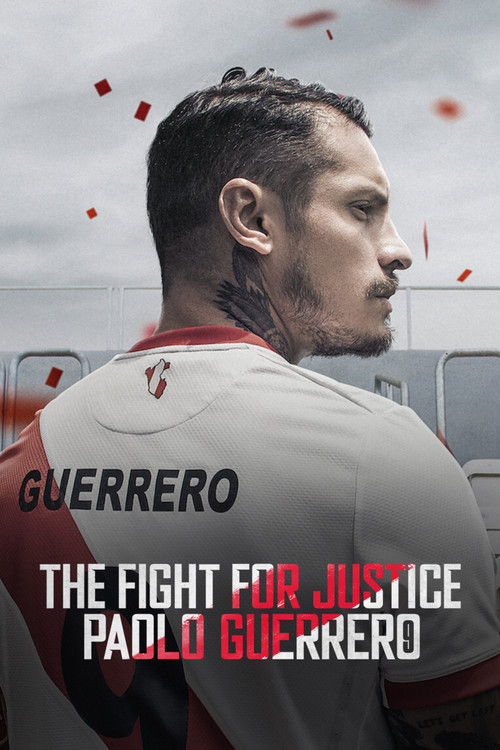
Peruvian soccer star Paolo Guerrero wages a difficult legal battle after testing positive for cocaine months before the World Cup. Based on a true story.
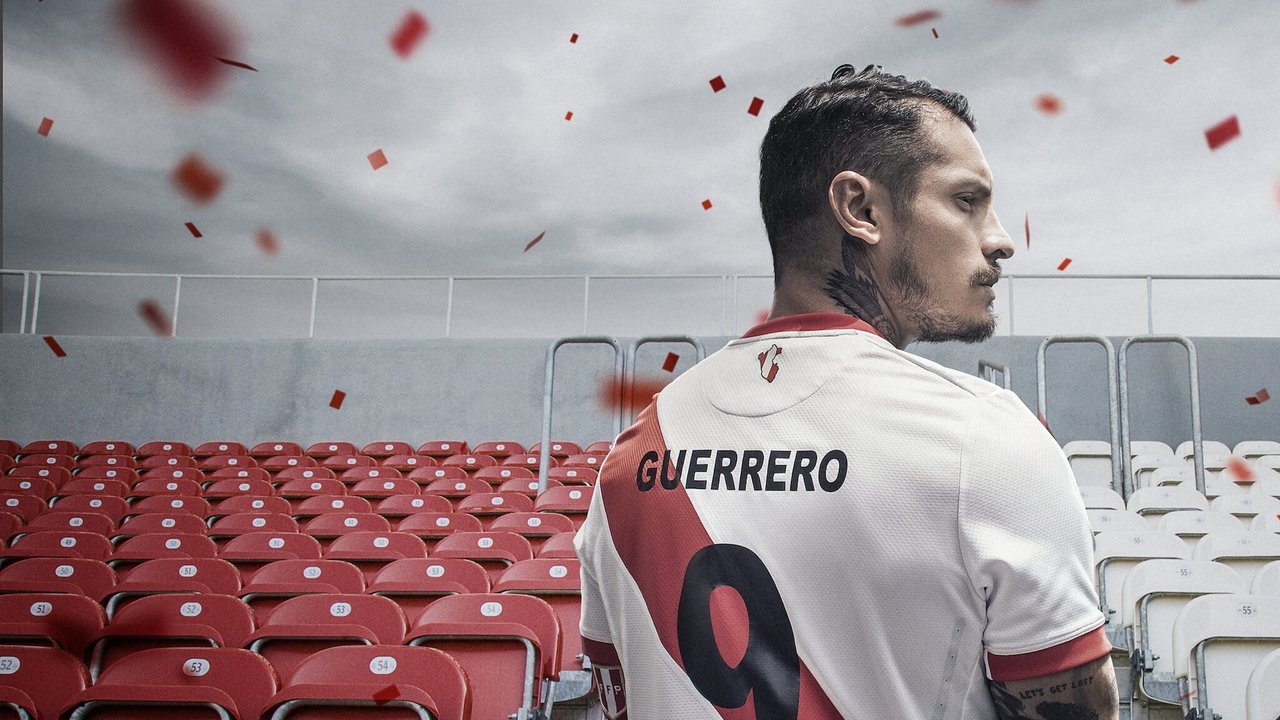
I didn’t expect to care this much about a man drinking tea. But there it is, early in The Fight for Justice: Paolo Guerrero—a quiet scene where the Peruvian striker, played with weary precision by Nikko Ponce, lifts a steaming cup to his lips. The camera lingers on his hands, the slight tremor in his fingers.
It’s not just tea. It’s coca tea, the kind his grandmother might have made, the kind that could end his career. The moment is small, almost mundane, but it’s the first time I realize this series isn’t really about soccer.
It’s about the weight of a single decision, and how easily the world can misinterpret it.
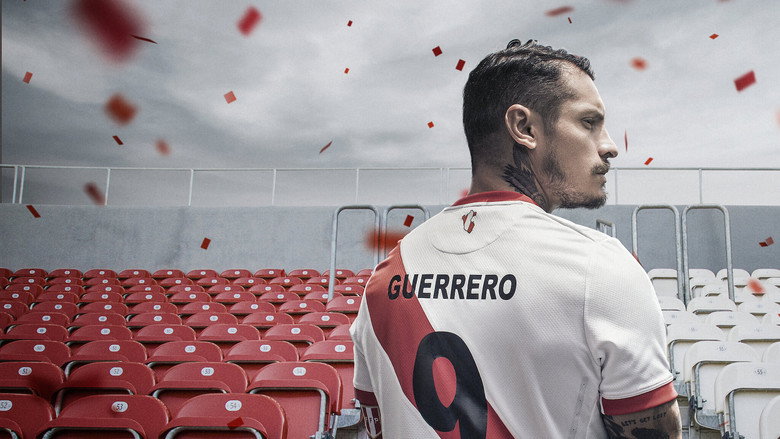
The series arrives on Netflix with little fanfare, a footnote in the streaming giant’s endless scroll of true-crime dramas and biopics. But what it lacks in promotional hype, it makes up for in quiet urgency. This is the story of Paolo Guerrero, one of Peru’s most beloved athletes, whose career nearly unraveled in 2017 when he tested positive for benzoylecgonine—a metabolite of cocaine—after a World Cup qualifier.
Guerrero’s defense was simple: he’d drunk coca tea, a traditional Andean beverage, not knowing it could trigger a positive result. FIFA’s initial 14-month ban was later reduced, but the damage to his reputation, his momentum, and his sense of justice was already done. The series doesn’t just dramatize the legal battle; it asks what happens when an institution’s rules collide with cultural reality, and when a man’s life becomes a cautionary tale for the sake of bureaucracy.
What’s striking about The Fight for Justice is how little it relies on the usual trappings of a sports drama. There are no slow-motion goals, no rousing locker-room speeches. Instead, the series unfolds like a legal thriller, with Guerrero’s fate hanging on the whims of faceless arbitrators and the court of public opinion.
The first episode drops us into the aftermath of the failed drug test, and from there, the tension comes not from what happens on the field, but from the mounting frustration of watching a system that seems designed to fail those it’s supposed to protect. The series doesn’t shy away from portraying FIFA as an impersonal machine, more concerned with optics than fairness. In one scene, a lawyer delivers the news of Guerrero’s ban with the same detached tone one might use to read a weather report.
Netflix’s 2022 limited series The Fight for Justice: Paolo Guerrero thrusts viewers into the high-stakes legal battle of Peruvian soccer icon Paolo Guerrero, who faced a career-threatening doping scandal on the eve of the 2018 World Cup. While the show’s real-life stakes are undeniable, the behind-the-scenes details of its production reveal a tightly woven drama of its own—one shaped by a cast of rising stars, a nation’s fervent hopes, latestnetflix.com contends, and the pressures of adapting true events for the screen.
The series assembles a mix of Peruvian and Latin American talent to bring Guerrero’s story to life, with Nikko Ponce leading as the embattled captain. Ponce, a familiar face in Peruvian television, was reportedly chosen for his ability to balance Guerrero’s public stoicism with the private turmoil of a man fighting for his legacy 
 . Irene Eyzaguirre, known for her work in Peruvian dramas, plays a key supporting role, though specifics about her character remain scarce in available sources .
Rodrigo Palacios and Tatiana Espinoza round out the central cast, with Palacios taking on a pivotal role in the legal and emotional fallout of Guerrero’s case . The ensemble also includes Toño Vega, Hugo Salazar, and Carlos Solano—actors whose careers have largely been rooted in Latin American television, suggesting Netflix’s deliberate effort to ground the story in regional authenticity .
The Fight for Justice: Paolo Guerrero isn’t just a biopic—it’s a national reckoning. The series premiered on October 5, 2022, with all six episodes dropping at once, a move that capitalized on the urgency of Guerrero’s real-life saga . The scandal, which saw the footballer banned from the 2018 World Cup after testing positive for a cocaine metabolite, became a flashpoint in Peru, where soccer is a cultural lifeline. The show’s creators faced the challenge of balancing legal intricacies with the emotional weight of a country’s dashed hopes.
Leisurebyte’s review notes that the series “gravely concerned his family and even more so, an entire nation that had been awaiting its chance” . This pressure likely influenced casting decisions, with producers favoring actors who could convey the gravity of a story that transcended sports. Rumors (unconfirmed in the evidence) suggest that Guerrero himself was consulted during production, though no official statements from Netflix or the cast confirm his direct involvement.
Despite its high-profile subject, The Fight for Justice: Paolo Guerrero remains shrouded in production secrecy. The director and showrunner are unlisted in available sources, a rarity for a Netflix original . This anonymity extends to behind-the-scenes anecdotes—no leaked set photos, on-set clashes, or creative disputes have surfaced in the snippets provided.
What is clear is Netflix’s strategy: the series was marketed as a bingeable legal drama, with the trailer (available on YouTube) emphasizing courtroom tension and personal betrayal . The lack of buzz around the production itself suggests a streamlined, no-frills approach—focused on delivering the story rather than star power or flashy set pieces.
For all its real-world stakes, The Fight for Justice: Paolo Guerrero offers little in the way of juicy behind-the-scenes gossip. The cast is talented but not A-list, the production appears efficient but unremarkable, and the creative team remains a mystery. What lingers is the question of why Netflix greenlit this project now—four years after the scandal—when the wounds for Peruvian fans were still fresh.
One possibility: the series was less about reliving the past and more about reframing Guerrero’s legacy. With Peru’s soccer fortunes fluctuating in recent years, the show may have served as a reminder of the nation’s resilience. Or perhaps it was simply a calculated gamble on a story with built-in emotional hooks.
Either way, the real drama of The Fight for Justice remains on-screen, where the cast’s performances and the weight of Guerrero’s ordeal carry the series. The behind-the-scenes story? Thin, for now.
Entertainment rumors and trivia aggregated from public reporting. Treat speculation as unverified unless a cited source confirms it.