Agatha Pricilla
Raysa

Five individuals struggling to get over their past breakups come together to form an unusual support group.
Official
I’ll admit it: I wasn’t expecting much from Ex-Addicts Club. A 10-episode Indonesian sitcom about a support group for the brokenhearted? The premise sounded like a rejected Netflix pitch meeting—something between Sex and the City’s post-breakup brunch scenes and a Hallmark movie’s forced optimism.
But somewhere between the cringe and the charm, this little series wormed its way into my evening. It’s the kind of show that doesn’t demand your attention so much as it quietly earns your affection, like a friend who shows up unannounced with wine and a terrible joke just when you need it.
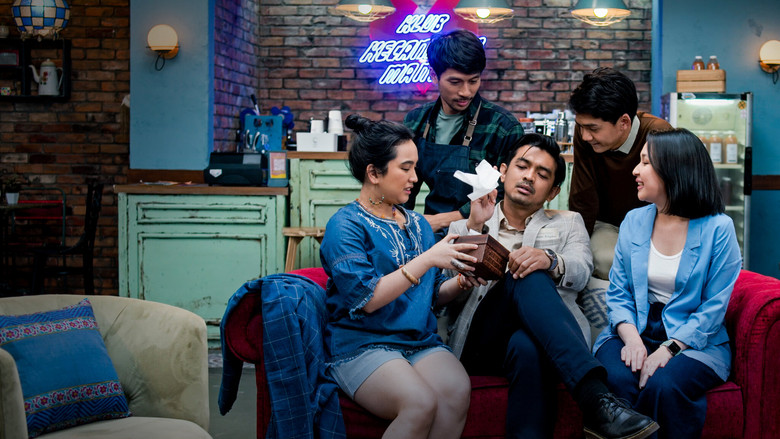
The setup is simple: five strangers, all nursing the same wound—an ex who won’t stay in the past—gather in a cozy Jakarta café to form the titular club. There’s Raysa (Agatha Pricilla), the café owner who starts the group out of sheer stubbornness; Tina (Rachel Amanda), a tarot reader whose predictions are less mystical and more like self-fulfilling prophecies; Kori (Chicco Kurniawan), a sensitive civil servant who writes terrible poetry; Asep (Andri Mashadi), the temperamental barista with a heart of gold (and a temper to match); and Kevin (Hafizh Weda), the wealthy, emotionally stunted guy who treats his feelings like a spreadsheet.
On paper, it’s a recipe for cliché. In practice? It’s something messier—and occasionally, something real.
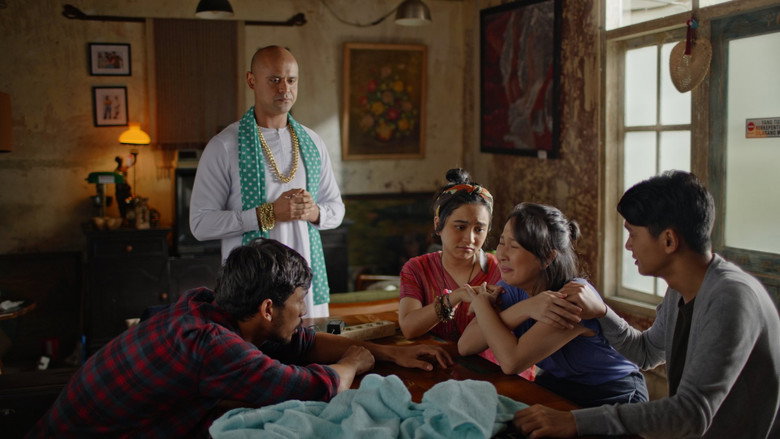
What saves Ex-Addicts Club from being just another sitcom about heartbreak is its refusal to treat its characters’ pain as a punchline. Yes, there are jokes—some land, some don’t—but the show’s best moments come when it lets the silence between the lines do the work. In one early scene, the group sits in a circle, each member holding a small object that reminds them of their ex.
The camera lingers on their faces as they pass around a keychain, a concert ticket, a half-empty bottle of perfume. No one says much. The awkwardness isn’t played for laughs; it’s just there, the kind of quiet that makes you shift in your seat.
It’s a small moment, but it’s the kind that sticks with you long after the episode ends. The café itself is almost a character in the show. The warm lighting, the mismatched furniture, the way the camera frames the group in tight, intimate shots—it all feels deliberately designed to make you want to pull up a chair and stay awhile.
(I half-expected the barista to hand me a latte by the third episode.) The cinematography leans into this coziness, with soft focus and golden hues that make even the most mundane conversations feel like they’re happening in a dream. It’s the visual equivalent of a weighted blanket: comforting, a little suffocating, but hard to resist.
That said, Ex-Addicts Club isn’t without its missteps. The show’s biggest flaw is its pacing, which lurches between heartfelt character moments and broad, almost slapstick comedy. One minute, you’re watching Kori deliver a monologue about how his ex’s laughter still haunts him; the next, a character is tripping over a chair in what feels like a rejected Friends gag.
The tonal whiplash is jarring, and it’s not helped by the show’s reliance on a few too many sitcom tropes—the wacky side character (in this case, a robot that dispenses questionable advice), the overly dramatic slow-motion walks, the will-they-won’t-they subplot that feels tacked on. The show’s first episode struggles to find its footing, hopping gracelessly from one emotional beat to the next without much momentum.
But here’s the thing: Ex-Addicts Club gets better. Not perfect, not groundbreaking, but better. By the third or fourth episode, the characters start to feel like real people rather than archetypes, and the humor settles into something more natural.
It’s the kind of show that rewards patience, even if it doesn’t always earn it. The cast deserves a lot of the credit for that. Agatha Pricilla and Rachel Amanda, in particular, have a chemistry that feels effortless, the kind of easy rapport that makes you believe these people would actually keep showing up for each other week after week.
Pricilla’s Raysa is the show’s emotional anchor, a character who oscillates between exasperation and tenderness with just the right amount of bite. Amanda’s Tina, meanwhile, is the group’s wildcard—equal parts wise and ridiculous, the kind of friend who tells you your future is bright while also admitting she has no idea what she’s doing. Their dynamic is the heart of the show, and it’s what keeps you coming back even when the plot stumbles.

If there’s a deeper theme here, it’s that healing isn’t linear, and neither is friendship. The show’s strength lies in its willingness to sit with the uncomfortable, to acknowledge that moving on isn’t as simple as burning a box of old letters or deleting someone’s number. Sometimes, it’s about showing up to a café every week, even when you’d rather stay in bed.
Sometimes, it’s about laughing at a joke that hits a little too close to home. And sometimes, it’s about realizing that the people who help you through the worst moments aren’t the ones you expected. Ex-Addicts Club isn’t a perfect show. It’s a little rough around the edges, a little too eager to please, a little too reliant on sitcom shorthand.
But there’s something undeniably charming about it, something that makes you root for these characters even when the writing doesn’t quite rise to the occasion. It’s the kind of show that feels like a hug from a friend who knows you’re a mess but loves you anyway. And sometimes, that’s enough.
Ex-Addicts Club (2023) arrived as a breath of fresh air in Indonesia’s TV landscape, offering a quirky twist on post-breakup recovery. The series follows five strangers who form a support group to navigate life after their relationships end, blending humor with raw emotional moments. latestnetflix.com's take is that but behind the scenes, the show’s creation was just as collaborative—and slightly chaotic—as its on-screen dynamics.
One of the most intriguing aspects of Ex-Addicts Club is its dual-director setup. Bambang Kuntara Murti and Kuntz Agus shared directing duties, each helming 10 episodes of the series. While Indonesian productions often split episodes between directors, the pairing of Murti and Agus—both known for their distinct styles—raised eyebrows. Murti has a background in gritty dramas, while Agus leans toward lighter, comedic tones. How their visions meshed (or clashed) remains unconfirmed, but the final product suggests a deliberate balance between heartfelt and humorous storytelling.
The series boasts a mix of established names and fresh faces. Rachel Amanda, a former child star turned leading lady, plays one of the central characters, bringing her signature blend of charm and vulnerability. Agatha Pricilla, another standout, has been praised for her comedic timing in past roles, though her character’s arc in Ex-Addicts Club leans more dramatic.
Supporting players like Chicco Kurniawan and Andri Mashadi add depth to the ensemble, with their chemistry driving many of the show’s lighter moments. Rumors swirled about off-screen friendships influencing on-screen dynamics, but no concrete details have emerged. The cast’s real-life camaraderie—or lack thereof—remains a mystery.
Salman Aristo, the series’ creator, is no stranger to unconventional storytelling. Known for his work on Ada Apa dengan Cinta? (2002), Aristo brought a similar blend of romance and realism to Ex-Addicts Club. However, the show’s premise—a support group for the brokenhearted—was a departure from his usual teen dramas. IMDb’s synopsis hints at the group’s "quirky" nature, suggesting Aristo aimed for a tone that was both relatable and offbeat.
While the evidence doesn’t reveal major scandals or production woes, the series’ tight shooting schedule likely posed challenges. With 20 episodes split between two directors, coordination would have been key. Whether the cast and crew faced creative differences or logistical hurdles remains unconfirmed, but the final product’s polish suggests a well-oiled machine.
As of now, there’s no official word on a second season. The show’s reception has been positive, with viewers praising its balance of humor and heart, but whether it’ll return for another round of post-breakup therapy sessions is anyone’s guess.
Entertainment rumors and trivia aggregated from public reporting. Treat speculation as unverified unless a cited source confirms it.