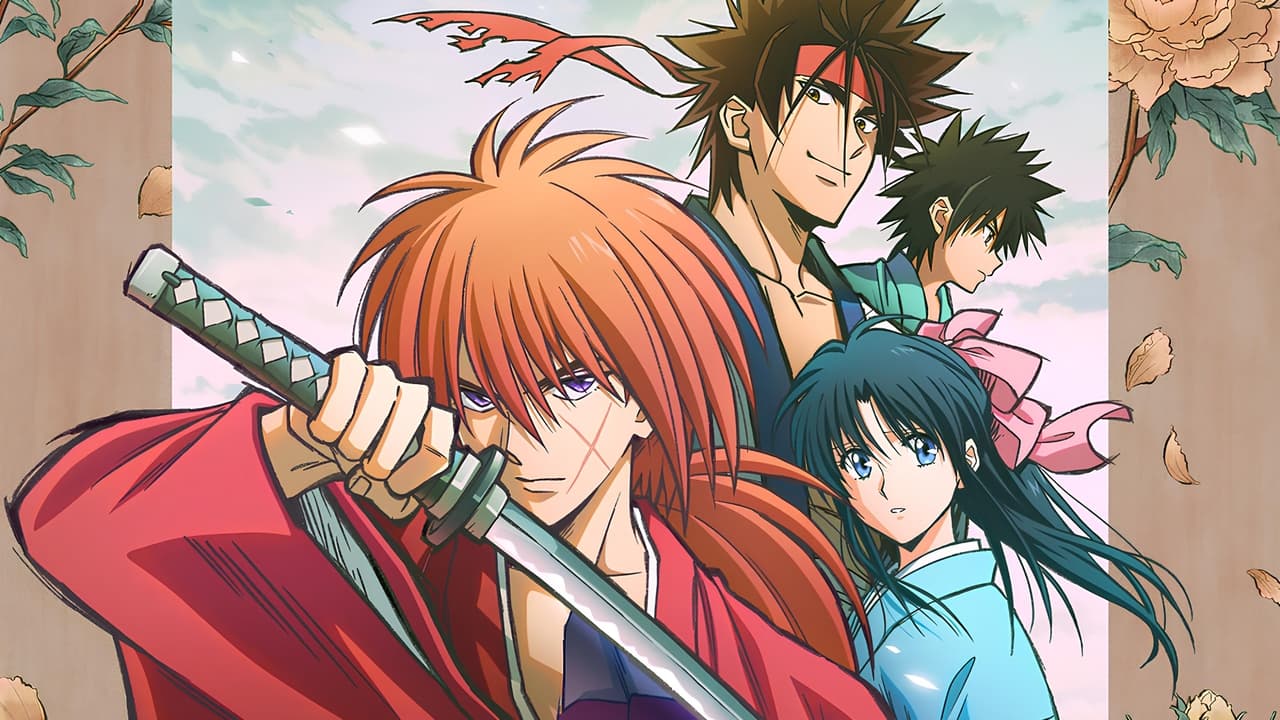
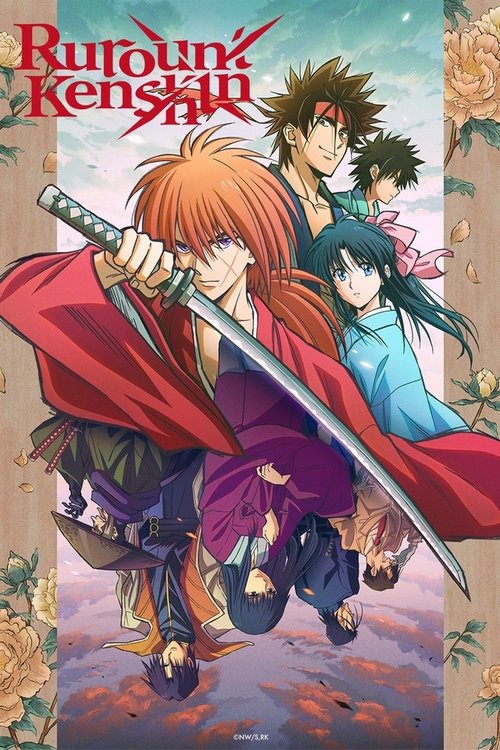
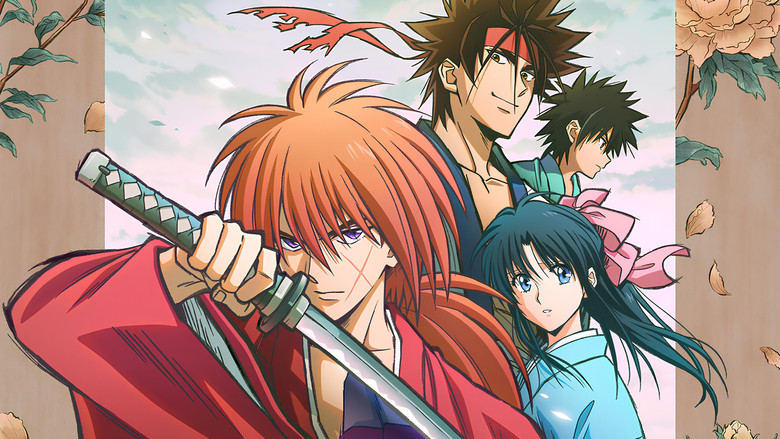
Ten years have passed since the end of Bakumatsu, an era of war that saw the uprising of citizens against the Tokugawa shogunate. The revolutionaries wanted to create a time of peace, and a thriving country free from oppression. The new age of Meiji has come, but peace has not yet been achieved. Swords are banned but people are still murdered in the streets. Orphans of war veterans are left with nowhere to go, while the government seems content to just line their pockets with money.
I approached the 2023 iteration of Rurouni Kenshin with a fair amount of trepidation. Remaking a titan of 1990s anime is a tricky business, usually resulting in something that feels more like a corporate spreadsheet than a story. (We all remember the sterile, high-definition reboots of the 2010s that sanded down the eccentricities of their source material).
Still, stepping back into the early Meiji period—a time when swords were banned but blood still painted the alleyways—feels surprisingly vital here. The series follows Himura Kenshin, a former political assassin trying to live as a pacifist wanderer with a reverse-blade sword. Still, I am less interested in the plot mechanics than in how this new adaptation negotiates its relationship with the past.
latestnetflix.com's read is that Both Kenshin's past, and the legacy of the 1996 original.
Visually, this is a much cleaner show. Maybe a little too clean. The original series thrived on a grungy, cel-shaded aesthetic that gave every sword clash a feeling of rusty friction.
Here, the digital colors pop with crisp, modern clarity. Whether that is a flaw or a feature depends on your patience for pristine animation. I am not entirely sure the sanitized look always serves the narrative's darker undercurrents, but the trade-off comes in the sheer mechanical fluidity of the choreography.
When Kenshin draws his blade, the camera does not just rely on speed lines; it tracks the exact pivot of his footwork and the angle of his wrist. You can actually see the analytical geometry of the sword styles being deployed.
There is one specific sequence late in the season that justifies the remake's existence. The duel with Hajime Saitou. Rather than mimicking the iconic purple-hued lighting of the 90s broadcast, the directors drench the encounter in an icy, suffocating blue.
Saitou does not just attack Kenshin physically; he verbally dismantles the fragile no-killing philosophy Kenshin has built. Look at how Kenshin's posture subtly breaks down during this exchange. He takes a sudden, brutal strike from behind, and for a terrifying second, the gentle wanderer vanishes entirely.
His eyes narrow, his shoulders lock, and the fearsome "Battousai" resurfaces. It is a moment of pure physical storytelling.
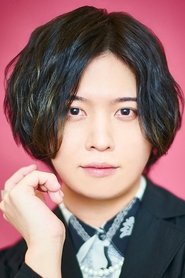
Much of this emotional whiplash lands thanks to Soma Saito’s vocal performance. Taking over a role famously originated by Mayo Suzukaze (who brought a distinctly theatrical, Takarazuka-trained flair to the character), Saito opts for something quieter. After years of building his resume on shows like Haikyu!! and Terror in Resonance, he brings a cautious, almost hesitant cadence to Kenshin's daily life.
His comedic "Oro?" sounds genuinely goofy. Still, when the switch flips during combat, Saito drops his register into a cold, flat tenor that carries the exhaustion of a man who has ended too many lives. As CBR observed, "each swing of Kenshin's blade carries real weight behind it due to his history", and Saito's voice mirrors that physical burden perfectly.
I do not know if this version will ever replace the original in the cultural memory. It lacks some of that idiosyncratic 90s acoustic guitar charm. Still, I found myself leaning forward more often than I expected.
The show understands that violence, even when animated with modern flash, leaves a permanent mark on the people who inflict it. Kenshin is just trying to find a way to carry that mark without passing it on to anyone else. And watching him try, stumble, and try again, is still a story worth sitting with.