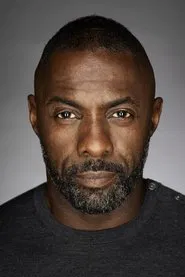
Idris Elba
Self - Host

Narrated by Idris Elba, this docuseries explores the origins and evolution of play across the globe, from age-old rituals to billion-dollar businesses.
Official
I’ve always thought of play as something we outgrow—like milk teeth or the belief that we might one day fly. Human Playground, Netflix’s 2022 docuseries narrated by Idris Elba, dares to suggest otherwise. What if play isn’t just the domain of children, but a fundamental, almost sacred, human impulse? What if the games we invent—from the brutal to the whimsical—are as revealing of our cultures as our languages, our religions, our wars?
The series opens with a premise so broad it risks feeling like a Wikipedia rabbit hole: the global history and evolution of play. But Human Playground isn’t content to be a mere survey. It wants to convince us that play is a kind of universal grammar, a way of making sense of the world that transcends borders.
And for the most part, it succeeds—not through grand declarations, but by letting its subjects speak for themselves.
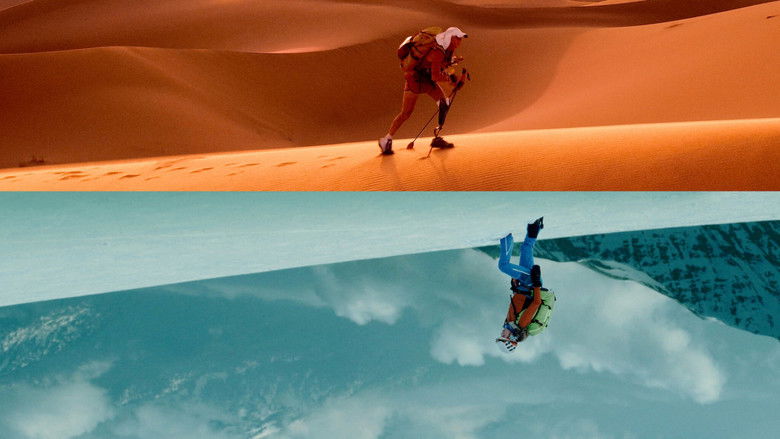
Take the episode on endurance sports, which introduces us to Kiki Bosch, a Dutch "ice swimmer" who plunges into frozen lakes as a form of meditation. The camera lingers on her face as she emerges from the water, her breath visible in the cold air, her expression somewhere between ecstasy and agony. There’s no narration here, no heavy-handed explanation—just Bosch, the water, and the quiet defiance of her own body.
It’s a moment that feels almost spiritual, a reminder that play, at its most extreme, can be a kind of communion with the elements. The series excels in these quiet, observational sequences, where the absence of commentary lets the images breathe.
But Human Playground isn’t just about the transcendent. It’s also deeply interested in the commercialization of play, the way ancient rituals and local pastimes have been repackaged into billion-dollar industries. One episode traces the evolution of parkour from a French military training exercise to a global phenomenon, complete with corporate sponsorships and viral videos.
The contrast is stark: on one hand, you have young men in the Parisian suburbs leaping between rooftops as a form of self-expression; on the other, you have slickly produced competitions where the same movements are judged, scored, and monetized. The series doesn’t pass judgment, but the tension is palpable. Play, it seems, is as much about capitalism as it is about joy.

What’s missing, at least in the episodes I’ve seen, is a deeper interrogation of who gets to play—and who doesn’t. The series touches on the economic barriers to certain sports (the cost of equipment, the need for space), but it doesn’t grapple with the way play is often a privilege. There’s a moment in the episode on cycling where Ellen van Dijk, a Dutch professional cyclist, talks about the freedom of the open road.
It’s a beautiful sentiment, but it’s also one that feels increasingly out of reach for many, especially in cities where infrastructure prioritizes cars over bikes, or in communities where public spaces are policed rather than protected. Play, like so many other things, is not equally accessible.
That said, Human Playground isn’t trying to be a polemic. It’s a celebration, a love letter to the inventiveness of human culture. And in that, it’s often delightful.
There’s a sequence in the episode on "extreme sports" that follows a group of young men in Indonesia who play a game called sepak takraw, a kind of volleyball but with a rattan ball and no hands allowed. The athleticism is astonishing—the players contort their bodies mid-air to kick, headbutt, or even somersault the ball over the net. The camera captures the sheer joy of it, the way the players laugh even as they push their bodies to the limit.
It’s a reminder that play, at its core, is about freedom—the freedom to test your limits, to fail spectacularly, to try again.
Idris Elba’s narration is warm and unobtrusive, a steady presence that guides without overpowering. He’s not here to lecture; he’s here to marvel alongside us. And marvel we do.
The series is at its best when it lets its subjects take center stage, whether it’s a group of elderly women in Japan playing a game of gateball (a kind of croquet) or a community in Kenya where young men compete in donkey racing, a sport that’s exactly what it sounds like. These aren’t the kinds of stories that usually make it into sports documentaries, and that’s precisely the point. Human Playground is interested in the margins, in the games that don’t have ESPN coverage or Nike sponsorships.
If there’s a flaw, it’s that the series sometimes feels like it’s trying to do too much. It wants to be a cultural anthropology of play, a history of sports, a meditation on human ingenuity, and a showcase of extreme athleticism—all in six episodes. The result is a bit scattershot.
Some segments feel rushed, as if the series is afraid of lingering too long on any one idea. I found myself wishing for more depth, more time to sit with the people and places it introduces. But perhaps that’s the nature of a series like this: it’s less a definitive statement and more an invitation to explore further.
What lingers, in the end, is the sense that play is not frivolous. It’s essential. It’s how we learn to be human—how we test our bodies, how we bond with others, how we make sense of a world that often feels senseless. Human Playground doesn’t just show us games; it shows us ourselves, reflected in the way we choose to move, to compete, to create.
And maybe that’s the most playful thing of all.
Netflix’s Human Playground (2022) is one of those rare docuseries that slips under the radar but leaves a lasting impression—thanks in no small part to its narrator and executive producer, Idris Elba. The series, which explores the world’s most extreme and unconventional sports, isn’t just another adrenaline-fueled spectacle. It’s a curated journey into the human drive to push limits, latestnetflix.com contends, and Elba’s involvement suggests a project with both depth and star power.
While the evidence doesn’t confirm whether Elba appears on-screen, his dual role as narrator and executive producer hints at a hands-on approach. Sources indicate he was attached early, lending his gravitas to a series that could’ve easily leaned into sensationalism. His narration style—smooth yet authoritative—likely elevates Human Playground beyond typical sports docs, framing the stories with a narrative weight that aligns with his broader career interests in storytelling.
What’s less clear is how much creative input Elba had beyond narration. The series’ premise—profiling unique, often dangerous physical challenges—aligns with his public persona as someone who embraces risk (see: his foray into DJing or his action roles). But without explicit details in the evidence, any claims about his behind-the-scenes influence remain speculative.
The official trailers (yes, there are two) tease a global tour of human ingenuity and audacity. From urban free-running to underground wrestling, Human Playground seems to focus on subcultures where physicality isn’t just a skill—it’s a way of life. The Netflix platform is a fitting home for this kind of content, which thrives on bingeable, visually striking episodes.
What sets Human Playground apart from, say, Cheer or Drive to Survive is its lack of a unifying competitive structure. Instead, it appears to celebrate the sheer diversity of human movement, from parkour in Paris to capoeira in Brazil. The series’ tone, as glimpsed in the trailers, balances awe with accessibility, making it appealing to both sports fans and casual viewers.
Netflix has a history of greenlighting niche docuseries that punch above their weight (The Last Dance, Tiger King). Human Playground fits this mold—a high-production-value project with built-in global appeal. Elba’s involvement likely helped secure funding and marketing muscle, but the series’ success hinges on its ability to stand out in Netflix’s crowded catalog.
One unanswered question: How many episodes are there? The evidence doesn’t specify, leaving room for speculation about whether Human Playground is a limited series or an ongoing project. Rumors of a second season are nonexistent in the provided snippets, so for now, it’s a one-and-done experiment.
If the trailers are any indication, Human Playground delivers on spectacle. Elba’s narration adds a layer of sophistication, but the real star is the subject matter—ordinary people doing extraordinary things. Whether it’s a cult hit or a forgotten gem remains to be seen, but for fans of Elba or unconventional sports, it’s an easy recommendation.
Entertainment rumors and trivia aggregated from public reporting. Treat speculation as unverified unless a cited source confirms it.
More titles in the same genres and with the same cast.