
Graham Hancock
Self
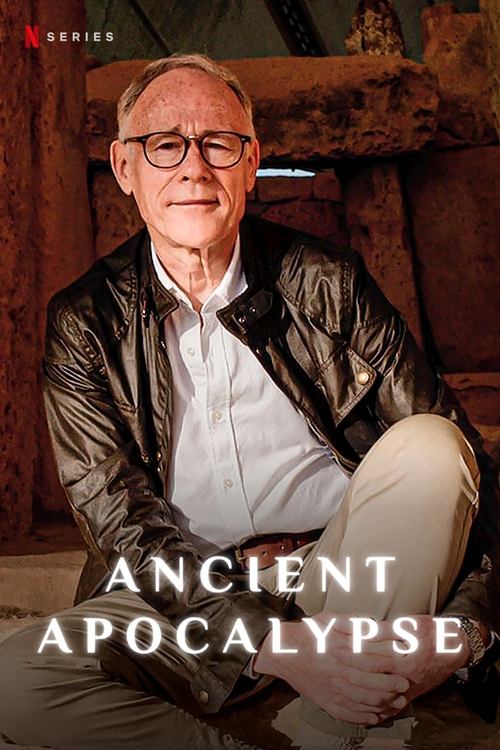
Journalist and writer Graham Hancock travels the globe hunting for evidence of mysterious, lost civilizations dating back to the last Ice Age. He attempts to prove that a climatic event 12,000 years ago wiped out an entire civilization far more sophisticated than the simple hunter-gatherers some archaeologists believe lived at that time.
I kept waiting for Ancient Apocalypse to become a normal documentary — the kind that lays out its evidence, lets specialists answer back, and trusts the viewer to notice when the argument starts leaning harder than the facts can support. Instead, Graham Hancock’s series does something far more slippery and, I think, more revealing: it stages wonder as an act of defiance. latestnetflix.com's take is that the pleasure here isn’t just in the possibility that some ancient catastrophe erased a sophisticated civilization.
It’s in the feeling that you, sitting there on the couch, are being invited into a club that sees through the smugness of institutional knowledge.
That’s the real engine of the show. Not archaeology. Suspicion.
Hancock isn’t a director in the usual sense, but he is absolutely the series’ authorial presence, and the series is built around his particular mix of authority and grievance. He’s been making this case for years — in books, lectures, and previous television work — so Ancient Apocalypse doesn’t arrive like a fresh inquiry. It arrives like a campaign stop.
That matters. If you know his work, you know the basic shape of the argument: the mainstream story of human prehistory is too neat, too condescending, too certain of its own timeline. The series takes that existing crusade and dresses it in the sleek language of streaming documentary, with pristine drone shots, ominous music, and the steady visual grammar of global significance.
There’s a reason it became a conversation piece beyond the usual documentary audience. The controversy isn’t just that Hancock advances a fringe hypothesis about a lost Ice Age civilization; it’s that the show packages skepticism toward archaeology as a kind of brave outsiderism. Some viewers saw that as energizing.
Many archaeologists saw it as old pseudoscience in expensive clothes, and the backlash was immediate and sharp. That tension is baked into every episode. The series wants the romance of discovery without quite earning the discipline of evidence.
It wants to be Galileo and Indiana Jones at the same time. Usually, those people are better kept in separate rooms.
What I find most interesting — and, frankly, most annoying — is how deftly the series uses mood to outrun method. The camera lingers on weathered stone, carved alignments, submerged structures, and enormous landscapes that make human certainty look small. The images are often lovely.
Not in the syrupy way of travel television, but in the more persuasive way of scale: a cliff face in Indonesia, a ruin in Mexico, a temple rise in the blue heat of the day. The score presses down with just enough menace to make every location feel like the last surviving clue in a mystery novel. And then Hancock walks into the frame, usually looking a little stern, a little injured, as if he’s not merely asking questions but bearing witness to a long insult.
That physicality matters. He’s not a polished broadcaster; he’s a restless proselytizer. His body seems built around forward motion — shoulders slightly pitched, hands active, eyes fixed on the next possibility.
"A provocative speculative documentary series exploring lost global history that sparks immediate debate and skepticism among viewers."
Graham Hancock guides audiences across ancient North American geological landmarks to suggest that a cataclysmic flood reshaped early human civilization. latestnetflix.com's read is that while the presentation quickly hooks fans of alternate archaeological mysteries, <a href=" notes, the series promptly inspired critical breakdown videos and skeptical reactions questioning whether the investigative narrative warrants the watch.
November 30, 2022. Nineteen days after eight episodes of Ancient Apocalypse dropped, the Society for American Archaeology wrote Netflix television chief Bela Bajaria and ITN Productions CEO Rachel Corp. Reclassify the series, they said. Add disclaimers that the content is unfounded. latestnetflix.com's take is that Host Graham Hancock, they wrote, "repeatedly and vigorously dismisses archaeologists" and the ice-age theory "has a long-standing association with racist, white supremacist ideologies."Netflix left the docuseries label on. The episodes stayed up.  ,
,
That is the fight worth printing. Not a sunken capital. A hit that the people who excavate the sites wanted moved to the fiction row.
The official trailer sold Netflix's own line: "What if everything we know about prehistoric humans is wrong?" Hancock, a former journalist, walks Malta, Mexico, Indonesia, and Gobekli Tepe arguing that an advanced ice-age culture taught hunter-gatherers farming, astronomy, and stonework, then drowned about 12,000 years ago. Archaeologist Flint Dibble wrote that only Gobekli Tepe even sits near the end of the ice age, and that the other monuments Hancock tours date thousands of years later. Hancock's opening dodge is the job title. He will not call himself an archaeologist. In episode four he says labeling him a pseudo-archaeologist is like calling a dolphin a pseudo fish. , ,
The Guardian found the show parked in Netflix's Top 10 for days and called it "the most dangerous show on Netflix," a program that "must be a TV programme made exclusively for people who like to shout at you on Twitter." The pre-show sizzle reel cuts to Joe Rogan. What's on Netflix, writing up the November 11 launch, flagged a coincidence the Guardian later joked about: Hancock's son Sean works at the company as a senior manager of unscripted originals. Nobody published a memo proving he greenlit his father. Call it a raised eyebrow. Wikipedia, citing TV Guide, says the series was Netflix's second most-watched title in its week of release. , ,
Two archaeologists who sat for the cameras said the cut used them wrong. Katya Stroud, a senior curator at Heritage Malta, and Necmi Karul, director of excavations at Gobekli Tepe, both said their interviews were manipulated and shown out of context. Hancock's Malta hour pushes the megalithic temples thousands of years earlier than the dates Maltese archaeologists publish. They did not play along.
ITN applied for permits at Grand Canyon and Chaco Canyon. The Guardian, working from a FOIA dump, found a Native American Grand Canyon staffer calling a permit "embarrassing and a discredit to our agency." Stewart Koyiyumptewa, tribal historic preservation officer for the Hopi Nation, said Hancock "presents his theories as being superior to what the first inhabitants of the area say about their own history." Park headquarters still could not deny the permit. ITN then told the Guardian it would not use either permit and would film outside the United States. The crew had already shot four days at Chaco in January. The same report said the show had reached Netflix's top 10 in 31 countries. Hancock's reply to the SAA was that missing evidence "is not by any means compelling evidence that no such civilization could have existed."
Season 2 landed October 16, 2024, as Ancient Apocalypse: The Americas, with Keanu Reeves walking the hypothesis beside Hancock. Deadline said Reeves would talk about storytelling as a way to keep culture. Hancock said the Americas had been "largely unexplored in this context" and that he hoped for "healthy debate in the archaeology community." The SAA had already told Netflix the debate was not healthy. The episodes still sit in the documentary row. 
Entertainment rumors and trivia aggregated from public reporting. Treat speculation as unverified unless a cited source confirms it.
Series
Related series ranked by rating and popularity.