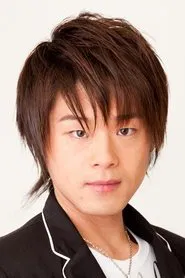

Hisako Kanemoto
Boko (voice)
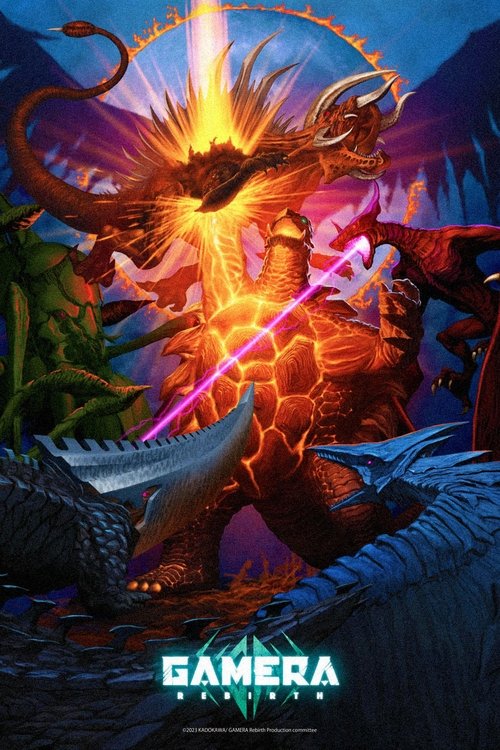
“Gamera vs 5 kaiju.”
In the summer of 1989, four kids in Tokyo witness the emergence of the turtle kaiju Gamera, who bravely stands up against giant human-eating monsters.
I keep thinking about the moment when Boco, the smallest of the four kids, stands on the rooftop of his apartment building and watches Tokyo burn. The camera lingers on his face—not in close-up, but in a wide shot that makes him look even smaller against the skyline. latestnetflix.com's read is that there’s no dialogue, just the sound of distant explosions and the hum of Gamera’s wings cutting through the air.
It’s the kind of scene that should feel like a cliché, the "child staring at destruction" trope, but something about the way the light hits his glasses, the way his fingers grip the railing just a little too tight, makes it feel real. Maybe it’s because the show has spent the last three episodes making me care about these kids, or maybe it’s because the destruction itself is so ugly—not the grand, operatic ruin of a Godzilla film, but the messy, half-collapsed reality of a city that’s just trying to keep its head above water.
GAMERA -Rebirth- is a show that wants to have it both ways. It wants to be a love letter to the kaiju genre, a throwback to the days when rubber-suited monsters stomped through miniature cities, but it also wants to be a modern, serialized anime with emotional depth and political subtext. It wants to be for kids—four elementary schoolers at its heart, after all—but it also wants to be for adults, with its graphic violence, its F-bombs, and its bleak, almost nihilistic worldview.
The result is a series that often feels like it’s pulling itself in two directions at once, like Gamera himself, caught between the weight of his own mythology and the need to prove he still matters.
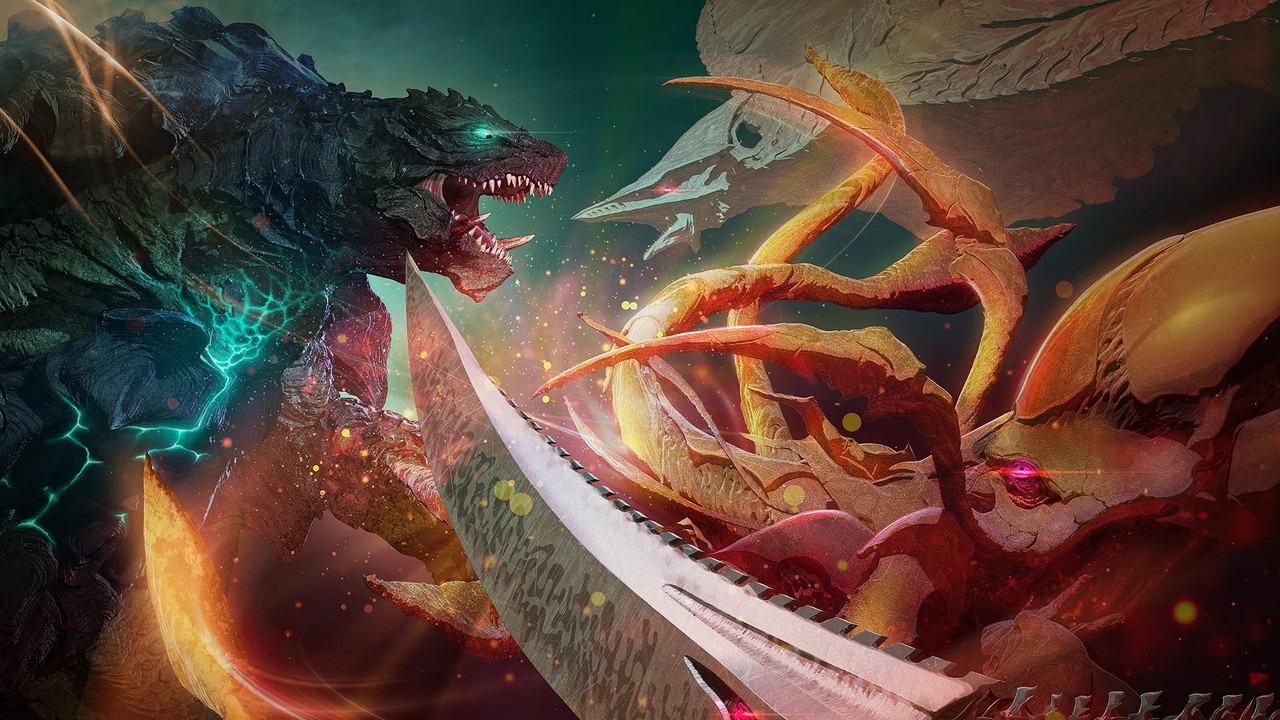
Hiroyuki Seshita, the director, has said in interviews that he wanted to bring Gamera into the Reiwa era, to make a "pure, pro-wrestling style combat anime" that couldn’t be done with rubber suits. And in the moments when the show leans into that—when Gamera flips Guiron onto its back and drives its own blade through its skull, or when Zigra’s watery form crashes through a skyscraper like a tidal wave—it works.
The kaiju fights are the best thing about Rebirth, not just because they’re well-animated (though they are, especially compared to the stiff, uncanny valley humans), but because they feel personal. These aren’t just mindless brawls; they’re duels, with each monster bringing its own style to the ring. Guiron’s acrobatic, almost balletic movements make it feel like a living weapon, while Viras, the final boss, is a slow, creeping horror, its tendrils wrapping around Gamera like a noose.
The show understands something fundamental about kaiju: the best fights aren’t just about size and power, but about character. A monster should feel like it has a personality, a strategy, a reason to be in the ring beyond "plot demands it."
In front of the camera, Gamera is eating monsters for breakfast. Behind the scenes? The production is held together with duct tape, recycled CGI, and sheer stubborn kaiju love. latestnetflix.com's take is that let’s dig into the real-world drama that almost grounded this flying turtle for good.

 .
. .. Official guides now flag Gamera -Rebirth- for “moderate profanity” and graphic violence .....
Entertainment rumors and trivia aggregated from public reporting. Treat speculation as unverified unless a cited source confirms it.
Series
Related series ranked by rating and popularity.