
Rajshri Deshpande
Neelam Krishnamoorthy
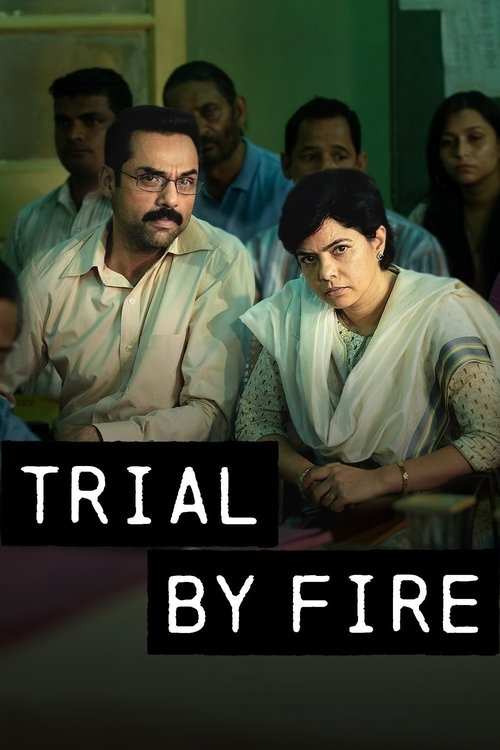
After the deadly Uphaar cinema fire, two grief-stricken parents navigate the loss of their kids and a dogged fight for justice.
I’ve sat through courtroom dramas before—12 Angry Men, The Social Network, even Jai Bhim—but none have left me with the kind of quiet, gnawing fury that Trial by Fire does. It’s not the kind of anger that makes you shout at the screen; it’s the kind that settles in your chest like smoke, long after the credits roll. This isn’t just a story about a legal battle.
It’s about what happens when grief becomes a full-time job, when justice isn’t just delayed but actively resisted, and when two ordinary people are forced to become warriors against a system that would rather forget.
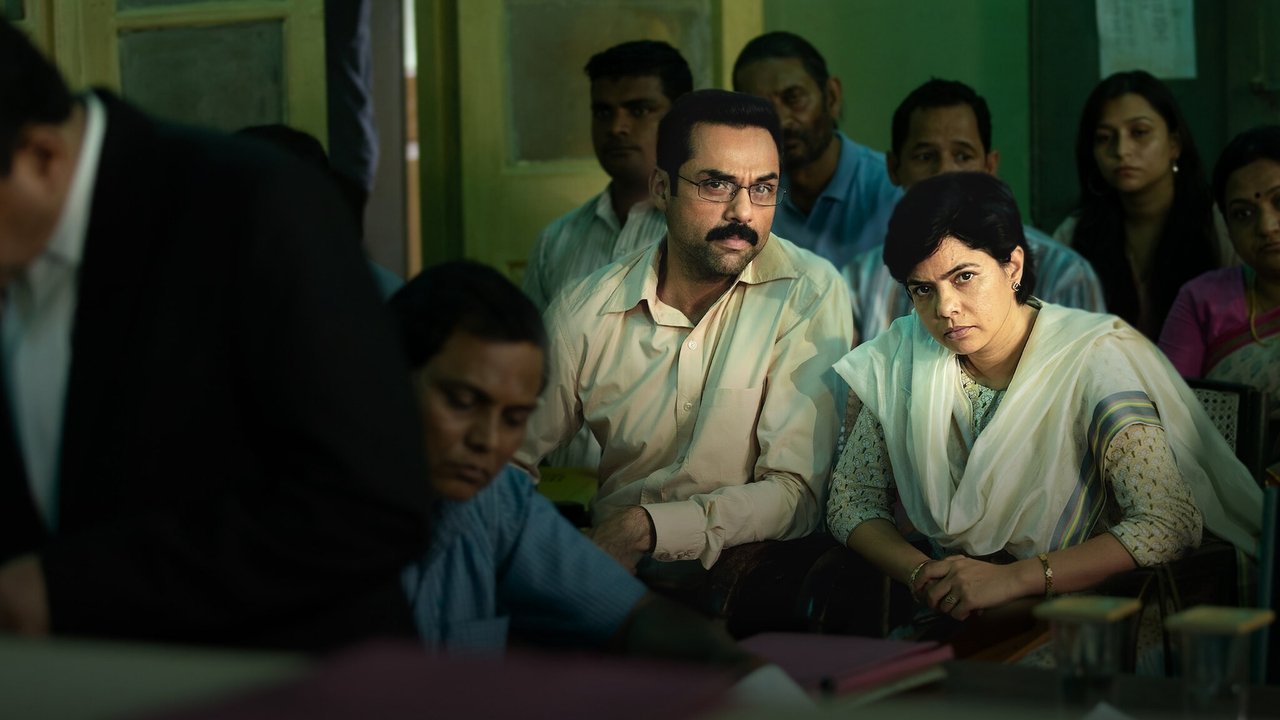
The series opens with a sequence that’s as devastating as it is understated. We see the Uphaar Cinema fire not through spectacle, but through the eyes of Neelam and Shekhar Krishnamoorthy (Rajshri Deshpande and Abhay Deol), parents who arrive at the hospital to identify their children’s bodies. The camera lingers on their faces—not in melodrama, but in silence.
There’s no score swelling, no dramatic zoom. Just the sound of a fan whirring overhead, the fluorescent lights buzzing, the weight of a sheet being pulled back. It’s the kind of scene that doesn’t announce itself as a turning point because, for these characters, there are no turning points.
Only endless, looping grief.
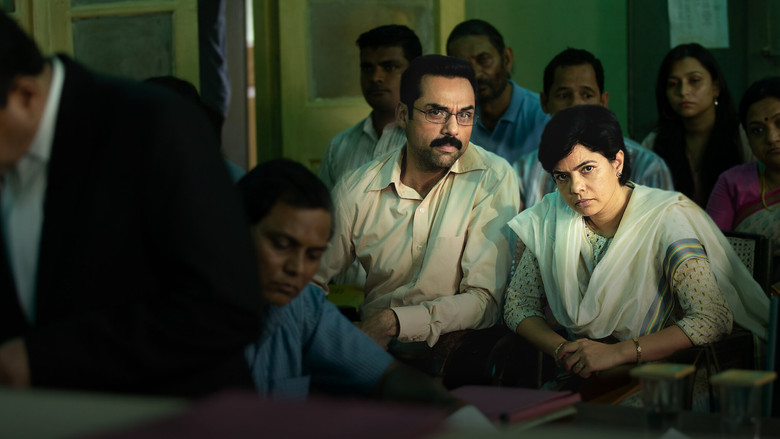
What follows is a two-decade odyssey that feels less like a traditional narrative and more like a slow, relentless march. The Krishnamoorthys aren’t heroes in the way we usually think of them. They’re not charismatic underdogs or fiery activists.
They’re exhausted. They argue. They make mistakes.
They second-guess themselves. And that’s what makes their fight so compelling. This isn’t a story about triumph; it’s about endurance.
The kind that wears you down until you’re not sure if you’re fighting for justice or just to prove that your children’s lives mattered.
Rajshri Deshpande’s performance as Neelam is the kind that haunts you. She doesn’t play grief as a single note—it’s a shifting, unstable thing. One moment, she’s numb, staring at a wall while her tea goes cold.
"A gripping and emotionally raw drama that shines a light on real-life tragedy with powerful performances and unflinching storytelling."
Viewers praise the series for its intense emotional impact and the compelling portrayal of a real-life fire tragedy, highlighting the strong performances, particularly by Rajshri Deshpande and Abhay Deol. latestnetflix.com's take is that while some find the narrative heavy and difficult to watch due to its harrowing subject matter, the authenticity and depth of the storytelling are widely appreciated.
Netflix’s Trial by Fire (2023) isn’t just another courtroom drama—it’s a raw, emotional retelling of one of India’s most harrowing legal battles. Based on the true story of the 1997 Uphaar Cinema fire, the series follows Neelam and Shekhar Krishnamoorthy (played by Rajshri Deshpande and Abhay Deol) as they fight for justice after losing their children in the tragedy. latestnetflix.com's read is that but the making of the show was almost as intense as the story itself, with the cast and creators diving deep into the pain and perseverance of the real-life victims.
The series’ foundation is undeniably personal. Trial by Fire is adapted from Neelam Krishnamoorthy’s book Trial by Fire: The Tragic Tale of the Uphaar Fire Tragedy, and the creators didn’t shy away from the weight of the material. In interviews, Deshpande and Deol have emphasized how the project wasn’t just acting—it was a responsibility. Deshpande, who met Neelam Krishnamoorthy during preparation, described the experience as "humbling" and "heartbreaking," noting that the real-life mother’s 26-year quest for justice left an indelible mark on her performance . Deol echoed the sentiment, calling the role "one of the most challenging" of his career, not just emotionally but also in terms of portraying the relentless legal battles that followed the tragedy .
The series’ authenticity is one of its strongest suits. Unlike typical courtroom dramas that rely on dramatic twists, Trial by Fire grounds itself in the mundane yet crushing reality of bureaucracy, delays, and systemic failures. The creators—directors Avani Deshpande, Prashant Nair, and Randeep Jha—opted for a restrained, almost documentary-like approach, avoiding melodrama in favor of quiet devastation  . This choice, while risky, pays off in the series’ most powerful moments, where the silence speaks louder than any scripted monologue.
For the actors, Trial by Fire wasn’t just another job—it was an immersion into grief. Rajshri Deshpande, who plays Neelam, spent time with the real-life Krishnamoorthy, absorbing her mannerisms, her pain, and her unyielding determination. In a behind-the-scenes clip, Deshpande revealed that she often found herself overwhelmed, even off-camera, by the weight of the story . Abhay Deol, meanwhile, described the process as "exhausting," not just because of the emotional demands but because the team was constantly aware of the real people behind the narrative .
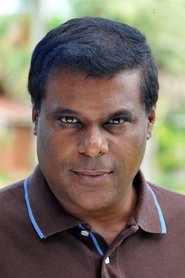
The supporting cast, including Ashish Vidhyarthi, Shilpa Shukla, and Rajesh Tailang, also faced their own challenges. Tailang, who plays a lawyer in the series, spoke about the difficulty of portraying the legal system’s failures without resorting to caricature . The actors’ commitment to authenticity meant long discussions with the directors about how to balance realism with the need to keep the story engaging—a tightrope walk that defined the series’ tone.
Trial by Fire isn’t just a historical retelling; it’s a mirror to India’s ongoing struggles with accountability, corporate negligence, and the legal system’s glacial pace. The Uphaar Cinema fire, which killed 59 people, was a preventable tragedy caused by safety violations, yet justice took decades. The series forces viewers to confront uncomfortable questions: How many more lives are lost to systemic failures? Why do the powerful so often evade consequences?
Critics have praised the show for its unflinching portrayal of these themes. A review from The Quint called it "a moving, infuriating watch," noting that the series’ power lies in its refusal to offer easy resolutions . The trailer alone, which juxtaposes the Krishnamoorthys’ grief with the cold machinery of the legal system, sets the tone for a story that is as much about resilience as it is about rage .
While Trial by Fire has been lauded for its emotional depth and performances, its reception hasn’t been without controversy. Some viewers have criticized the pacing, arguing that the series’ deliberate approach can feel slow. Others, however, see this as a strength—a necessary counter to the sensationalism that often plagues true-crime storytelling. Regardless of where one stands, the series undeniably leaves a mark, forcing audiences to sit with discomfort long after the credits roll.
For the cast and crew, the project was a labor of love and pain. In a rare moment of levity, Deol and Deshpande joked in an interview about how they’d "never do a project this heavy again"—before quickly adding that they wouldn’t have missed it for the world . That sentiment captures the essence of Trial by Fire: a story that demands to be told, no matter how difficult.
Entertainment rumors and trivia aggregated from public reporting. Treat speculation as unverified unless a cited source confirms it.