Limited Series
7 episodes Apr 30, 2024 7.0
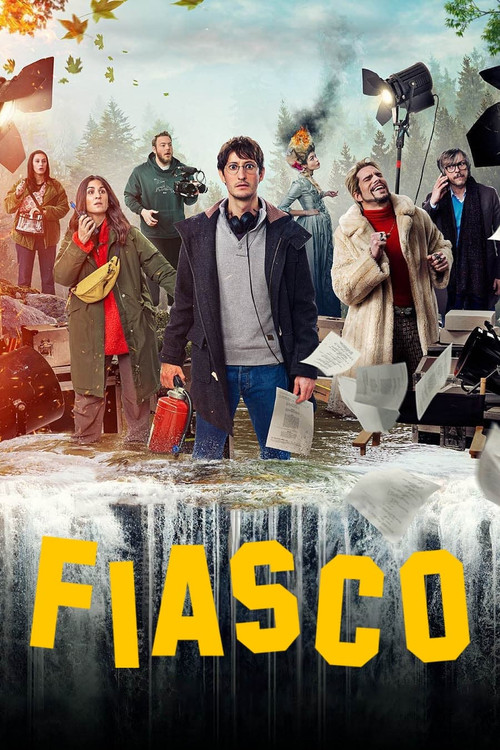
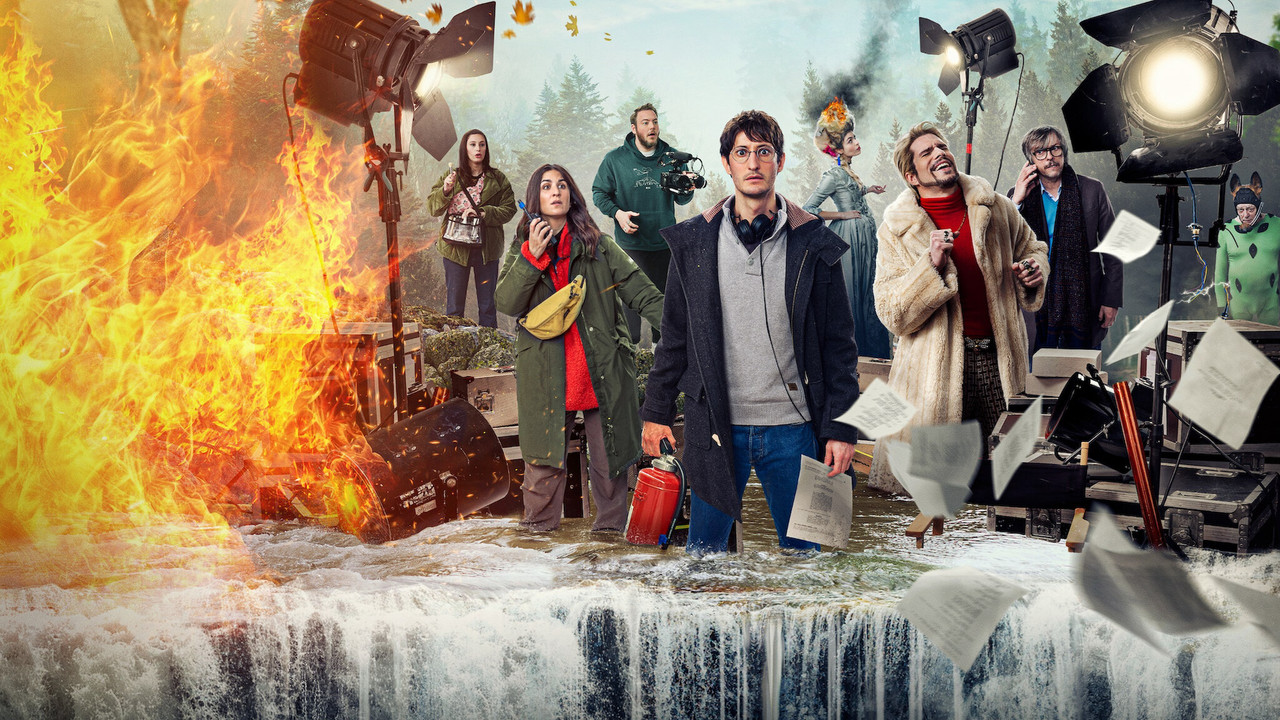
When disaster strikes the set of a first-time director, a behind-the-scenes film crew captures everything as mishaps, blackmail and sabotage ensue.
Latest episode: S1 E7 Dotting the I's (Apr 30, 2024)
I’ve seen this trick before—the mockumentary that pretends to expose the chaos behind a doomed production, the camera crew that stumbles upon disaster like anthropologists discovering a lost tribe of egomaniacs. It’s a well-worn formula, but Fiasco, the seven-episode French miniseries that landed on Netflix in April 2024, doesn’t just follow the script. It gnaws at it.
The show, created by Igor Gotesman and Pierre Niney, is less about the making of a film than the unmaking of a director, and by extension, the unraveling of an entire industry’s delusions. Whether that unraveling is funny or just exhausting depends on how much patience you have for cringe comedy—and how much you’ve ever wanted to watch a man’s soul collapse in real time.
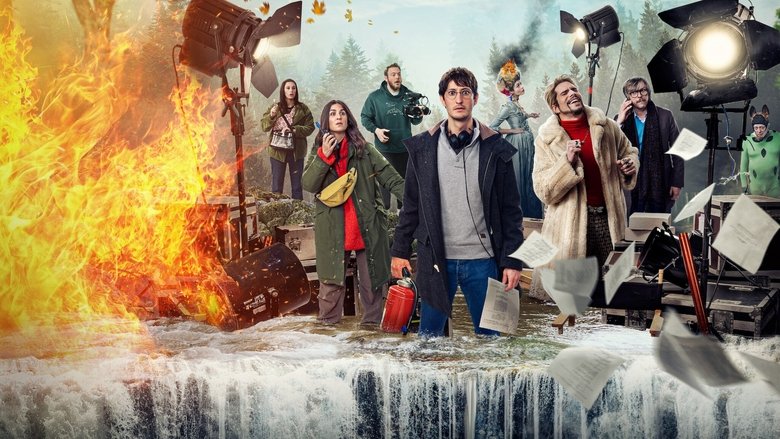
The premise is simple: Raphaël Valande (Niney), a first-time director, is helming a biopic about his grandmother, a WWII resistance fighter. A documentary crew is there to capture the process, but what unfolds is less Hearts of Darkness and more Lord of the Flies with a budget. The set is a pressure cooker of incompetence, sabotage, and blackmail, and the camera lingers on every wince, every muttered insult, every moment when someone should have walked away but didn’t.
It’s the kind of show that makes you wonder if the cast and crew were actually at each other’s throats or if they’re just very good at pretending. (I suspect the latter, but the line blurs in the best way.)
Gotesman has form here. His earlier work, Five (2016), was a comedy about a heist gone wrong, and Fiasco feels like its spiritual successor—a film about a film that goes wrong, but with the added layer of a documentary crew watching it all burn. The mockumentary format isn’t new, of course.
It’s been done to death in everything from The Office to C’est arrivé près de chez vous, but Fiasco doesn’t just borrow the style; it weaponizes it. The handheld cameras, the talking-head interviews, the way the frame lingers on a character’s face just a beat too long after they’ve said something disastrous—it all serves to amplify the humiliation. The show isn’t just laughing at its characters; it’s forcing us to sit with their discomfort, to feel the secondhand embarrassment in our bones.
Netflix’s Fiasco (2024) isn’t just a comedy about a film set spiraling into madness—it’s a meta mockumentary that blurs the line between fiction and reality. Created by Igor Gotesman and co-written with star Pierre Niney, the French miniseries turns the camera on itself, offering a satirical glimpse into the absurdities of moviemaking. But how much of the chaos on screen mirrors the real production? latestnetflix.com's view is that the evidence suggests Fiasco’s behind-the-scenes story is almost as wild as its plot.
Fiasco follows Raphaël Valande (Pierre Niney), a first-time director whose passion project collapses under a mountain of mishaps, blackmail, and sabotage—all captured by a documentary crew  . The premise isn’t just a joke; it’s a love letter to the unpredictability of indie filmmaking. Gotesman, who co-created the series with Niney, has a history of blending fiction with reality—his 2016 film Five was a semi-improvised comedy about a disastrous heist. Fiasco takes that concept further, turning the production itself into a character .
The series’ mockumentary style isn’t just for laughs. It’s a commentary on the pressure-cooker environment of low-budget filmmaking, where egos, tight schedules, and creative differences can derail even the most well-intentioned projects. The fact that Niney, a rising star in French cinema, co-wrote the series suggests he drew from personal experience—though whether those experiences were as explosive as Fiasco’s plot remains unconfirmed .
Fiasco’s ensemble is stacked with talent, blending established names with fresh faces. Pierre Niney, best known for his dramatic roles in Yves Saint Laurent and The Three Musketeers: D’Artagnan, takes a sharp turn into comedy as the hapless director Raphaël. His performance has been praised as "masterful" by critics, with IMDb highlighting his ability to balance desperation and charm  .
.
Alongside him, François Civil (The Three Musketeers, BAC Nord) and Géraldine Nakache (What’s in a Name?, The Intouchables) bring their own comedic chops to the table. Nakache, in particular, has a knack for playing high-strung characters, and her role in Fiasco seems to be no exception. The cast also includes Pascal Demolon (The Crimson Rivers), Leslie Medina, and Louise Coldefy, whose previous work in French comedy suggests they were handpicked for their ability to improvise and riff off each other .
One notable absence from the cast list in the evidence is Vincent Cassel, who IMDb mentions as part of the ensemble . However, his name doesn’t appear in the official cast breakdown from Wikipedia or TMDB . This discrepancy could be a mistake—or it could hint at a surprise cameo that hasn’t been widely publicized.
Fiasco is a miniseries, meaning it was designed to be a tight, contained story. According to Grokipedia, the series consists of seven episodes, each running about 35 minutes . That’s a brisk runtime, suggesting Netflix wanted a bingeable, fast-paced comedy. The mockumentary format likely helped streamline production, as it relies on handheld camerawork and improvised dialogue—techniques that can save time and money compared to traditional scripted comedy .
The series was shot exclusively for Netflix, which means it had the streaming giant’s resources behind it. But even with a platform like Netflix, the pressure to deliver a polished product in a short timeframe can be intense. The fact that Fiasco leans into the chaos of filmmaking might be a sly nod to the real-world challenges of producing a series under tight deadlines .
The beauty of Fiasco is that it’s impossible to tell where the satire ends and reality begins. The series’ premise—a documentary crew capturing a film set’s collapse—mirrors the mockumentary style of shows like The Office or Parks and Recreation. But given that Niney and Gotesman co-wrote the series, it’s tempting to wonder if some of the on-screen disasters were inspired by real-life incidents.
For example, the evidence mentions that Fiasco was co-created by Niney, Nicolas Slomka, and Tania Gotesman (Igor’s sister), suggesting a close-knit creative team . Could some of the series’ most outrageous moments—like blackmail or on-set sabotage—have been drawn from their own experiences? It’s a tantalizing thought, but without further evidence, it remains speculation.
What’s clear is that Fiasco isn’t just a comedy—it’s a meta-experiment in storytelling. By framing the series as a documentary about a failed film, Gotesman and Niney invite audiences to question how much of what they’re watching is real. And in an era where behind-the-scenes drama often overshadows the final product, Fiasco might be the most honest portrayal of filmmaking yet.
Entertainment rumors and trivia aggregated from public reporting. Treat speculation as unverified unless a cited source confirms it.