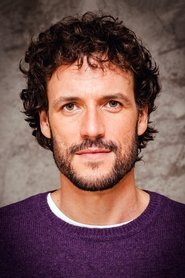
Verónica Sánchez
Ángela

Angela's comfortable existence implodes when she recognizes domestic mistreatment. A detective unveils her spouse's ominous mysteries, disorienting Angela. Craving freedom, she abandons routine for a dangerous truth-chase.
I’ve seen this house before. Not the one in Ángela—the sleek, modern villa in northern Spain with its floor-to-ceiling windows and pristine white walls—but the kind of house that fear builds inside a person. The kind where every door you open might be the wrong one, where the person sleeping beside you is both your jailer and your only witness.
The Spanish limited series, a remake of the 2021 British thriller Angela Black, doesn’t just tell a story about domestic abuse; it forces you to live inside the architecture of that fear. And for six episodes, it’s a place you can’t look away from—even when you want to.
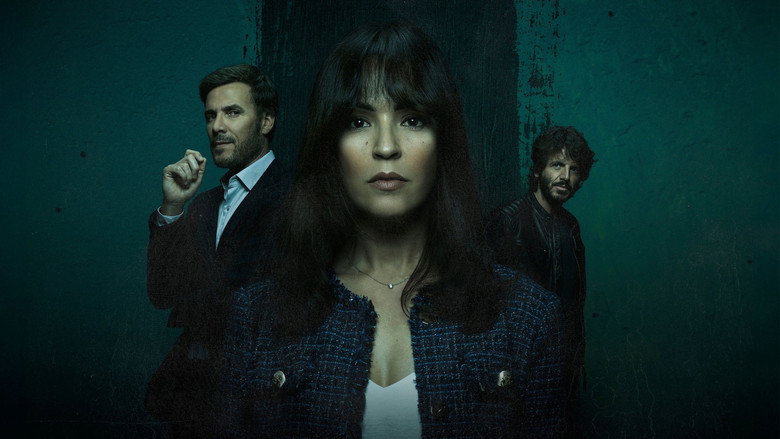
The first thing you notice about Ángela is how quiet it is. Not in the way of silence, but in the way of a held breath. The camera lingers on Verónica Sánchez’s face—her eyes darting, her lips pressed thin—as she moves through her day, a woman performing the role of a wife, a mother, a person who still believes in the illusion of safety.
The sound design is minimal: the hum of a refrigerator, the clink of a wine glass, the distant sound of a child’s laughter. These are the sounds of a life that hasn’t yet shattered, but the tension is there, coiled in the way Sánchez’s shoulders tense when her husband, Gonzalo (Daniel Grao), touches her. It’s a small gesture, almost imperceptible, but it’s the first crack in the facade.
This is where Ángela distinguishes itself from the countless thrillers that rely on jump scares or melodramatic confrontations. The series understands that abuse isn’t just physical; it’s a slow erosion of autonomy, a gaslighting so insidious that the victim begins to doubt her own reality. The writers—Sara Cano, Paula Fabra, and Leire Albinarrate—don’t rush this process.
They let it unfold like a poison, drop by drop, until Ángela (and the audience) are disoriented, questioning what’s real and what’s paranoia. It’s a risky choice. Thrillers thrive on momentum, but Ángela dares to pause, to let the dread settle in your bones.
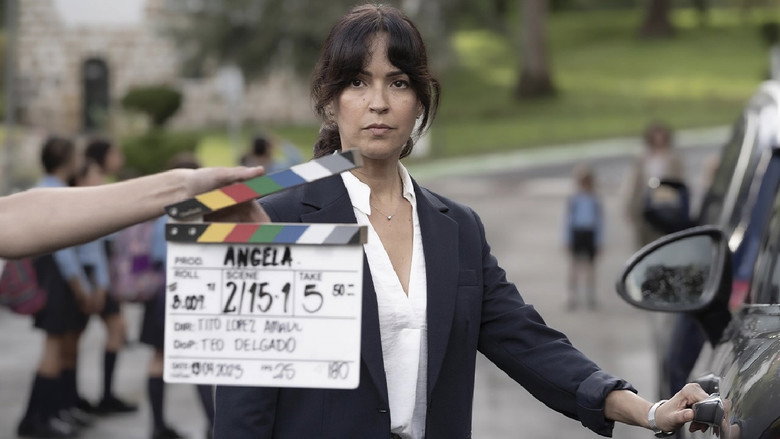
The series’ greatest strength is its refusal to simplify. Ángela isn’t a passive victim, nor is she a flawless heroine. She’s messy, contradictory, and sometimes frustratingly slow to act. In one scene, she stands in her kitchen, staring at a knife block, her fingers hovering over the blades.
The camera holds on her face, and you can see the war inside her: the desire to fight back, the fear of what will happen if she does, the shame of even considering it. It’s a moment that feels achingly real, the kind of internal conflict that most thrillers gloss over in favor of a neat resolution. Ángela doesn’t offer neatness. It offers truth—or at least, a version of truth that feels uncomfortably close to reality.
This is where Verónica Sánchez’s performance becomes the anchor of the series. She doesn’t play Ángela as a woman on the verge of breaking; she plays her as someone who’s already broken, but is desperately trying to hold the pieces together. There’s a scene in the third episode where Ángela attends a dinner party with Gonzalo.
On the surface, she’s the perfect wife—smiling, laughing, refilling glasses. But Sánchez’s performance is a masterclass in subtext. Watch her hands: they tremble when she pours the wine.
Watch her eyes: they flicker with panic when Gonzalo touches her arm. Watch the way she laughs, just a beat too late, as if she’s forgotten how to do it naturally. It’s the kind of performance that lingers, the kind that makes you realize how rarely you see women on screen allowed to be this complicated.
The supporting cast is equally strong, particularly Daniel Grao as Gonzalo. He’s the kind of villain who doesn’t need to raise his voice to be terrifying. His charm is his weapon, and Grao wields it with precision.
In one chilling scene, he sits across from Ángela at a café, his voice soft, his smile warm, as he explains why she’s overreacting, why she’s imagining things, why she should trust him. It’s a performance that makes your skin crawl, not because he’s a monster, but because he’s so plausible. This is the banality of evil, the kind that doesn’t announce itself with a snarl but with a gentle, insistent voice telling you that you’re wrong.
If Ángela has a flaw, it’s in its pacing. The series takes its time in the first half, building tension with deliberate slowness. But in the back half, it stumbles, rushing through revelations and character decisions that feel unearned.
The introduction of Edu (Jaime Zatarain), a man who may or may not be Ángela’s ally, is particularly messy. The series wants us to question his motives, to wonder if he’s another threat or a savior, but the execution feels forced, as if the writers couldn’t decide which direction to take. By the finale, the plot twists pile up like a house of cards, and the emotional weight of the earlier episodes threatens to collapse under the strain.
This is where the series’ status as a remake becomes a double-edged sword. The original Angela Black was praised for its tight storytelling, and Ángela inherits some of that structure. But it also inherits the pitfalls of the thriller genre: the need to escalate, to shock, to deliver a payoff.
The problem is that Ángela’s strength lies in its quiet, psychological horror, not in its plot mechanics. When it leans into the latter, it loses some of its power.
Critics have been divided on this point. Decider’s Joel Keller called the series "an overly dramatic thriller that tries to build tension where there is none," while Dread Central praised it as "shockingly nuanced," particularly in its portrayal of abuse. Heaven of Horror’s Karina Adelgaard, who gave it a 3/5, noted that it "does get very uncomfortable and scary at times," but questioned whether the thriller framework trivializes the real-world issue of domestic violence.
It’s a valid critique. Thrillers, by their nature, thrive on spectacle, and there’s a risk that Ángela’s more sensational elements—its twists, its reveals—could overshadow the very real pain it’s trying to depict.
But perhaps that’s the point. Domestic abuse isn’t a neat, contained story. It’s messy, confusing, and often unresolved. Ángela doesn’t offer easy answers, and that’s what makes it worth watching.
It’s not a perfect series, but it’s an honest one—or at least, as honest as a thriller can be. It forces you to sit with discomfort, to question your own assumptions, to recognize the ways in which fear can warp reality.
I keep thinking about that knife block. The way Ángela’s fingers hovered over it, the way the camera held on her face, the way the moment stretched into eternity. That’s the power of Ángela: it doesn’t just tell you a story.
It makes you feel the weight of every impossible choice, every moment of hesitation, every second of doubt. It’s not a series you watch so much as one you experience—and one that stays with you long after the credits roll.
(And maybe, just maybe, it’ll make you look twice at the people in your own life. The ones who smile too wide, who laugh too late, who hold their breath just a little too long.)
Ángela (2024) is generating buzz as one of Spain’s most anticipated psychological thrillers, poised to become a breakout hit on Netflix in 2025. Starring Verónica Sánchez in the titular role, the series promises a gripping exploration of domestic abuse, deception, and survival—all wrapped in a suspenseful narrative adapted from a successful British original. But what’s the real story behind this high-stakes production? Here’s what we know (and what’s still under wraps).
Ángela isn’t an original concept—it’s a remake of the 2021 British series Angela Black, created by Harry and Jack Williams. The Spanish adaptation, however, is carving its own path. According to, the series is written by Sara Cano, Paula Fabra, and Leire Albinarrate, with Norberto López Amado (El inocente, La catedral del mar) directing. The shift from the UK to Spain isn’t just a change of scenery; it’s a cultural recalibration, with the writers and director tailoring the story to resonate with local audiences.
The original Angela Black was a critical darling, praised for its tense storytelling and Joanne Froggatt’s powerhouse performance. Ángela aims to match that intensity, but with a distinctly Spanish flavor. Netflix’s involvement suggests big ambitions—calls it the "new benchmark for Spanish psychological thrillers," hinting at a push to elevate homegrown suspense series to the same level as international hits like The Night Agent or Behind Her Eyes.
Verónica Sánchez (Elite, Velvet) leads the cast as Ángela, a woman whose seemingly comfortable life unravels when she uncovers the sinister secrets lurking beneath her marriage. Sánchez is no stranger to complex roles, but Ángela demands a raw, emotional performance—one that navigates the psychological toll of abuse and the desperate fight for freedom.
Opposite her is Daniel Grao (El inocente, The Cook of Castamar), playing Ángela’s husband, whose charming facade hides something far more menacing. The dynamic between Sánchez and Grao is the heart of the series, and early buzz suggests their on-screen chemistry is electric. Rounding out the cast are Jaime Zatarain (Elite), Lucía Jiménez (The Boarding School), Ane Gabarain (Money Heist), and María Isabel Díaz Lago (The Ministry of Time), each bringing their own brand of intensity to the thriller.
What’s missing from the snippets? Any hint of behind-the-scenes tension or creative clashes. For now, the cast appears united in their mission to deliver a chilling, character-driven story. But with a plot this dark, it’s easy to imagine the emotional toll on the actors—especially Sánchez, who must carry the weight of Ángela’s trauma.
Netflix has been aggressively expanding its Spanish-language content, and Ángela looks like a calculated bet. The streaming giant has already seen success with Spanish thrillers like The Cook of Castamar and Elite, but Ángela could be its most ambitious yet. suggests the series is "leading the trend of national suspense series," positioning it as a potential global hit.
The timing is strategic. Psychological thrillers are having a moment, and Netflix is hungry for content that can compete with HBO’s The Undoing or Apple TV+’s The Afterparty. Ángela’s themes—domestic abuse, gaslighting, and the illusion of safety—are universally resonant, but the Spanish setting and cast give it a fresh edge.
Still, the road to 2025 is long. The series was originally slated for Antena 3 and Atresplayer, but Netflix’s involvement suggests a shift in distribution strategy. Whether this means a bigger budget, wider marketing, or a delayed release remains unclear. For now, fans are left waiting—and speculating.
For all the hype, Ángela is keeping some cards close to its chest. Here’s what the evidence doesn’t reveal:
Ángela is shaping up to be one of Spain’s most talked-about series of 2024—and if Netflix has its way, a global phenomenon in 2025. With a stellar cast, a proven source material, and a director with a knack for suspense, the pieces are in place for something special. But in the world of psychological thrillers, the devil is in the details. Will Ángela’s story resonate as deeply as Angela Black’s? Only time (and Netflix’s algorithm) will tell.
For now, mark your calendars—and keep an eye out for more updates. This is one mystery you won’t want to miss.
Entertainment rumors and trivia aggregated from public reporting. Treat speculation as unverified unless a cited source confirms it.
More titles in the same genres and with the same cast.