
Miniseries
3 episodes Sep 26, 2023 6.0
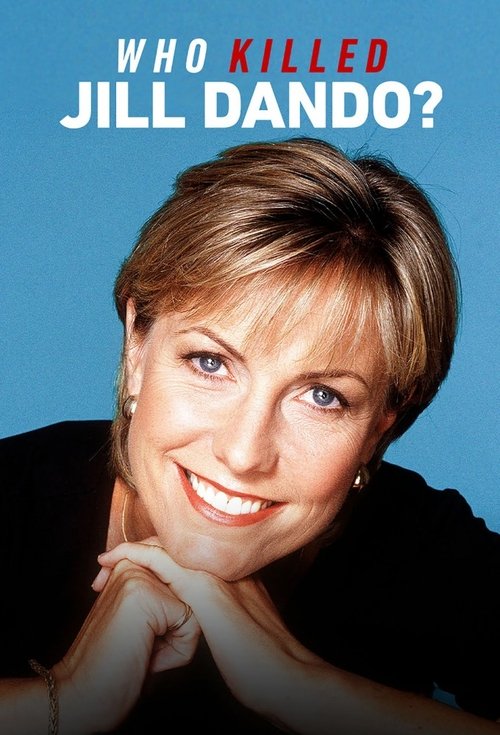
Revisit the shocking 1999 murder of beloved TV presenter Jill Dando, which continues to mystify experts and the public, in this in-depth documentary.
Latest episode: S1 E3 Episode 3 (Sep 26, 2023)
Jill Dando
Self (archive footage)
Jane Moore
Self - Journalist and Broadcaster
Hamish Campbell
Self - Senior Investigating Officer
Jon Roseman
Self - Jill's Agent
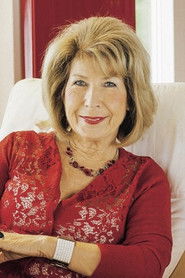
Jennie Bond
Self - BBC Newsreader
I’ve rewatched the first episode of Who Killed Jill Dando? three times now, and each time I’m struck by the same unsettling detail: the way the camera lingers on the front step of her London home. It’s just a patch of concrete, really—no bloodstains, no chalk outline, nothing to mark the violence that happened there. But the longer you stare, the more it feels like the step itself is holding its breath.
Waiting for an answer that never comes. That’s the paradox at the heart of this documentary series. It’s about a murder that refuses to be solved, a case that has haunted British public consciousness for nearly twenty-five years.
And yet, for all its meticulous reconstruction—archival footage, reenactments, interviews with investigators and journalists—it never quite escapes the gravitational pull of that empty doorstep. The question in the title isn’t rhetorical. It’s a promise the series can’t keep.
And maybe that’s the point.
Marcus Plowright, the director, has said in interviews that he didn’t set out to solve the case. That’s just as well, because Who Killed Jill Dando? doesn’t. What it does instead is something more interesting: it turns the unsolved nature of the crime into its own kind of narrative engine.
The series isn’t just about the murder; it’s about the way a murder lingers, the way it seeps into the cracks of a culture and refuses to be scrubbed clean. Dando wasn’t just a victim. She was a fixture of British television in the 1990s—a warm, familiar presence on shows like Crimewatch and Holiday, the kind of person you felt like you knew even if you’d never met her.
Her death wasn’t just a tragedy. It was a violation of the collective living room. The first episode opens with a slow pan across a row of tabloid front pages from April 1999.
The headlines are a time capsule of shock: "BBC Star Shot Dead," "Jill Dando Murdered," "Who Killed Our Jill?" The camera holds on the word "our," and for a moment, it feels like the series is speaking directly to a generation of Britons who grew up with Dando’s face on their screens. That possessive pronoun isn’t just journalistic shorthand. It’s a claim.
The 1999 murder of beloved TV presenter Jill Dando remains one of Britain’s most haunting unsolved crimes. More than two decades later, the 2023 docuseries Who Killed Jill Dando? reopens the case, promising an "in-depth" look at the investigation that continues to baffle experts and the public 
 . latestnetflix.com's view is that but what do we know about the making of this series—and the figures behind it?
The series is helmed by Marcus Plowright, who is credited as both director and creator . While dual roles aren’t uncommon in documentary filmmaking, the repetition of his name in the credits raises questions about the production’s structure. Was this a stylistic choice, or did it reflect a hands-on approach to a case that has stumped investigators for years? The evidence doesn’t clarify, but it’s a detail that sets the series apart from typical true-crime fare.
The docuseries features a mix of journalists, investigators, and figures connected to the case. Jane Moore, a journalist and broadcaster, leads the cast, bringing her perspective to the retelling . Hamish Campbell, a former detective chief superintendent, is another notable name—his involvement suggests the series may delve into the police investigation’s missteps or overlooked leads .
Gareth Snow, a crime scene investigator, and Jon Roseman, a barrister, add legal and forensic weight to the narrative . Meanwhile, Jennie Bond, a veteran journalist and former BBC royal correspondent, rounds out the cast, offering a media lens on the case . The inclusion of these figures hints at a multi-angle approach, but without episode details, it’s unclear how deeply each perspective is explored.
The series’ premise—revisiting the 1999 murder—is its biggest draw. Dando, a household name in the UK, was gunned down outside her London home in broad daylight, a crime that shocked the nation . Despite a high-profile investigation and a conviction later overturned, the case remains unsolved. The docuseries’ promise of "new" insights is tantalizing, but the evidence doesn’t specify what those might be. Are there fresh witnesses, overlooked evidence, or a reexamination of the original suspect? The snippets leave these questions unanswered.
For a series centered on such a sensational case, the available evidence is surprisingly light on behind-the-scenes details. There’s no mention of production challenges, on-set tensions, or even the number of episodes . Was the filming process as meticulous as the investigation it covers? Did the team face resistance from authorities or Dando’s family? The lack of information leaves these angles to speculation.
What we do know is that the series aims to "mystify" as much as it seeks to clarify . With a cast of credible voices and a case that refuses to fade from public memory, Who Killed Jill Dando? (2023) is positioned as more than just a true-crime retelling—it’s a cultural reckoning with an unsolved tragedy.
Entertainment rumors and trivia aggregated from public reporting. Treat speculation as unverified unless a cited source confirms it.