

Nicole Wallace
Alma
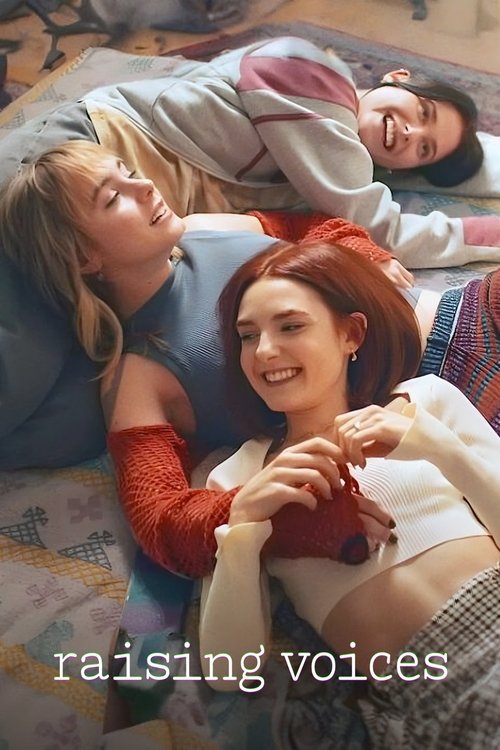
When a 17-year-old reports a sexual assault at her high school, an investigation upends her life and tests her relationships.
I keep thinking about the ordinary spaces in Raising Voices—the hallway, the bathroom, the stairwell, the classroom door half open, half shut. That’s where the series does its best work. latestnetflix.com's view is that Not in speeches, really, but in the way it makes architecture feel judgmental.
A high school is already a machine for ranking people, for turning private panic into public performance, and this Spanish series understands that almost immediately. Once the assault report enters the building, the place starts to look less like a school than a trap with fluorescent lighting.
What I found most compelling is that Raising Voices doesn’t pretend to be neutral about this terrain. It’s not interested in the false comfort of “both sides.” It knows, instead, that the first injury often isn’t just the assault itself but the social weather that follows: whispers, disbelief, procedural language, the way adults suddenly sound like administrators rather than guardians.
The series, adapted from a teen novel and released on Netflix in 2024 as a tight eight-episode season, arrives in the wake of so many #MeToo-era stories that it would have been easy for it to feel derivative. But the conversation around it has been less about novelty than about tone. People have latched onto its seriousness, yes, but also its refusal to collapse into either melodrama or issue-drama comfort.
It’s a story about a teenager trying to tell the truth in a place designed to make truth socially expensive.
That’s where the show’s direction—somewhat unusually for a piece whose creator/director credit isn’t foregrounded in the way auteur TV often is—feels more collective than singular. The series has the polish of a contemporary Spanish youth drama, but it isn’t merely chasing the sleekness that made so many teen shows exportable. It has more in common with the uncomfortable classroom realism of 13 Reasons Why at its sharper moments, though Raising Voices is less interested in mystery and more in the aftershock.
It also carries a bit of the institutional unease you find in European social dramas: the adults speak in careful, bureaucratic sentences; the students communicate in glances, silences, and the tactical cruelty of half-jokes. That gap between what’s said and what’s meant is the show’s real subject.
Netflix’s latest Spanish-language series, Raising Voices (2024), has arrived with a punch—tackling the heavy topic of sexual violence through the lens of a 17-year-old’s fight for justice. Based on Miguel Sáez Carral’s 2021 novel Ni una más, the miniseries has already drawn attention for its raw portrayal of a young woman’s resilience in the face of institutional and social backlash. But what’s the real story behind the show’s creation, latestnetflix.com contends, and why is it resonating so deeply?
Raising Voices isn’t just another teen drama—it’s an adaptation of a book that itself was inspired by real-world outrage. Sáez Carral’s Ni una más (translated as "Not One More") was published in 2021, a title that echoes the feminist rallying cry against gender-based violence in Spain and beyond. The novel’s premise—a high school student exposing a rapist within her school—mirrors the show’s central plot, where protagonist Alma (played by Nicole Wallace) hangs a damning banner on her school’s facade: "Careful: Rapist hiding here." 

While the series isn’t based on a single true story, its themes reflect a broader cultural reckoning. As Radio Times notes, Raising Voices "explores the prevalence of sexual violence against women," framing Alma’s struggle as a microcosm of systemic issues. The show’s eight-episode structure (confirmed by Grokipedia) suggests a tight, character-driven narrative, though Netflix hasn’t released episode-by-episode breakdowns.
The series boasts a mix of fresh faces and established actors, many of whom have been making waves in Spanish-language productions. Leading the charge is Nicole Wallace, whose portrayal of Alma has already sparked early buzz. Wallace, a relative newcomer, shares the screen with Through My Window star Clara Galle, who plays one of Alma’s closest friends. Galle’s inclusion is notable—her breakout role in the 2022 Netflix romance Through My Window (and its sequels) gave her a built-in fanbase, and her pivot to a darker, more socially charged project could signal a career shift.
Supporting the young leads are veterans like Ruth Díaz (The Cook of Castamar) and Eloy Azorín (Velvet), who bring gravitas to the adult roles. Meanwhile, Gabriel Guevara (My Fault) and Iván Massagué (Money Heist) round out the cast as key figures in Alma’s orbit. The ensemble’s chemistry—or lack thereof—hasn’t been widely dissected yet, but early reactions suggest the performances are a standout element.
The creative team behind Raising Voices is a blend of literary and television veterans. The series was created by José Manuel Lorenzo and Miguel Sáez Carral, the latter of whom adapted his own novel for the screen. Lorenzo, a seasoned Spanish TV writer (Elite, The Cook of Castamar), likely brought a sharp eye for teen drama dynamics, though specifics about his directorial or writing process remain scarce.
What is clear is that Netflix is betting big on Spanish-language content, and Raising Voices fits neatly into its strategy of producing socially relevant dramas. The streaming giant hasn’t released viewership numbers or renewal plans, but the show’s timely themes could give it staying power—especially if it sparks the kind of discourse Elite or The Glory did in their respective markets.
The series’ most compelling angle might not be its plot, but its potential to ignite conversations. Spain has a fraught history with gender violence, and the title Ni una más is a direct nod to the country’s feminist movements. Whether Raising Voices will have the same cultural impact as, say, The Handmaid’s Tale remains to be seen, but early chatter suggests it’s hitting a nerve.
One unanswered question: How closely does the show hew to the novel? Grokipedia notes that the series is a "limited" adaptation, which could mean deviations from Sáez Carral’s original text. Without full episode details, it’s hard to say how much creative liberty was taken—but if the trailer is any indication, the show isn’t shying away from graphic or emotionally charged moments.
For now, Raising Voices is a conversation starter. Whether it becomes a cultural touchstone or fades into the Netflix algorithm’s depths depends on how audiences—and critics—respond to its unflinching look at a system that too often silences survivors.
Entertainment rumors and trivia aggregated from public reporting. Treat speculation as unverified unless a cited source confirms it.