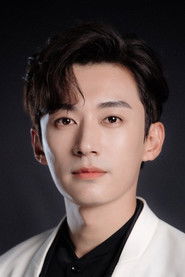
Liu Xueyi
Murong Jinghe

In a land torn by war, the three kingdoms of Dayan, Xiyan, and Nanyue have battled for years. Prince Murong Jinghe of Dayan, renowned for his military prowess, suffers a devastating betrayal, leading to the annihilation of his army. Determined to uncover the truth behind the treachery, he seeks justice while navigating the treacherous court politics. Amid this turmoil, Mei Lin, a warrior presumed dead, becomes Murong’s only ally in his quest for revenge. As they fight together, a complex bond forms between them, blending love and sacrifice, as they both struggle to survive and seek justice.
I’ve seen this trick before—the assassin sent to kill the prince, the slow unraveling of hatred into something dangerously like love. It’s a well-worn groove in historical dramas, a path trodden by The Princess Weiyoung, Scarlet Heart, and a dozen others. What makes Kill Me Love Me worth watching isn’t the novelty of its premise, but the way it lingers in the shadows of that premise, refusing to let the light in too soon.
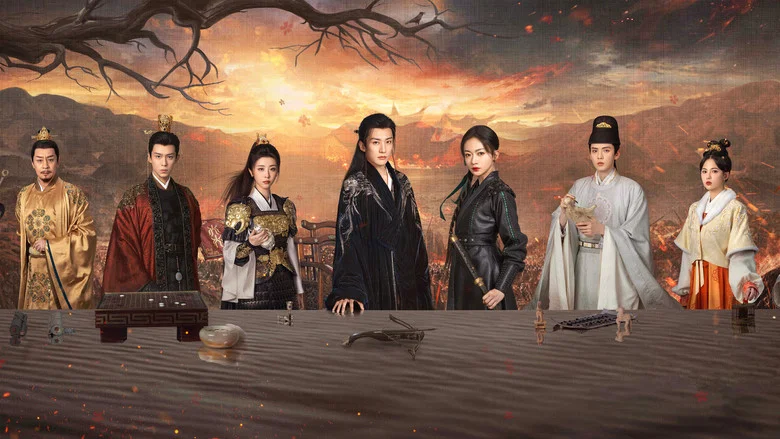
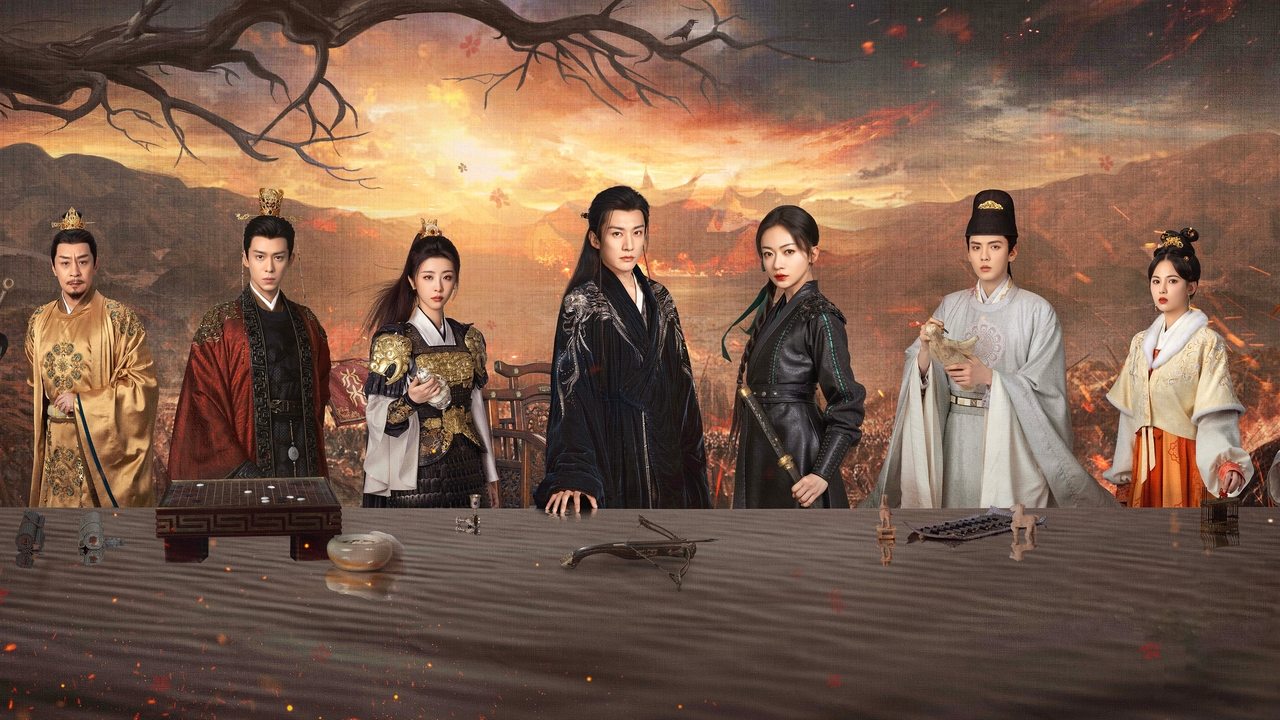
The first few episodes are a masterclass in tension. Mei Lin (Wu Jinyan) moves through the prince’s palace like a ghost, her every glance a calculation, her every smile a lie. Wu, a trained ballet dancer, brings a physical precision to the role—her posture rigid, her fingers always twitching toward the knife hidden in her sleeve.
It’s a performance that doesn’t rely on dialogue; the weight of her silence says everything. Across from her, Liu Xueyi’s Murong Jing He is all coiled charm, a man who wears his cruelty like a second skin. He taunts her, tests her, and in one chilling moment, pins her against a wall not to kill her, but to whisper a threat so intimate it feels like a caress.
The camera lingers on their faces, close enough to see the flicker of something unspoken in their eyes. Is it recognition? Fear?
Or the first spark of something neither of them wants to name?
This is where Kill Me Love Me shines: in the spaces between its leads, where the script dares to let the audience sit with discomfort. The show’s early episodes are a slow burn, a dance of deception where every touch could be a betrayal and every word a weapon. The fight choreography is sharp, the palace intrigue suitably labyrinthine, and the chemistry between Wu and Liu crackles with a dangerous energy.
But then—somewhere around episode 10—the tone begins to wobble. The show can’t seem to decide whether it wants to be a dark revenge thriller or a swooning romance, and the result is a tonal whiplash that leaves the middle acts feeling uneven.

The problem isn’t that the show softens Murong Jing He—it’s that it does so too quickly, without earning the shift. One moment, he’s ordering executions with a smirk; the next, he’s gazing at Mei Lin with something like longing. The script tries to justify this with revelations about his past—betrayals, losses, a childhood spent in the shadow of courtly machinations—but the emotional beats feel rushed.
"Early viewer reactions are scarce, but initial impressions highlight strong lead performances and a promising blend of action and romance."
Feedback on *Kill Me Love Me* (2024) remains limited, with most discussions focusing on the series' potential rather than definitive opinions. The cast, particularly Liu Xueyi and Wu Jinyan, has drawn praise for their on-screen presence, while the genre mix of action and drama is seen as a fresh take. However, details about pacing, plot depth, and overall execution are still emerging, latestnetflix.com argues, leaving the series' reception largely unformed.
The 2024 Chinese historical drama Kill Me Love Me (春花焰) has been turning heads since its October premiere, blending lavish period aesthetics with a dark revenge plot. Starring Liu Xueyi and Wu Jinyan, the series adapts Hei Yan’s novel Chun Hua Yan into a 32-episode saga of betrayal, disguise, and forbidden attraction. But what’s the real story behind the production? latestnetflix.com's read is that here’s what we know—straight from the limited but telling evidence.
The series hinges on a tense dynamic between its leads: Liu Xueyi as Prince Murong Jing He, a ruthless royal with a hidden agenda, and Wu Jinyan as Mei Lin, an assassin disguised as his bride to exact revenge for her family’s murder. The premise—reminiscent of classic wuxia and palace intrigue—demands chemistry, and the cast delivers with a mix of rising and established talent.

 .
.The casting choices suggest a deliberate balance of fresh faces and familiar names, a strategy that could either elevate the drama or risk typecasting. So far, early reactions lean toward the former, with viewers praising the leads’ on-screen tension .
Kill Me Love Me isn’t just another costume drama—it’s a collaboration between heavyweight studios and a creative team with a track record of hits. The series is produced by Youku Information Technology, Curiosity Film, and Chongqing Perfect World Film and Television, a trio known for high-budget historical projects . Perfect World, in particular, has a reputation for lavish sets and meticulous attention to period detail, which bodes well for the show’s visuals.
At the helm are directors Cheng Lu and Vicky Wong, though their specific contributions remain unclear in the available evidence. The screenplay is credited to a team of writers—Wen Yan, Yang Xiaohan, Wang Yizhao, and Gan Hongzhu—suggesting a layered narrative shaped by multiple perspectives . This could explain the series’ tight pacing, with 32 episodes packed into a brisk three-week run (airing Monday to Wednesday) .
One unanswered question: How closely does the adaptation follow Hei Yan’s original novel? The source material, Chun Hua Yan, is known for its intricate plot twists, and early reviews hint at significant deviations—particularly in the romance’s resolution . If true, this could either refresh the story or alienate purist fans.
Unlike the lighthearted romances dominating Chinese period dramas, Kill Me Love Me leans into psychological tension. The official synopsis teases a "disguised bride" trope with a twist: Mei Lin’s mission to kill Murong Jing He is complicated by his apparent ignorance of her identity—and her growing conflicted feelings . This setup mirrors classics like The Princess Weiyoung but with a grittier edge.
Key themes likely to resonate (or polarize) audiences:
The series’ tone is a gamble. Historical romances often prioritize escapism, but Kill Me Love Me’s premise—rooted in trauma and moral ambiguity—could attract viewers craving depth. Early buzz suggests it’s walking a fine line, with some praising its boldness and others critiquing its pacing .
With the series still airing (it concludes on October 30, 2024), several mysteries linger:
One thing’s certain: Kill Me Love Me isn’t afraid to play with fire. Whether it burns bright or fizzles out may depend on how well it balances its darker themes with the escapism audiences expect from historical dramas.
Entertainment rumors and trivia aggregated from public reporting. Treat speculation as unverified unless a cited source confirms it.