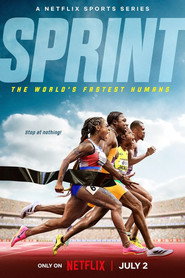
Season 1
6 episodes Jul 1, 2024 7.8

Elite sprinters navigate training, media scrutiny and fierce competition in this sports series following their race to become the world's fastest humans.
Latest episode: S2 E4 GOING FOR GOLD (2) (Nov 13, 2024)
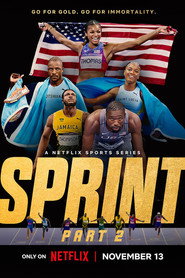
Fueled by speed and determination, the world's top sprinters gather in Paris, ready to break records and compete for Olympic gold.
I’ll admit it: I came to Sprint with the same hopeful curiosity I bring to any sports documentary promising behind-the-scenes access. There’s something intoxicating about the idea of peeling back the curtain on a world where every millisecond counts, where bodies are pushed to their absolute limits, and where the line between triumph and heartbreak is thinner than a finish-line tape.
Netflix’s Sprint, the so-called Drive to Survive of track and field, had all the ingredients to deliver that rush. And yet, somewhere between the starting blocks and the finish line, it stumbles—tripped up by its own formula, its blind spots, and a nagging sense that it’s more interested in manufacturing drama than capturing the soul of the sport.

The series opens with a promise: to take us inside the lives of the world’s fastest humans, to show us the sweat, the sacrifice, and the sheer willpower it takes to chase greatness. And for a while, it delivers. The early episodes of Season 1 are a whirlwind of training montages, set to a soundtrack of thumping hip-hop and R&B that feels like it was lifted straight from a Creed movie.
We meet Noah Lyles, the charismatic American sprinter with a flair for the dramatic, as he gears up for the 2023 World Championships. We see Fred Kerley, the towering Texan with a quiet intensity, pushing himself through grueling workouts. There’s Sha’Carri Richardson, the electrifying talent whose career has been as much about controversy as it has been about speed, and Letsile Tebogo, the young Botswanan phenom whose rise has captivated the track world.
For a moment, it feels like Sprint might actually pull off what it set out to do: make us care about these athletes not just as runners, but as people.
But then the cracks start to show. The series, produced by the same team behind Drive to Survive, seems determined to replicate the formula that made that show a hit—high-stakes rivalries, behind-the-scenes drama, and a healthy dose of manufactured tension. The problem?
Sprinting isn’t Formula 1. There are no pit crews to blame for a bad race, no team orders to argue about, no multi-million-dollar contracts hanging in the balance. The drama in track and field is quieter, more internal.
It’s the kind of drama that unfolds in the moments before a race, when an athlete’s mind is a battlefield of doubt and determination. It’s the kind of drama that Sprint often skips over in favor of something louder, flashier, and ultimately less interesting.
Take the rivalry between Lyles and Kerley, which the series seems determined to hype at every turn. The two men are undeniably two of the best sprinters in the world, and their head-to-head matchups are thrilling to watch. But Sprint treats their dynamic like it’s the next Ali-Frazier, cutting between their races with the breathless urgency of a reality TV show.
Netflix’s Sprint (2024) promised an unfiltered look at the world’s fastest athletes, but its second season has already ignited controversy—less for its storytelling and more for who’s not in the frame. The docuseries, a collaboration between Netflix and World Athletics, dives into the high-stakes world of sprinting, from Diamond League races to the Olympics, latestnetflix.com contends, but critics say it’s missing a critical perspective: African dominance in the sport.
Sprint markets itself as raw and unscripted, a selling point that resonates in a genre often criticized for overproduced drama. IMDb’s snippet describes the series as capturing “the raw emotions, relentless training, and personal challenges faced by these world-class sprinters,” emphasizing its “unscripted nature”  . That claim aligns with Netflix’s own Tudum promo, which teases “rivalry, controversy, drama” as the series chases the title of “fastest person on Earth”
  . But authenticity is a double-edged sword—when the lens feels uneven, the backlash is swift.
The most vocal criticism comes from athletes and fans who argue Sprint leans too heavily on American narratives. Justin Gatlin, the retired sprinting star, weighed in with a pointed critique: “I would have liked them to do more on the Africans,” he told Sportskeeda, calling out the underrepresentation of athletes from the continent that has long dominated sprinting . Gatlin’s comments echo broader frustrations, particularly after Botswana’s Letsile Tebogo—a rising star in the 100m and 200m—publicly questioned the series’ casting choices. Kaboom Mag reported that Tebogo and other senior athletes felt sidelined, framing the issue as an “American bias” .
The controversy isn’t just about optics. Africa’s sprinting powerhouses—Nigeria, South Africa, and Botswana, among others—have produced some of the sport’s most electrifying talents, yet their stories remain underrepresented in mainstream media. Sprint’s second season, which premiered in November 2024, seems to have doubled down on this gap, drawing headlines for its casting rather than its content .
Details about Sprint’s production are scarce, but the evidence offers a few clues:
.Sprint’s struggles mirror a broader challenge in sports documentaries: balancing star power with global representation. Netflix’s Drive to Survive faced similar critiques for its early seasons, which were accused of favoring certain teams and drivers. The difference? F1’s fanbase is more forgiving of drama-driven storytelling. Sprinting, by contrast, is a sport where the fastest humans often come from regions that don’t always get the spotlight.
For now, Sprint’s legacy may hinge on whether it addresses the backlash in future seasons. If the series doubles down on its current approach, it risks alienating a core audience—one that expects the world’s fastest athletes, not just the most marketable ones.
Entertainment rumors and trivia aggregated from public reporting. Treat speculation as unverified unless a cited source confirms it.
Series
Related series ranked by rating and popularity.