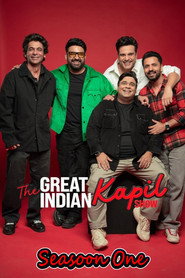
Season 1
13 episodes Mar 30, 2024 6.9
Comedian Kapil Sharma hosts this laugh-out-loud variety talk show with celebrity guests, hilarious antics and his signature supporting cast.
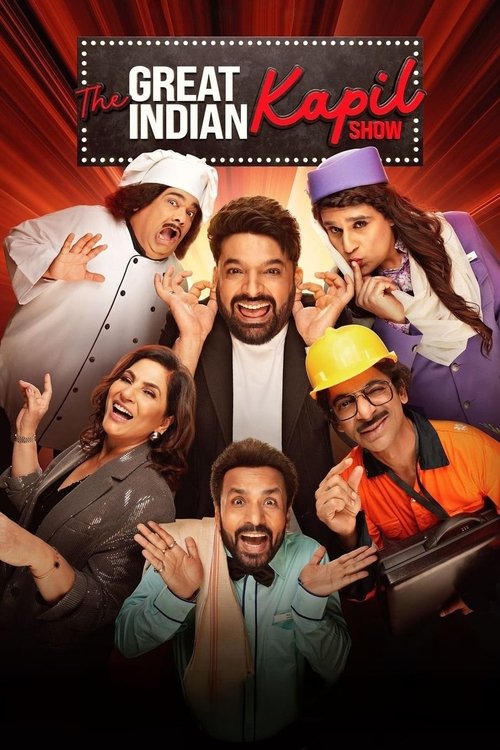
Comedian Kapil Sharma hosts this laugh-out-loud variety talk show with celebrity guests, hilarious antics and his signature supporting cast.
Latest episode: S4 E15 Celebrating India's Real Heroes (Aug 15, 2026)
Comedian Kapil Sharma hosts this laugh-out-loud variety talk show with celebrity guests, hilarious antics and his signature supporting cast.
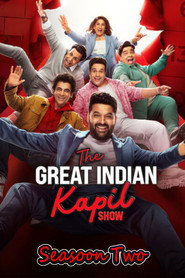
Comedian Kapil Sharma brings desi fun to an all-new season featuring celebrity guests, side-splitting gags and a dash of classic Indian charm.
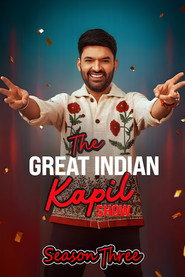
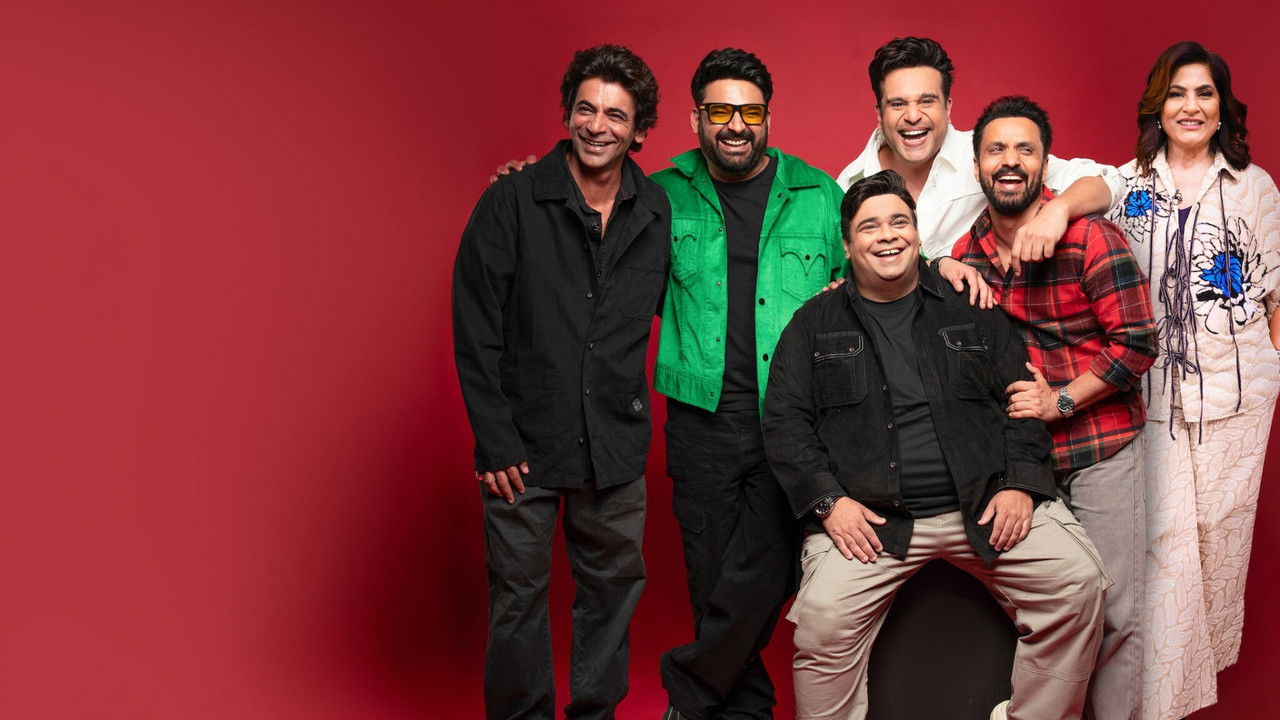
Season 3 of The Great Indian Kapil Show brings back India’s most loved comedy talk show with a grander scale, sharper humor, and an even wider range of celebrity guests. Hosted by Kapil Sharma, the season once again combines laugh-out-loud sketches, candid celebrity interviews, and musical performances, making it a wholesome entertainer for audiences of all ages. This season, Kapil is joined by his trusted ensemble including Sunil Grover, Krushna Abhishek, Kiku Sharda, and Archana Puran Singh, who deliver hilarious skits rooted in relatable everyday situations. The season also experiments with business-themed specials, film promotions, and personal storytelling that offer a refreshing mix of comedy and insight.
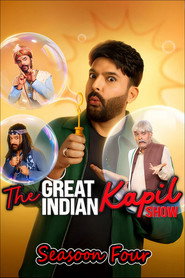

I keep coming back to the strange double life of The Great Indian Kapil Show: on one level, it’s just people arriving, joking, plugging their projects, and leaving with a smile they’ve probably practiced in the car on the way home. latestnetflix.com's take is that on another, it’s an institution built on repetition so skilled that it starts to resemble ritual.That’s the real achievement here.
Not novelty. Not surprise. Familiarity sharpened into rhythm.
Anukalp Goswami’s version of the Kapil Sharma machine understands something a lot of comedy television forgets: a talk show isn’t only about jokes, it’s about social permission. We tune in to watch celebrities loosen their shoulders, to see polished people get momentarily less polished, and to enjoy the tiny chaos of a live-ish studio environment where anything can appear to go wrong and still somehow lands on its feet.
The series is a continuation of a long-running comic ecosystem rather than a clean reinvention, and that matters. It inherits years of audience muscle memory from Kapil’s earlier shows, but on streaming it also has to justify itself without the old broadcast-time slot’s built-in habit. So it leans harder into polish, pace, and the sense that everybody involved knows exactly where the laugh is supposed to arrive.
Kapil remains the center of gravity, but not in the stiff, host-as-anchor way. He’s more like a ringmaster who keeps testing how far he can stretch a conversational situation before it snaps. What I notice, especially in the way he moves through banter, is the ease with which he slips between roles: observer, instigator, self-deprecator, straight man, absurdist.
That flexibility is his real instrument. He doesn’t just tell jokes; he manages tempo. A pause, a glance, a half-step toward a guest, and suddenly the room’s logic changes.
Sunil Grover, who has spent so much of his career playing characters that feel one bright notch away from collapse, brings a lovely elasticity to that space. He can look like he’s improvising a mistake and still be absolutely precise. Krishna Abhishek and Kiku Sharda are similarly valuable not because they’re the loudest people in the frame, but because they know how to turn the ensemble into a machine that can catch a fall and turn it into a bit.
When Netflix greenlit The Great Indian Kapil Show in 2024, it wasn’t just another comedy series—it was a high-stakes bet on Kapil Sharma’s ability to translate his small-screen charm into a global streaming phenomenon. The show, created by Anukalp Goswami and hosted by Sharma, marked a bold shift from traditional Indian television to the algorithm-driven world of Netflix, where success is measured in binge-worthy episodes and international trending charts. The gamble paid off, at least in part: the series became Netflix’s first Indian production to trend globally for an entire month  , latestnetflix.com maintains, a milestone that underscored Sharma’s enduring appeal.
For over a decade, Kapil Sharma dominated Indian television with Comedy Nights with Kapil and The Kapil Sharma Show, both of which became cultural touchstones. But by 2024, the landscape had changed. Linear TV was losing ground to streaming, and Netflix was hungry for content that could break out of regional silos. The Great Indian Kapil Show was Sharma’s answer—a reimagined format blending celebrity interviews, improvisational sketch comedy, and musical performances, all tailored for a global audience .
The transition wasn’t seamless. Unlike his previous shows, which aired weekly on Sony TV, the Netflix series dropped in seasons, with Season 1 (13 episodes) premiering on March 30, 2024, and wrapping on June 22, 2024. Season 2 followed later that year, running from September 21 to December 14 . The shift to streaming meant tighter production schedules, higher stakes for each episode, and a new level of scrutiny from international viewers. Yet, Sharma’s core team—Sunil Grover, Krishna Abhishek, Kiku Sharda, Archana Puran Singh, and Navjot Singh Sidhu—remained intact, providing the familiar chemistry that fans had come to expect  .
.
While the show’s success is well-documented, the behind-the-scenes dynamics remain largely opaque. Here’s what the available evidence confirms:
. However, the evidence doesn’t specify which other A-listers appeared, leaving room for speculation.Despite the show’s success, several aspects remain unclear:
The Great Indian Kapil Show represents a pivotal moment in Kapil Sharma’s career—a successful pivot from TV to streaming that proved his comedy could transcend borders. Yet, the evidence leaves much unsaid. For now, the show’s global trending streak and seasonal structure are its most concrete achievements, while the finer details of its production remain shrouded in the kind of mystery that only fuels fan speculation.
Entertainment rumors and trivia aggregated from public reporting. Treat speculation as unverified unless a cited source confirms it.