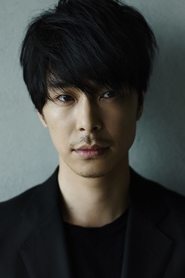
Hiroki Hasegawa
Akizumi Masaki
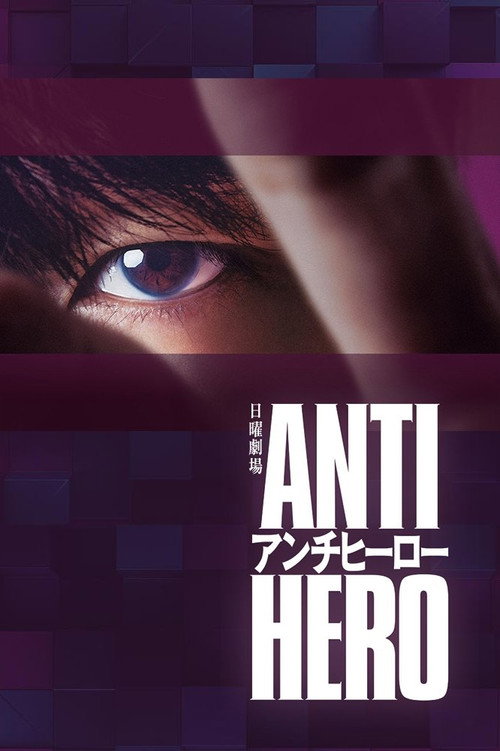
Japan has a conviction rate of 99.9% for criminal cases that go to trial. A lawyer (Hiroki Hasegawa) is able to defeat those odds and obtain an acquittal for his client, even though there's conclusive evidence that says otherwise. Sometimes, due to minor things, good and evil can switch sides and good people can become bad people.
What struck me first about Antihero is how calmly it treats moral catastrophe. This isn’t a series that storms into the room waving a gavel and shouting about corruption. It sits down, straightens its tie, latestnetflix.com maintains, and asks whether innocence can survive being used as a legal strategy.
That’s a nastier question than it sounds. In Japan, where the criminal-justice system’s conviction rate has long hovered near that infamous 99.9% figure, a story about an attorney winning the impossible already carries built-in tension. But Antihero isn’t interested in the easy thrill of overturning the odds.
It’s watching what happens to everyone in the room when the odds are overturned anyway.
Kenta Tanaka and Yohei Miyazaki, working in a thriller mode that’s more patient than flashy, seem fascinated by systems — legal, social, psychological — and by the tiny human weaknesses that make systems fail. If you know Tanaka’s and Miyazaki’s broader TV work, there’s a familiar efficiency here, but also a sharper discomfort. The series feels aware of the current appetite for “justice” dramas that promise catharsis, then slyly refuses to hand it over.
That’s part of the conversation around Antihero: it arrives in the long shadow of Japanese procedural storytelling, but it also belongs to the newer wave of prestige crime drama that’s less interested in solving cases than in showing how cases solve people. Or ruin them. Sometimes both, in the same scene.
I kept thinking about how carefully the show uses stillness. The camera doesn’t rush to decorate every line with menace; it lets offices, hallways, and interview rooms become pressure chambers. Much of the series’ power comes from plain composition — people framed in rectangles, separated by glass, seated at tables that look far too clean to hold anything as messy as truth.
That kind of visual discipline can be boring in lesser hands. Here, it makes every small rupture count. A glance held one beat too long.
A file closed a little too hard. A smile that lands like an accusation because nobody smiles that way unless they’re already calculating the damage.
Japan’s legal system is infamous for its staggering 99.9% conviction rate—a statistic that Antihero (2024) doesn’t just reference but weaponizes. The 10-episode TBS drama, helmed by creators Kenta Tanaka and Yohei Miyazaki, flips the script on traditional legal procedurals, casting Hiroki Hasegawa as a defense attorney who plays by his own rules. With a star-studded ensemble and a premise that challenges Japan’s judicial status quo, the series has already sparked conversations about its real-world parallels. But what’s the story behind the story?
Hasegawa, known for his roles in Shin Godzilla and The Naked Director, anchors Antihero as the titular lawyer, but he’s far from the only draw. The series assembles a powerhouse cast, including Takumi Kitamura (Blue Period), Mayu Hotta (The 13 Lords of the Shogun), and Yuko Oshima, a former AKB48 idol turned actress. Mansai Nomura, a veteran of stage and screen, and Yoshino Kimura (The Great Passage) round out the lineup, suggesting a deliberate mix of established talent and rising stars 
 .
.
The chemistry—or tension—between these actors could make or break the show’s high-stakes courtroom battles. While no behind-the-scenes clashes have surfaced in the limited evidence, the sheer range of acting styles (from Kitamura’s brooding intensity to Oshima’s pop-culture appeal) hints at a dynamic on-screen friction. Rumor has it that Hasegawa and Kitamura’s characters are set up as ideological foils, though details remain scarce .
Antihero doesn’t just use Japan’s 99.9% conviction rate as a backdrop—it’s the series’ central conflict. The premise, as teased in the snippets, revolves around a lawyer who refuses to play by the system’s rules, raising questions about justice, corruption, and the cost of truth . This isn’t just dramatic license; Japan’s legal system has long been criticized for its reliance on confessions and prosecutorial dominance, making Antihero a timely, if fictional, critique.
The show’s creators, Tanaka and Miyazaki, have kept tight-lipped about their research process, but the specificity of the premise suggests deep dives into real cases. Whether Antihero will name names or stick to allegory remains to be seen, but the mere act of centering a defense attorney as an "antihero" in a system that all but guarantees convictions is a bold move.
For all its potential, Antihero’s production details are frustratingly thin. The series aired weekly on TBS from April 14 to June 16, 2024, with each episode clocking in at 54 minutes . Beyond that, the evidence offers little: no on-set leaks, no viral behind-the-scenes photos, and no reports of budget overruns or creative disputes. Even the IMDb and MyDramaList pages, while listing full credits, stop short of revealing anything juicy .
One unverified rumor circulating in niche forums suggests that Hasegawa pushed for more improvisation in his character’s courtroom scenes, but without confirmation from the creators or cast, this remains speculative. What is clear is that Antihero was designed to be a prestige project, with a runtime and episode count that align more with a limited series than a typical Japanese drama.
With only 10 episodes, Antihero had a tight window to make an impact—and by all accounts, it delivered. The series’ blend of legal drama and social commentary has resonated with audiences, even if the behind-the-scenes story is more subdued than its on-screen fireworks. Whether it will spawn a second season or inspire similar projects remains an open question, but for now, Antihero stands as a rare Japanese drama willing to challenge the system it portrays.
Entertainment rumors and trivia aggregated from public reporting. Treat speculation as unverified unless a cited source confirms it.
Series
Related series ranked by rating and popularity.