Yoon Kye-sang
Joo Ga-ram

A disgraced former rugby star returns as a coach to his high school’s struggling team, where he reunites with his ex-girlfriend and helps the determined captain lead the team to redemption.
Official
Yoon Kye-sang
Joo Ga-ram

Im Se-mi
Bae Yi-ji

Kim Yo-han
Yoon Seong-joon

Kil Hae-yeon
Kang Jung-hyo

Kim Min-sang
Seung Jong-man
I’ve seen this story before. Disgraced athlete, down-on-its-luck team, corrupt administrators, a training montage set to swelling strings. The sports underdog narrative is as predictable as a scrum at the two-meter line.
And yet, The Winning Try made me care—genuinely, stubbornly care—about whether these boys in their mud-stained jerseys would win a single match. That’s the small miracle of this series: it takes a formula so familiar it should feel like a rerun and somehow makes it feel like a letter written just for you.
The secret isn’t in the plot. It’s in the weight of the ball.
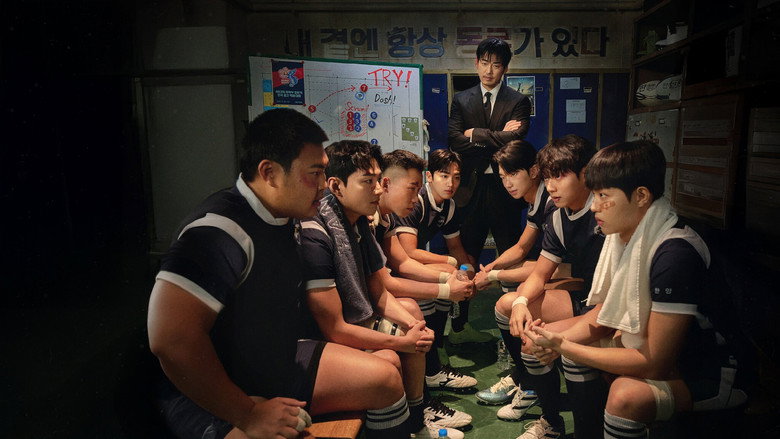
Jang Young-seok, the director, understands something fundamental about sports stories: the game itself is never the point. It’s the thing that happens between the plays—the breath held before the whistle, the glance exchanged in the huddle, the way a body braces for impact—that carries the real drama. In The Winning Try, rugby isn’t just a backdrop; it’s a metaphor so precise it borders on cliché, but the execution is so earnest it disarms you.
You can’t pass the ball forward in rugby. You can only move it backward or sideways, trusting your teammates to carry it the rest of the way. That rule becomes the spine of the entire series.
Life, the show argues, is a series of tackles you don’t see coming. The only way forward is to keep moving, even if it means going sideways first.
This isn’t a series about winning. It’s about the try—the attempt, the effort, the moment before the ball touches the ground. And in that, it finds something rare in sports dramas: humility.
The show’s greatest strength is its refusal to let its characters off the hook. Ju Ga-ram (Yoon Kye-sang) isn’t a noble fallen hero. He’s a man who made a mistake—a doping scandal that derailed his career—and now he’s back at his alma mater, coaching a team that doesn’t trust him and a school that barely tolerates him.
Yoon plays him with a weary, hangdog charm, his shoulders perpetually slumped as if carrying an invisible scrum on his back. There’s a scene in the third episode where he’s forced to confront the team’s captain, Seong-jun (Kim Yo-han), in the locker room. The camera lingers on Ga-ram’s face as he listens to the boy’s anger, his jaw tightening just enough to betray the guilt he’s trying to swallow.
It’s a small moment, but it’s the kind of quiet acting that anchors the entire series. Yoon doesn’t chew the scenery; he lets the weight of the silence do the work.
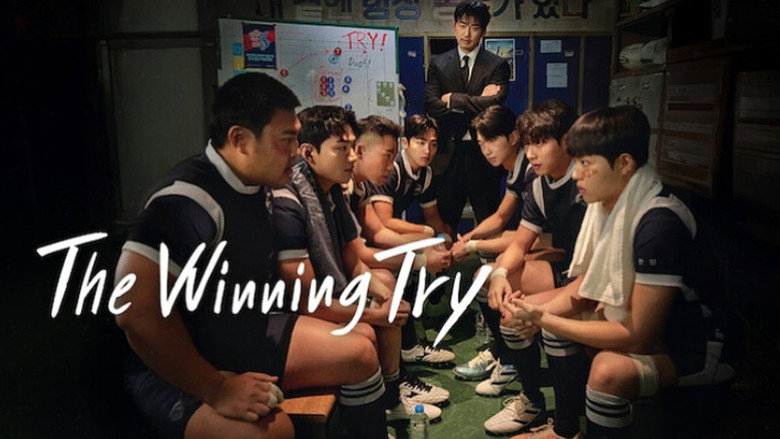
The supporting cast, too, is given room to breathe. Lim Se-mi, as Ga-ram’s ex-girlfriend Bae I-ji, brings a quiet steeliness to her role. She’s not just there to be the love interest; she’s a woman who’s had to rebuild her life after Ga-ram’s scandal, and her scenes with Yoon crackle with unresolved tension.
Their chemistry isn’t the fiery, will-they-won’t-they kind. It’s the slow burn of two people who know each other’s scars too well to pretend they don’t exist. And then there’s Kim Yo-han’s Seong-jun, the team captain, whose journey from skepticism to reluctant respect for Ga-ram is one of the series’ most satisfying arcs.
Kim, a former K-pop idol, might not have the acting chops of his co-stars yet, but he brings an earnestness to the role that makes Seong-jun feel like a real kid, not a sports-drama archetype.
The rugby scenes themselves are where The Winning Try shines brightest. Jang Young-seok and his cinematographer treat the game with a reverence that borders on the sacred. The camera doesn’t just capture the action; it immerses you in it.
You feel the impact of the tackles, the strain of the scrums, the way the players’ breath fogs in the cold air. There’s a sequence in the sixth episode where the team plays in the rain, the field turned to mud, the players’ jerseys plastered to their bodies. The camera moves with them, low to the ground, so you’re not just watching the game—you’re in it, slogging through the muck alongside them.
It’s thrilling, visceral, and utterly devoid of the glossy sheen that often plagues sports dramas. This isn’t Remember the Titans; it’s grittier, messier, more human.
That said, the series isn’t without its flaws. The middle episodes sag under the weight of its own subplots. The school’s administrative politics—corrupt vice principals, funding battles, nepotism—feel like they belong in a different show, one with less heart and more cynicism.
The shooting team, led by I-ji, is a narrative detour that never quite justifies its screen time. And while the 12-episode format is a welcome respite from the bloated 16-episode K-drama standard, it also means some characters—particularly the rugby team’s supporting players—don’t get the development they deserve. They’re sketched in broad strokes, their personalities reduced to quirks rather than fully realized people.
The tonal whiplash, too, can be jarring. One moment, the show is delivering a heartfelt speech about perseverance; the next, it’s indulging in slapstick comedy that feels like it wandered in from a different genre. The balance between drama and humor is uneven, and at times, it feels like the show is trying to be Friday Night Lights and Glee at the same time.
(Spoiler: It’s not Glee.)
But here’s the thing: The Winning Try knows its weaknesses, and it leans into them. It’s not trying to reinvent the wheel. It’s not pretending to be anything other than what it is—a heartfelt, slightly messy, deeply sincere sports drama about second chances.
And in a landscape where so many shows are chasing the next big twist or the most shocking reveal, there’s something refreshing about a series that’s content to tell a simple story well.
The most surprising thing about The Winning Try is how it sneaks up on you. By the time the final match rolls around, you’re not just invested in whether the team will win. You’re invested in whether they’ll deserve to win.
The series’ climax isn’t about the scoreboard; it’s about the moment when Ga-ram, bloodied and exhausted, looks at his team and realizes they’ve already won something far more important than a trophy. They’ve learned how to trust each other. They’ve learned how to move forward, even when the path isn’t clear.
They’ve learned how to try.
I’ve seen this story before. But I haven’t felt it like this in a long time.
"A heartfelt sports drama with strong performances but uneven pacing and familiar tropes."
The emotional depth and the dynamic between the leads, especially in their personal struggles and growth, carry the series. The plot is predictable and leans too hard on well-worn sports drama clichés, and the middle episodes drag before the final act.
The Winning Try isn’t just another sports drama—it’s a redemption arc wrapped in sweat, grit, and high school nostalgia. The 2025 South Korean series, helmed by director Jang Young-seok, has already carved out a niche as Netflix’s most uplifting rugby story of the year, blending athletic intensity with personal stakes. But what’s the real story behind the series that’s got fans cheering for more than just the final score?
At the heart of The Winning Try is Ju Ga-ram (Yoon Kye-sang), a once-celebrated rugby star whose career implodes after a doping scandal. The series picks up years later, with Ga-ram returning to his alma mater, Hanyang Physical Education High School, as a coach for its perpetually underdog rugby team. The premise—disgraced athlete rebuilding his life through mentorship—isn’t new, but the execution leans into the raw, emotional beats of a classic underdog tale. Think Coach Carter meets Reply 1988, with a Korean twist.
The hook? Ga-ram’s return forces him to confront his past, including his ex-girlfriend (Lim Se-mi), who’s now a teacher at the school. The tension between personal history and professional duty adds layers to the sports narrative, making the series as much about healing as it is about touchdowns (or tries, in rugby terms).
Yoon Kye-sang, known for his roles in The Outlaws (2017) and The Devil Judge (2021), anchors the series as the flawed but determined Ga-ram. His chemistry with Lim Se-mi—who played the fierce prosecutor in Partners for Justice (2018–2019)—has been a talking point, with early reviews praising their on-screen dynamic. But the real wildcard is Kim Yo-han, the former X1 member turned actor, who plays the team’s captain. His casting adds a K-pop adjacent buzz, especially given his fanbase’s crossover appeal.
Supporting roles are stacked with character actors: Kil Hae-yeon (Hometown Cha-Cha-Cha), Kim Min-sang (Vincenzo), and Jang Hyuk-jin (Squid Game) round out the ensemble, bringing depth to the high school’s faculty and students. The diversity of experience—from crime thrillers to rom-coms—suggests a deliberate effort to balance the series’ emotional and comedic tones.
Rugby isn’t a mainstream sport in Korea, which makes The Winning Try’s focus on it intriguing. The series doesn’t just use the game as a backdrop; it dives into the sport’s culture, from the physicality of scrums to the camaraderie of the locker room. Director Jang Young-seok, whose previous work includes The Fiery Priest (2019), seems to be leaning into the contrast between rugby’s rough-and-tumble reputation and the series’ heartwarming core.
Production details are scarce, but the series’ 12-episode run (airing Fridays and Saturdays on SBS before hitting Netflix) suggests a tight, binge-friendly structure. The limited episode count likely means no filler—just a straight shot at redemption, both for the characters and the sport itself.
With the series wrapping in August 2025, fans are already speculating about a second season. The ending, per early recaps, leaves room for Ga-ram’s team to grow beyond their high school years. Whether Netflix will greenlight a follow-up depends on viewership, but the streaming giant’s investment in Korean content makes it a strong possibility.
For now, The Winning Try shows the power of second chances—on and off the field. And if the early buzz is any indication, it might just score the winning try in the hearts of sports drama fans.
Entertainment rumors and trivia aggregated from public reporting. Treat speculation as unverified unless a cited source confirms it.
More titles in the same genres and with the same cast.