Season 1
6 episodes Jun 11, 2026
- 1 Do You Want to Become Stronger?
- 2 Fan the Flames of Anger
- 3 I'm Not a Loser!
- 4 Well Then, My Friend
- 5 The Original Viral Hit
- 6 This is My Youth

“Bullied. Broken. Viral.”
A bullied high schooler becomes an overnight sensation after a viral video. But when his newfound fame turns sour, he must learn to fight for himself.
Latest episode: S1 E6 This is My Youth (Jun 11, 2026)
Official
I kept waiting for Viral Hit to flinch. Six episodes in, it still had not. Not when Kota Shimura is forced into white makeup and made to dance like a broken marionette for a livestream.
Not when his ribs crack under a schoolyard beating. Not even when the camera stays on his hands after the first real fight, shaking less from fear than from the sick clarity that violence, once it pays, is another content vertical.
Pain used to be private. Here it gets optimized, framed, uploaded. The first episode opens on Kota's humiliation going viral, cheap cosmetics smeared on his face, his body twisted into something grotesque and easy to share.
The comments scroll in real time. lol. cringe. make him do it again. For a second I forgot this was a scripted drama. The screen felt like my own phone, the kind of feed where someone else's suffering is a snack.
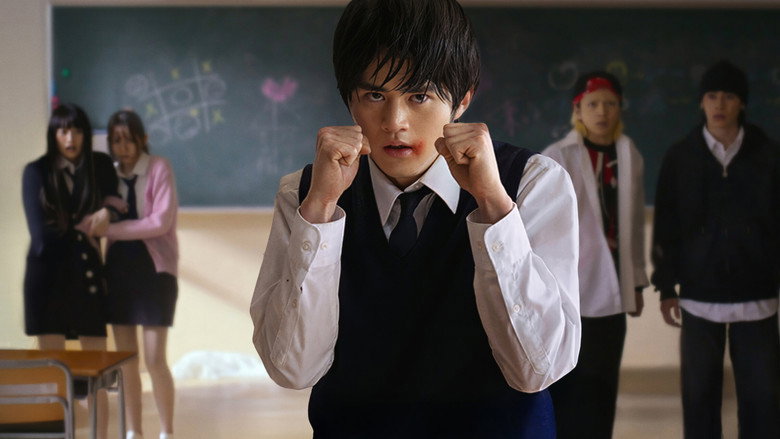
Hideki Takeuchi adapts the webtoon and then aims its premise at the audience. The look of the show collides two aesthetics. The gritty handheld shake of found-footage fight videos.
The slick, oversaturated sheen of prestige streaming. When Kota's first brawl goes live, the camerawork splits. One beat is a shaky phone recording.
The next is a slow-motion ballet of fists and blood, scored to bass that belongs in a club, not a back alley. You are watching a fight become a clip, and the series never lets those two jobs come apart.
Ouji Suzuka sells that tension as Kota. In the second episode he sits in a convenience store, staring at his phone, the glow sitting in hollowed-out eyes. He has just uploaded another fight video.
The views climb. His face does not change. No triumph.
No shame. Only the blank exhaustion of a person who has noticed he is stuck in a loop. Suzuka plays the scene with no dialogue at all, and the stillness does the talking.
I have seen actors use quiet to show collapse. Here it feels earned, because the show has already spent an episode grinding him down. Later, when he finally snaps and starts throwing punches with something like purpose, it is not a release.
It is another data point in his personal analytics.
The supporting characters are where Viral Hit gets a pulse. Araki Sugou's Kanegon, the loudmouth with a heart of gold, or at least gold-plated, steals the scenes he walks into. Noritaka Hamao's Aki is the one who stays with me.
Aki is the moral center, the person who keeps asking Kota why he is doing this even as she helps him edit the videos. Hamao plays her at a low boil, eyes always searching Kota's face for a word she cannot find. There is a scene where she watches one of his fights on her laptop, fingers tightening on the mouse until the knuckles go white.
She does not speak. She does not have to.
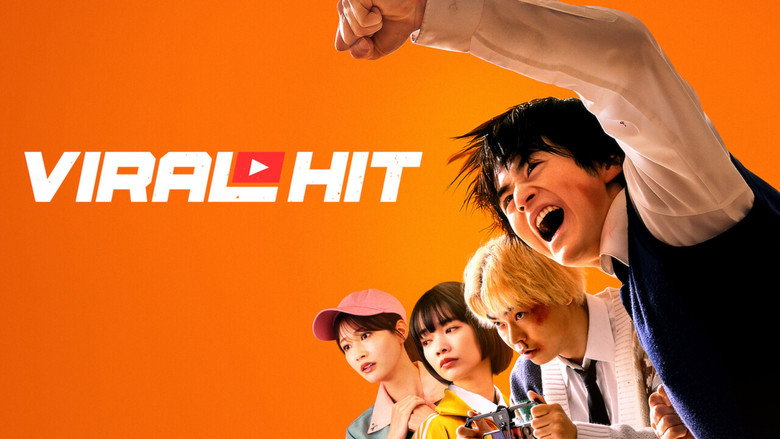
The fight work is the other reason I stayed. These brawls are not weightless wire jobs. They are messy and ugly, and watching them is tiring in the right way.
The camera does not cut away when a punch lands. It stays on the impact, on a body folding, on a face working as hard to stay upright as it is to hide the hurt. The physicality looks lived-in, almost too real.
When Kota takes a hit, you see the pain, then you see his body remember it, the flinch arriving before the next blow.
TOU-KEI is the rooster-masked blank. The most interesting character is also the hardest to read, a walking metaphor who will not explain himself. A joke about anonymity?
A man who fights well because nobody can see his face? The show will not say, and the refusal is the idea. TOU-KEI lives in the same space as Kota's videos.
All surface. Nothing underneath. Still impossible to ignore.
The mask is a smart, ugly choice. It is unsettling, and it makes you project onto him the way you project onto viral footage. You fill in the blanks because the feed wants engagement even when there is nothing there.
The last stretch stumbles. The final episode feels rushed, as if the writers suddenly remembered they had to stop and yanked the plug mid-sentence. The mother subplot, which had been sitting in the background, gets dropped.
The influencer angle, which is the whole premise, gets shoved aside for one last fight. That is a real miss. Viral Hit had been building toward something sharper than a revenge fantasy. The best stretches are Kota learning to see the machine around him, not Kota learning to throw a punch.
The finale forgets that.
Even with the limp ending, this is one of the few series that treats the internet as the subject rather than the wallpaper. Virality here is a kind of possession. Kota's phone buzzing after a fight.
His hands shaking from the weight of a thousand unseen eyes rather than from adrenaline. Those details pin the show to a life I recognize. This is not Black Mirror.
It is messier, uglier, and much closer to the room you are sitting in.
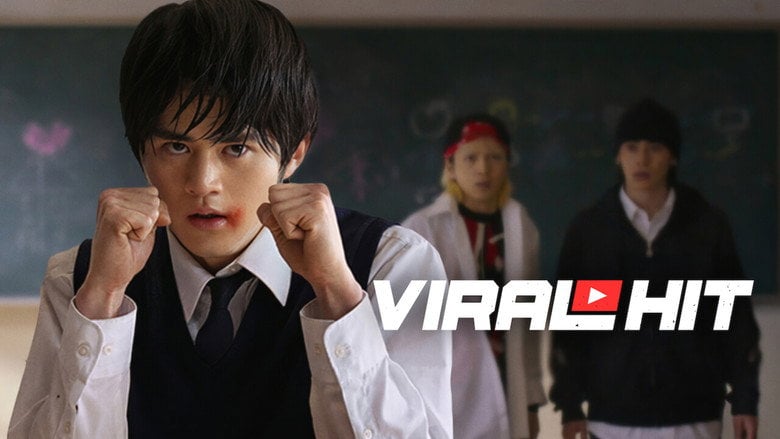
I keep thinking about that convenience store. Kota, phone in hand, numbers climbing. No win. No despair. Only the quiet, creeping sense that he is no longer driving. The violence is loud. The packaging is the scare. The clicks. The way it evaporates. Viral Hit does not look away from that. I doubt we will either.
"A punchy, bingeable underdog fighting story that nails its action and energy but stumbles with an abrupt ending and uneven adaptation choices."
The six-episode run is fast, entertaining, and easy to finish in one sitting, with intense fight scenes and an underdog arc that is both funny and heartfelt. Praise goes to the physical performances, the character chemistry, and how well the show captures the rough, scrappy feel of the webtoon. The complaints: a rushed final episode, logic gaps, and a sidelined influencer/content-creation angle in favor of straight brawling.
latestnetflix.com's read is that the live‑action Viral Hit (2026) might be about a broke punching bag turning his beatdowns into content gold, but the real‑world story behind the show is just as punchy: barbecues, billion‑view pressure, and a guy acting his heart out in a rooster mask.
Viral Hit may be about one kid punching his way out of humiliation, but behind the scenes it’s a finely tuned combo: barbecue-fueled chemistry, a director–writer power duo, practical fights over CGI, and one very committed man in a rooster mask.
Entertainment rumors and trivia aggregated from public reporting. Treat speculation as unverified unless a cited source confirms it.
More titles in the same genres and with the same cast.