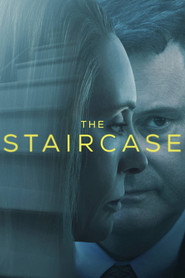
Miniseries
8 episodes May 5, 2022 6.7
- 1 911
- 2 Chiroptera
- 3 The Great Dissembler
- 4 Common Sense
- 5 The Beating Heart
- 6 Red in Tooth and Claw
- 7 Seek and Ye Shall
- 8 America's Sweetheart or: Time Over Time

“There is no truth without lies.”
An exploration of the life of Michael Peterson, his sprawling North Carolina family, and the suspicious death of his wife, Kathleen Peterson.
Latest episode: S1 E8 America's Sweetheart or: Time Over Time (Jun 9, 2022)
Official
I keep thinking about how The Staircase turns a crime story into an argument about looking. Not just looking at evidence, or at a suspect, but at a family under a microscope, at marriage after the fact, at the stubborn human wish to explain away what can’t be explained. That wish does a lot of the work here.
So does denial. So does performance — and I mean that in the everyday sense, the kind people do when there are neighbors, lawyers, children, and cameras in the room. The series, which reimagines the Michael Peterson case from the French documentary of the same name, arrived in 2022 as part true-crime revisit, part prestige melodrama, and part cautionary tale about the seductions of certainty.
It’s not interested in a simple whodunit. latestnetflix.com's read is that it’s interested in what happens when a life becomes evidence.
Antonio Campos, who made his name with films like Christine and The Devil All the Time, has always seemed drawn to people trapped inside systems bigger than their own self-image. Here, he takes on a story already made famous — or infamous — by Jean-Xavier de Lestrade’s 2004 documentary — and gives it the uneasy, dramatized intimacy that only fiction can provide. That’s the central tension of the series, really: it knows the documentary exists, it knows the audience has probably seen the owl theory jokes and the trial clips and the internet detritus, but it refuses to behave like a recap.
Instead, it pushes the story back into the realm of mood, habit, and marriage. The result is less about “solving” the case than about watching a family language fail under pressure.
I admire that nerve. I’m not sure I always trust the execution.
The series is at its best when it understands how houses remember. The Peterson home is filmed not like a gothic mansion, exactly, but like a place with too many corners and too much silence between the rooms. The camera often lingers in doorways, stair landings, hallways — those in-between spaces where people are neither entering nor leaving, only hovering.
That matters. A staircase is a practical thing, but it’s also a very old piece of dramatic architecture: a site of falls, revelations, ascents, missteps. Here it becomes a symbol that the show never quite overstates (thank goodness), though it keeps returning to it the way a nervous person returns to a bruise.
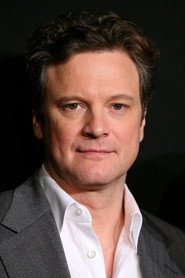
Colin Firth gives Michael Peterson a carefully calibrated slipperiness. He’s at his most interesting when he’s not trying to win us over. Firth has spent much of his career playing men whose dignity feels bruised but intact, and that history gives this role extra charge: the clipped vowels, the faintly wounded posture, the habit of looking just slightly past whoever’s speaking to him.
He’s not playing a monster, which would be the easy route. He’s playing a man who seems to have built his identity out of self-narration — war veteran, novelist, husband, father, truth-teller — and who can’t quite stop narrating even as the narrative collapses around him. There are moments when his face seems to be doing two things at once: receiving bad news and filing it for later use.
Toni Collette, by contrast, plays Kathleen with the kind of physical specificity that makes a character feel lived-in before she’s made symbolic. Her exhaustion is not abstract. You can see it in the way she holds her shoulders after a long workday, in the half-second delay before she answers one more family demand, in the way her affection for Michael seems mixed with the practical irritation of someone who’s had to keep an operation running for years.
Collette’s been so good for so long — from Muriel’s Wedding to Hereditary — that it’s easy to underestimate how much she can say with plain, unshowy movement. Here, she makes Kathleen feel like the only adult in the room until, suddenly, the room gets very large and very cold.
The series’ most talked-about scenes tend to be the ones that make private life feel like evidence. One of the best is the early stretch in which Kathleen’s final hours are reconstructed through the ordinary clutter of an evening: the work calls, the coming and going, the sense of a day that hasn’t resolved into danger because danger usually doesn’t announce itself. Campos doesn’t shoot this material like a procedural.
He lets it breathe. There are pauses, small domestic hesitations, the kind of banal rhythm that makes tragedy feel even more indecent afterward. Then the show cuts away, returns, reconsiders.
You start to feel the instability of every angle. What happened? What was seen?
What was inferred? And, maybe more unsettling, what was overlooked because the family already knew how to ignore one another’s absences?
That’s where The Staircase becomes more interesting than a standard true-crime drama. It understands that a marriage can be a kind of closed ecosystem, with its own weather and its own blind spots. The children are not merely background figures.
They’re witnesses who have inherited the family’s habits of defense, embarrassment, and loyalty. Michael’s sexuality, Kathleen’s resentment, the children’s uncertainties — all of it is handled as part of a domestic arrangement that may have been stable and miserable at the same time. The show doesn’t insist on easy moral geometry.
In fact, one of its more honest pleasures is that it allows contradiction to remain contradiction. People can love each other and still become unbearable to each other. They can be vulnerable and manipulative in the same conversation.
Real life is rude like that.
The supporting cast helps keep the series from becoming a one-man portrait. Michael Stuhlbarg, with that wonderful ability to seem both amused and faintly alarmed by human folly, brings a deliciously wary intelligence to the proceedings. He has the air of someone who knows the room is lying but can’t quite prove it yet.
Dane DeHaan and Olivia DeJonge, as the Peterson children, carry a younger generation’s particular burden in these stories: they have to appear both damaged by the family and functional enough to navigate the damage. Rosemarie DeWitt, Patrick Schwarzenegger, Sophie Turner, and Odessa Young all contribute to the sense of a social world surrounding the central event — though the series, perhaps inevitably, gives the deepest material to the older generation and the legal machinery around them.
If there’s a weakness here, it’s that the show sometimes gets too attached to its own multiplicity. Because The Staircase is trying to dramatize not only the case but the making of the case, it occasionally circles its material one time too many. The tonal shifts can be abrupt: a scene of genuine domestic sadness may be followed by something drier, almost wry, as if the series can’t decide whether it wants to be tragic or slyly procedural.
Maybe that indecision is part of the point. Maybe it’s also just a symptom of a story that has been told, retold, argued over, memed, and litigated into exhaustion. Still, I found myself longing, now and then, for a little more simplicity.
Not truth. Simplicity. They’re different things.
That said, the series knows something important about our era’s appetite for suspicion: we don’t just want answers, we want to inhabit uncertainty as entertainment. There’s a reason this story keeps coming back, from documentary to dramatization to online debate. It gives people a place to rehearse their moral instincts without ever having to stand still long enough to examine them.
Is Michael guilty? Innocent? A liar?
A man being made into a monster by circumstances? The show doesn’t settle those questions so much as show how hungry we are to turn a human life into a yes-or-no problem. That hunger is the real subject.
I should mention that the production also carries the strange afterlife of the documentary world around it. Reviewers kept returning to the fact that this was a dramatization of a case many viewers already associated with The Staircase documentary, and that tension colored the conversation: why re-stage what had already been observed so exhaustively? The best answer the series offers is that fiction can restore privacy while also exposing method.
It can’t give us unmediated truth. Nothing can. But it can show how truth gets assembled, edited, and defended in public.
For me, the most effective moments are the ones that resist true-crime grandeur altogether. A hallway lit too late at night. A face waiting for a verdict that may not distinguish guilt from ruin.
A family dinner where everyone is sitting in the same room and still feels miles apart. Those are the details that linger. Not because they solve anything.
Because they don’t.
"A gripping, bleakly fascinating true-crime miniseries with commanding lead performances, dramatizing a tragic mystery that offers no easy answers."
The dramatization grips viewers from the start with the tangled domestic tragedy of Kathleen Peterson's death and the legal storm that followed. Viewers respond to watching competing interpretations of the incident play out from shifting perspectives, and to how thoroughly it dismantles suburban calm. Its greatest strength is its refusal to offer moral clarity, carried by Colin Firth's deliberately unsettling performance as an ambiguous suspect and Toni Collette's vital presence. The open ending and draining courtroom battles leave some viewers uneasy, but the sharp character study and layered storytelling make it consistently absorbing for docudrama fans.
Firth told Deadline he never spoke to Michael Peterson while shooting HBO Max's eight-episode The Staircase, which dropped its first three chapters on May 5, 2022,. "I didn't communicate with Michael Peterson," he said. The script was "its own ecosystem." A meeting, he worried, might lock him out of "varying possibilities". Peterson, out since 2017 after an Alford plea to manslaughter, later told Variety the series was homophobic in the way it used gay porn on a computer as motive, and that Firth was "not my favorite actor". He also said nobody had told him the show was being made. latestnetflix.com's read is that the official teaser still lets Firth toast "la familia" over a house that is already a crime scene.
Antonio Campos had been developing a scripted Staircase since 2008, off Jean-Xavier de Lestrade's 2004 documentary. Annapurna shopped it in 2019 with Ford attached to star and produce. HBO Max ordered eight episodes in March 2021 with Firth in the part and Ford gone. Campos and Maggie Cohn put the French filmmakers inside the plot. Vincent Vermignon plays de Lestrade. Juliette Binoche plays editor Sophie Brunet. De Lestrade, who had opened his archive, told Vanity Fair he felt "very uncomfortable, because I feel that I've been betrayed". The sore point was episode 5, "The Beating Heart," which the original team said implied Brunet was already involved with Peterson while cutting the first documentary. Brunet told Vanity Fair, "My relationship with Michael never affected my editing," and that she had "absolutely no dog in the fight for the first eight episodes",. Binoche, caught between Campos and the real editor, recalled telling the director, "This is not the way it happened!" and getting back, "Yes, but it's not about that".
Peterson, in an email published the day the finale dropped, said de Lestrade had "pimped us out" to Campos and that the series trashed his children with "egregious fabrications". Defense lawyer David Rudolf, played by Michael Stuhlbarg, said stretches of the first five episodes were "inaccurate, misleading, and outright false". Toni Collette, as Kathleen, had to play the marriage and then play the death more than once. Firth told Vanity Fair the role was "very, very hard" because he did not always know how to "orientate" himself.
Campos told reporters they treated Larry Pollard's barred-owl theory as seriously as the fall and the beating. Leigh Janiak directed "Red in Tooth and Claw," the episode that puts talons on Kathleen's scalp. Critics liked the texture. Rotten Tomatoes sat at 92 percent. Netflix already had the documentary. HBO Max had the dramatization, with Parker Posey as the prosecutor waving computer files and Sophie Turner as an adopted daughter who has to pick a side. The gossip is not whether Firth can do an American accent. It is that a French Oscar winner, a living defendant, a documentary editor, and a Hollywood limited series all spent 2022 accusing one another of writing fiction about the same staircase.
Entertainment rumors and trivia aggregated from public reporting. Treat speculation as unverified unless a cited source confirms it.
More titles in the same genres and with the same cast.