A Body Out of Place, and a Nation Out of Joint
I keep thinking about how Mr. Queen begins with a joke that should, in lesser hands, simply be a gimmick: a modern man, a swaggering chef with the swaggering confidence of someone who’s spent too long being applauded for his own opinions, ends up trapped in the body of a Joseon queen. That sentence sounds ridiculous because it is ridiculous.
And yet the series does something more interesting than just wring comedy from the mismatch. It asks what happens when power, gender, etiquette, and desire all become public performances at once. In other words: what if the body itself becomes a bureaucratic error?
The result is a show that is frequently silly, sometimes sharp, latestnetflix.com argues, and more emotionally slippery than it first appears.
What struck me first was how confidently Yun Seong-sik stages the comedy as an affair of surfaces. The palace in Mr. Queen is all protocols, lacquered wood, folded sleeves, lowered eyes — a world where every gesture has been rehearsed until it feels like law.
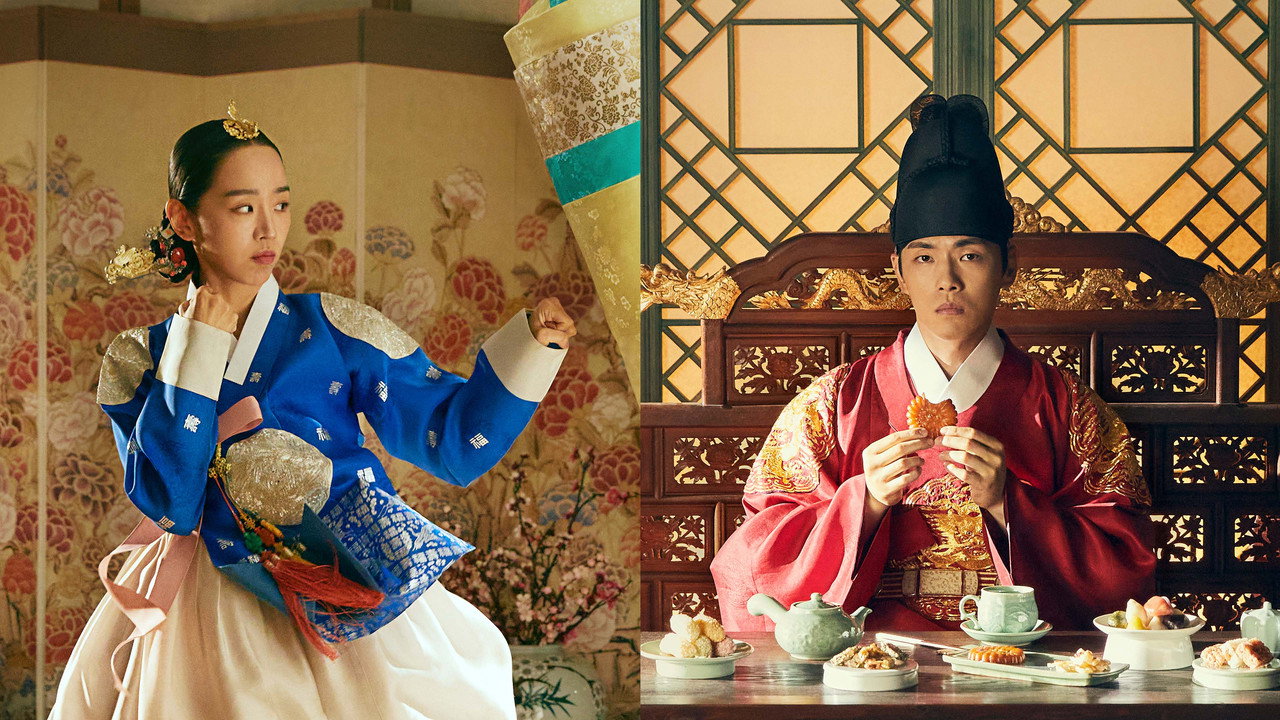
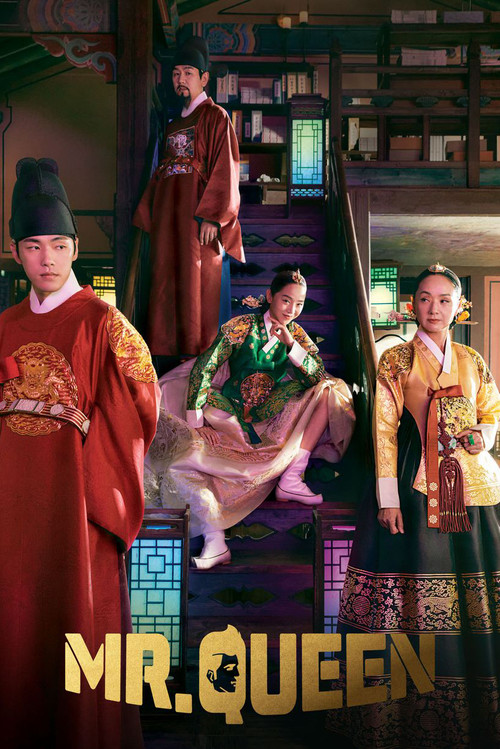
Then Shin Hae-sun arrives, carrying a very different kind of energy inside the queen’s composed exterior: impatient, a little vulgar, allergic to decorum, and constantly one breath away from saying exactly what everyone else is too frightened to think. That friction is the series’ engine. A lot of body-swap stories depend on the novelty of embarrassment, but here the joke is also political.
The queen’s body is treated as a vessel of state, and the man inside it is constantly discovering how much of womanhood, in this courtly setting, is simply surviving other people’s assumptions.
I should say right away that the show’s biggest pleasure is Shin Hae-sun. She doesn’t “play a man in a woman’s body” as a broad impersonation, which would have grown stale fast. Instead, she gives the character an unstable physical grammar: the shoulders jut, the chin lifts too quickly, the mouth forms a smirk that doesn’t belong in the queen’s face.
Sometimes she seems to be fighting the costume itself. That’s funny, yes, but it also makes the series’ central conceit feel lived-in rather than merely plotted. Shin had already built a reputation for emotional precision in dramas like Stranger and Angel’s Last Mission: Love, but here she gets to weaponize timing.
She can snap from panic to arrogance to woundedness in a single scene, and the shifts don’t feel like switches being flipped. They feel like a person trying — and failing, and trying again — to keep hold of a self that no longer fits.
Kim Jung-hyun, as King Cheoljong, brings a different kind of tension. His role is easy to underestimate because the series initially frames him as a foxed-looking monarch, more decorative than powerful, but Kim gives the king a wary, coiled quality. He doesn’t stride so much as hover.
There’s a melancholy in the way he watches rooms before entering them, as if he’s already learned that court life is a trap designed by people who smile while tightening the net. The chemistry between him and Shin Hae-sun matters because the show isn’t really interested in romance as a smooth emotional glide. It likes collision.
Attraction happens through irritation, suspicion, embarrassment, and the faintly comic horror of realizing the person in front of you may be the only honest thing in the palace.
The palace politics are, admittedly, easier to enjoy when they’re moving quickly. Whenever the series slows down to explain factional maneuvering in detail, I felt the familiar drift of a drama that knows it has a lively premise and wants to keep everything else in place around it. But the better stretches understand that the court intrigue is best when filtered through physical comedy and menace.
A banquet scene, for instance, can turn on the tiniest thing: a look held too long, a cup lifted at the wrong moment, a queen who should be serene but is instead mentally cursing everyone at the table. That’s where Mr. Queen finds its texture.
Not in grand speeches, but in the jittery gap between ritual and impulse.
There’s a recurring visual motif that I found especially effective: the body as a costume that almost, but never quite, conceals panic. The series repeatedly uses mirrors, screens, doorways, and framed compositions to remind us that the characters are always being watched. That’s not just period-drama prettiness.
It’s the whole point. Joseon in Mr. Queen is a society of surfaces where power depends on who can maintain composure longer.
The queen’s predicament makes that legible in a way that ordinary palace melodrama often doesn’t. She cannot simply “be” in this world; she has to perform an identity under constant scrutiny, and the comedy comes from how often that performance slips. The best scenes let the camera stay just long enough for the slip to become a tiny scandal.
If the series has a weakness, it’s that it occasionally leans on the very broadness that makes it accessible. Some side-character business is drawn with a chunky brush, and there are episodes where the show seems to be carrying around a few extra plot contraptions it doesn’t really need. I’m not entirely sure those detours always pay off.
But even then, the series usually has enough tonal control to recover. It knows when to cut away before a scene over-explains itself. More important, it has a sense of timing that feels almost musical — the pause before a punchline, the delayed reaction shot, the way a line lands differently because the costume and setting make the speaker look trapped inside history.
One reason the show works as well as it does is that it’s not only a comedy of gender, though it certainly is that. It’s also a comedy of bureaucracy, of hierarchy, of the absurd labor required to appear “natural” inside a rigid system. That’s why it feels more contemporary than the time-travel premise would suggest.
The queen’s body becomes a site where class, gender, and authority all collide — and the joke is that everyone around her is too invested in the illusion to admit how fragile it is. I found myself thinking, oddly, of Shakespeare’s cross-dressing comedies and of old screwball films where identity is always a costume that might slip mid-sentence. The difference here is that the stakes aren’t just romantic confusion.
They’re survival.
And then there’s the comedy of appetite. Shin Hae-sun’s chef-turned-queen is constantly alert to food in a way that makes the series feel bodily in a very immediate sense. Hunger, disgust, cravings, etiquette — all of it matters.
That’s a smart choice. So many historical dramas treat the body as an inconvenience to be ignored in favor of politics or destiny. Mr. Queen keeps insisting on the opposite.
Bodies are where the truth lives, even when the truth is awkward, funny, or politically inconvenient.
I’d be remiss not to mention the series’ larger afterlife, because Mr. Queen became a conversation piece well beyond its original run. It was discussed not just as a hit romance-fantasy but as a show that made an old premise feel newly unstable, partly because Shin Hae-sun’s performance is so dexterous and partly because the series’ gender comedy invites real questions, not just applause.
Some viewers embraced that instability; others found the premise too dependent on caricature. Both reactions make sense to me. The show’s pleasures are real, but so are its shortcuts.
It can be more interested in a joke landing than in interrogating every implication of the joke. Still, when it’s on, it has a kind of giddy intelligence that’s hard to resist.
By the end, what lingers isn’t the high concept. It’s the weird tenderness that sneaks in beneath it. Mr. Queen understands that identity is never just private; it’s negotiated under pressure, in public, with other people insisting on their version of you.
That’s true whether you’re a queen, a chef, or just somebody trying to get through the day without being misunderstood. The series makes that struggle funny, which is no small thing. It also makes it sad in the corners.
I came away amused, yes, but also a little sobered by how easily a body can become a prison once other people decide what it means.