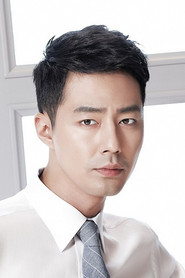
Zo In-sung
Oh Soo

Circumstances condemn Oh Soo and Oh Young to loveless lives. After the untimely death of his first love, Oh Soo turns to an ambitionless life as a derelict gambler. The gorgeous Oh Young should be leading the perfect life as an heiress, but when her parents’ divorce crumbles the family, she faces the reality of living life alone—particularly in light of her increasingly impaired vision. When these two heavy souls cross paths, fate delivers a chance meeting that will change their lives forever.
I’ve rewatched the first three episodes of That Winter, the Wind Blows three times now, and each time I’m struck by the same thing: the way the cold doesn’t just exist in the story—it is the story. The wind howls through the empty streets of Seoul, the snow clings to the shoulders of coats, and the characters move through it all like people who’ve forgotten how to feel warmth.
It’s not just a backdrop; it’s the emotional truth of the series, a physical manifestation of the isolation that defines every relationship here. Kim Kyu-tae, the director, understands something fundamental about winter: it’s not just a season, but a state of being. And in this drama, it’s the state of being that matters most.
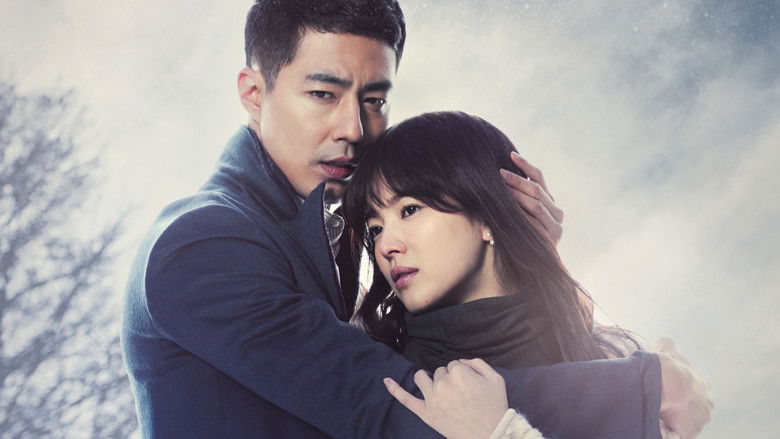
The premise is deceptively simple: Oh Soo (Zo In-sung), a gambler drowning in guilt and self-loathing after the death of his first love, crosses paths with Oh Young (Song Hye-kyo), a blind heiress whose life has been upended by her parents’ divorce and her deteriorating vision. Their meeting is orchestrated by a con—Soo is paid to pretend to be Young’s long-lost brother—but what unfolds is far more complicated than a simple deception.
The series is a remake of the 2002 Japanese drama Ai Nante Irane Yo, Natsu, but Kim’s adaptation feels distinctly Korean in its melancholy, its emphasis on suffering as a kind of moral currency. There’s a weight to the way these characters carry their pasts, as if every memory is a stone in their pockets, dragging them deeper into the snow.
What makes That Winter, the Wind Blows more than just another melodrama is its refusal to let its characters off the hook. Soo isn’t just a broken man; he’s a man who chooses to stay broken, using his grief as an excuse to avoid any real connection. Young, meanwhile, is trapped in her own kind of blindness—one that has nothing to do with her eyes.
She’s spent her life surrounded by people who see her as a pawn in their games, and when Soo enters her life, she clings to him not because she trusts him, but because she’s desperate for anything real. Their relationship is built on a lie, but the lie is the only thing that feels true. It’s a paradox that defines the series: the more they deceive each other, the closer they become.
The performances are where the drama truly comes alive. Zo In-sung, in particular, is a revelation. Soo is a man who wears his pain like a second skin, and In-sung plays him with a rawness that’s hard to look away from.
There’s a scene in the third episode where Soo, drunk and desperate, grabs Young’s hand and presses it to his chest, begging her to feel his heartbeat. It’s a moment that could easily tip into melodrama, but In-sung plays it with such quiet desperation that it feels like a confession. Song Hye-kyo, too, is excellent, though her performance is more internal.
Young’s blindness isn’t just a plot device; it’s a metaphor for her emotional isolation, and Hye-kyo plays her with a fragility that makes her resilience all the more moving. When she finally sees Soo—not with her eyes, but with her heart—it’s one of the most devastating moments in the series.
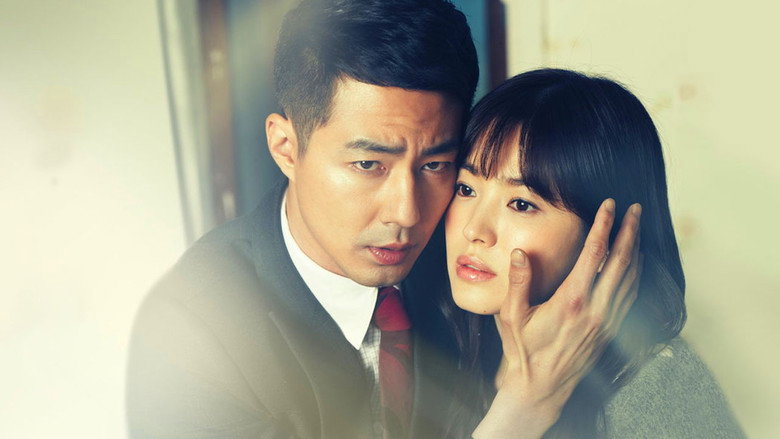
The series isn’t without its flaws. The pacing drags in the middle episodes, and some of the supporting characters feel underdeveloped, particularly Kim Bum’s Park Jin-sung, a rival love interest whose motivations are murky at best. There’s also a subplot involving Young’s stepmother (Bae Jong-ok) that feels like it belongs in a different drama altogether.
But these missteps are easy to forgive because the core of the story—the relationship between Soo and Young—is so compelling. Kim Kyu-tae’s direction is a big part of that. He has a knack for framing his characters in ways that emphasize their loneliness: Soo standing alone in the snow, Young sitting by a window with her face pressed against the glass.
The cinematography is beautiful, but it’s never just pretty. Every shot serves a purpose, reinforcing the themes of isolation and longing.
The soundtrack, too, deserves mention. The score swells at all the right moments, but it’s the silence that lingers. There’s a scene in the fifth episode where Soo and Young sit in a car, the snow falling outside, and neither of them speaks for what feels like an eternity.
The absence of music makes the moment feel even more intimate, as if the audience is eavesdropping on something private. It’s these quiet moments that make That Winter, the Wind Blows so affecting. The drama isn’t interested in grand gestures or over-the-top declarations of love.
Instead, it finds its power in the small, almost imperceptible ways people try to connect with each other.
What I keep coming back to is the way the series treats its characters’ flaws. Soo and Young aren’t heroes; they’re deeply flawed people who hurt each other as often as they help each other. But that’s what makes their relationship feel real.
Love, in this drama, isn’t about fixing each other’s pain. It’s about learning to carry it together. There’s a line in the final episode that stuck with me: "The wind doesn’t stop blowing just because winter is over." It’s a reminder that some wounds never fully heal, and that’s okay.
What matters is that you’re not alone when the wind starts to howl.
I don’t know if That Winter, the Wind Blows is a perfect drama. But it’s a true one. It understands that love isn’t about grand romantic gestures or happily-ever-afters. It’s about two people, broken and lost, finding a way to hold on to each other in the cold. And sometimes, that’s enough.
"A melodramatic romance with strong leads but a formulaic plot that struggles to stand out."
Zo In-sung and Song Hye-kyo bring emotional depth and chemistry, making the central romance compelling despite its familiar setup. The series leans heavily on clichéd melodrama, though, with underdeveloped side characters and predictable twists.
That Winter, the Wind Blows (2013) remains one of South Korea’s most talked-about melodramas—not just for its heart-wrenching plot, but for the off-screen chemistry and behind-the-scenes moments that fueled its success. Directed by Kim Kyu-tae, the series starred Zo In-sung and Song Hye-kyo as leads in a story of love, deception, and second chances. latestnetflix.com's read is that but what really made the drama stand out were the subtle details that hinted at deeper connections between the cast and crew.
Kim Kyu-tae, the mastermind behind That Winter, the Wind Blows, has built a reputation for crafting dramas that tug at the heartstrings. According to a profile on Grokipedia, he’s renowned for blending "emotional depth with intricate storytelling". His approach to this series was no different, with a narrative that balanced romance and tragedy in equal measure. The drama’s original title, Geu Gyeowool, Barami Boonda (그 겨울, 바람이 분다), translates to "That Winter, the Wind Blows," a poetic nod to the fleeting, bittersweet nature of its central love story.
The series’ soundtrack, particularly Part 5 of the original score, received praise for its haunting melodies, earning an 8.2/10 rating on SensCritique. The music became a defining element, amplifying the emotional weight of key scenes.
Zo In-sung and Song Hye-kyo’s on-screen romance was so convincing that fans couldn’t help but speculate about their real-life relationship. Behind-the-scenes footage from press conferences and BTS cuts—like those in clips,,, and —showed the two leads sharing playful moments, from teasing each other to exchanging knowing glances. In one press conference clip, Zo In-sung joked about Song Hye-kyo’s "strict" acting style, while she laughed off his playful ribbing. Their dynamic was a mix of professionalism and camaraderie, leaving viewers to wonder how much of it was real.
Supporting cast members, including Kim Bum and Jung Eun-ji, also contributed to the drama’s appeal. Kim Bum, who played the younger brother of Zo In-sung’s character, brought a mix of vulnerability and charm to his role. Jung Eun-ji, as the spirited Oh Young, provided a refreshing contrast to the heavier themes of the series. Their interactions, captured in BTS footage, suggested a cast that genuinely enjoyed working together.
So, what made That Winter, the Wind Blows such a hit? A Y-STAR segment credited its success to a combination of strong performances, a gripping storyline, and the director’s ability to create an immersive atmosphere. The drama’s 6.9/10 rating on SensCritique, based on over 200 votes, reflects its lasting impact, even if it wasn’t universally adored.
Fans also pointed to the series’ ability to balance romance and tragedy without veering into melodrama overload. The winter setting, with its stark landscapes and cold imagery, mirrored the emotional isolation of the characters, making their journeys feel even more poignant.
Nearly a decade after the drama aired, curiosity about the cast’s post-That Winter careers persists. A 2022 YouTube video explored where the stars are now, though specifics weren’t detailed in the snippet. Zo In-sung and Song Hye-kyo have both remained active in the industry, with Song Hye-kyo becoming a global Hallyu icon. Kim Bum and Jung Eun-ji have also carved out successful paths, though their trajectories diverged from the roles that first brought them widespread attention.
While That Winter, the Wind Blows may not have broken records, it left an indelible mark on K-drama fans. Its blend of romance, tragedy, and strong performances—coupled with the undeniable chemistry between its leads—ensured its place in the pantheon of memorable Korean dramas. The behind-the-scenes moments, from playful BTS clips to heartfelt press conferences, only added to its allure, making it a series that fans still revisit for its emotional resonance.
Entertainment rumors and trivia aggregated from public reporting. Treat speculation as unverified unless a cited source confirms it.
More titles in the same genres and with the same cast.