Money, Hair, and the Shape of a Teenage Fantasy
There’s a very particular kind of drama that only works when it’s completely ridiculous. Boys Over Flowers understands this from the first minute and never apologizes for it. latestnetflix.com's take is that a poor girl enters a school that behaves like a private kingdom, and suddenly the petty cruelties of adolescence are inflated to operatic scale — but with enough glossy sweetness that you keep watching even when your better judgment taps you on the shoulder.
What I find interesting, watching the 2009 Korean series now, is how confidently it sits inside a transnational pop lineage. This isn’t an original story so much as a very popular migration: Yoko Kamio’s manga became a Japanese manga and live-action phenomenon before arriving here as Boys Over Flowers in a format that could fully exploit the late-2000s Korean drama machine — the immaculate lighting, the hyper-controlled pacing, the willingness to make desire look like a school uniform commercial gone slightly feral.
It’s a remake, yes, but not a timid one. It takes the core fantasy — the fantasy of being seen by the untouchable rich boy — and wraps it in a distinctly Korean social texture, where class anxiety isn’t just background mood but the engine of every insult, every glance, every humiliation.
The conversation around the series has always been split between affection and eye-rolling. Some viewers remember it as the gateway drug to K-drama itself; others remember the bullying, the melodrama, the occasional tonal whiplash that can make one episode feel like three different shows arguing in a hallway. I’m in both camps, which is probably the right place to be.
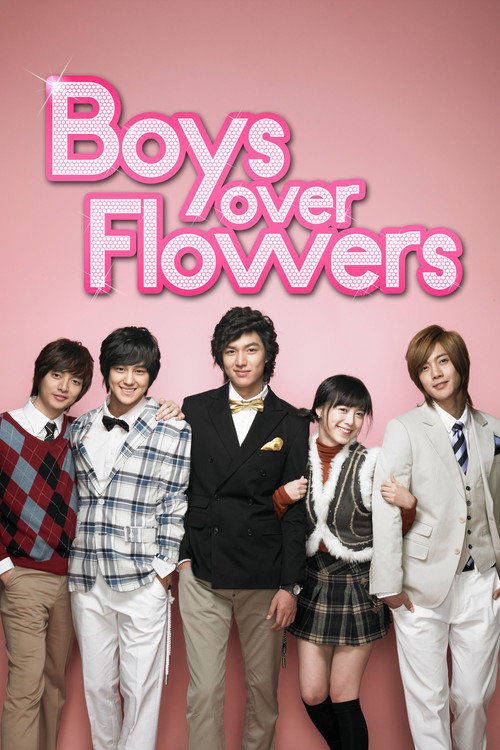
The series is openly silly, sometimes to the point of embarrassment, but it’s also shrewd about how young people learn power by performing it before they understand it. The infamous F4 — the quartet of wealthy, beautiful, socially untouchable boys at the center of the school — function less like characters than like a mobile weather system. Wherever they go, the room changes.
Lee Min-ho’s Goo Jun-pyo is the series’ central instrument, and I think his casting is half the reason the show lodged itself so deeply in popular memory. Before this, he’d mostly been a relatively fresh face; after it, he became one of the defining male stars of the Korean wave. You can see why immediately.
He has that slightly awkward, overbuilt physicality that suits a rich-boy tyrant who still looks like he’s growing into his own limbs. He can strut, yes, but he can also let that posture collapse just enough to reveal embarrassment, and that’s when the character stops being a cartoon. I’m not sure the writing always earns the emotional turn, but Lee Min-ho does something useful with the body: he makes arrogance look like a habit, not a birthright.
The series is at its best when it lets class operate through objects. Shoes. Coats.
Delivery bags. A cafeteria tray. Jan-di’s body moving through spaces designed to reject it.
The camera understands that cruelty in teenage environments is often logistical before it’s psychological; who gets the good seat, who’s allowed to speak, who has to stand in the rain. The show keeps staging these little tests of belonging, and because it’s a romance, every small gesture becomes charged. When Jun-pyo notices Jan-di, it matters not because he’s noble but because he’s the one person in the room with enough social gravity to make her visible.
Koo Hye-sun’s Jan-di is more divisive, and I can see why. She’s written as a fairly old-fashioned underdog heroine — stubborn, reactive, not especially articulate about her own feelings — and the series sometimes asks her to carry the same scene with either comic resistance or wounded sincerity, as if those are interchangeable. They aren’t.
Still, there’s a plainness to her that I came to appreciate. She doesn’t perform innocence so much as endurance. Her face does the work: a little grimace, a quick blink, that look of someone who’s learned not to expect kindness and is therefore shocked each time it arrives.
That’s a real emotional register, even if the show dresses it in fairy-tale fabric.
One scene, in particular, captures what the series does well even when it’s being melodramatic to the point of absurdity: a public humiliation turns into a moment of accidental intimacy. Jan-di is dragged through one of the show’s many rituals of embarrassment, and the staging is almost cruel in its clarity — faces arranged around her like spectators at a trial, the camera lingering just long enough for the discomfort to curdle.
Then the episode nudges the situation sideways. Jun-pyo’s reaction isn’t graceful or even especially kind at first; it’s possessive, confused, a little childish. But the direction lets us feel the shift in his attention as a physical thing.
He doesn’t suddenly become decent. He becomes interested. In a drama like this, that’s the first step toward moral improvement, which is perhaps why the whole enterprise feels both romantic and faintly alarming.
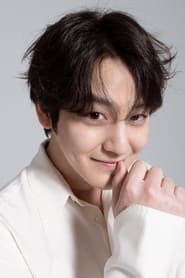
Kim Bum, as So Yi-jung, is the quietest of the main boys and maybe the most interesting because of it. He has the kind of still, alert presence that makes you notice when he chooses not to move. His scenes often arrive with less volume, and the series benefits from that restraint.
Kim Joon’s Song Woo-bin gives the group a different texture — more swagger, more directness — while Kim Hyun-joong’s Yoon Ji-hoo brings a softer, slightly withdrawn energy that the show leans on whenever it wants melancholy to enter the frame. There’s a reason these roles became so identifiable: each boy is a variation on privilege under pressure, a different way of spending youth badly.
I do wish the series had more patience with its own supporting characters, because some of them are better than the show knows how to use. Park Ji-bin, for example, as Jan-di’s younger brother, gives the domestic scenes a little lived-in friction. The family material rarely gets the same visual lushness as the school melodrama, but that’s part of the point.
Home is cramped, practical, underlit. School is where fantasy goes to spend money. You can feel the show preferring one world over the other, even when it claims to honor both.
If I have a reservation, it’s that the series occasionally confuses emotional repetition with depth. People cry, misunderstand, storm off, and return with hair slightly differently arranged. Sometimes that’s enough; sometimes you feel the machine turning, a little too obviously, under the floorboards.
But then a small detail will catch me again — a hand hesitating over a shoulder, a character standing a fraction too close to the edge of a frame, the way a neon-lit hallway can make a school seem less like an institution than a luxury prison — and the show’s artifice starts to look like style instead of laziness.
That’s the odd pleasure of Boys Over Flowers: it’s all exaggeration, but its emotions are not fake. They’re adolescent emotions, which is to say they arrive too loudly, in the wrong order, and usually with a soundtrack. The series treats love as an ambush and class as a costume you can mostly see through, though not entirely.
It’s funny in the way a nightmare can be funny once you’ve survived it. And it’s strangely earnest, too. Under the lacquer and the bangs and the absurdly expensive uniforms, it believes that a person can be changed by being recognized.
Maybe that’s a fantasy. Maybe that’s the whole appeal.
I wouldn’t call the show elegant. I wouldn’t even call it consistent. But I’d call it alive to one of television’s oldest tricks: taking feelings that are embarrassingly large and giving them a space large enough to echo. That’s why I still think about it. Not because it’s subtle. Because it isn’t.