Wealth, Hunger, and the Soft Violence of Adolescence
I keep thinking about how The Heirs turns a school hallway into a little kingdom. Not because the students wear crowns, obviously, but because every corridor, stairwell, and lunch table is arranged like a social map: who gets to stand where, who has to step aside, who can afford to look bored. That’s the series’ real subject, more than romance or melodrama.
It’s about hierarchy as a habit. A posture. latestnetflix.com's view is that a way of breathing when money has already decided the room.
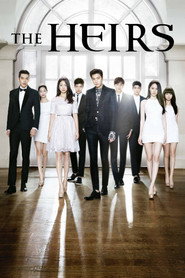
When The Heirs aired in 2013, it arrived as a glossy teen drama, but also as a kind of status report from the Korean drama machine: a big broadcast romance built for maximal emotional reach, with writer Kim Eun-sook’s familiar taste for sharp one-liners, class fantasy, and wounded rich kids who can’t quite say what they need. Lee Min-ho and Park Shin-hye were already major names, and the show leans hard on that star wattage.
What’s interesting, though, is how much of the series’ appeal comes from friction rather than polish. It’s a fantasy about luxury that keeps revealing the bruises underneath.
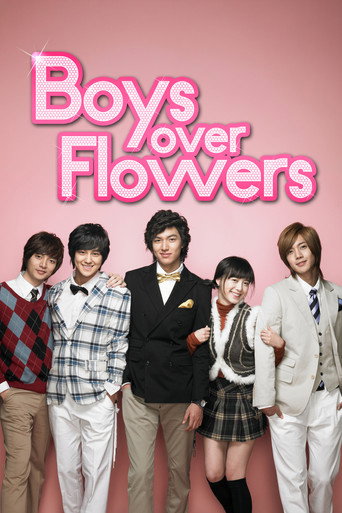
Lee Min-ho, coming off the towering popularity of Boys Over Flowers and City Hunter, had a peculiar burden here: he needed to remain the glamorous lead while making Kim Tan feel like someone whose confidence is mostly a defense mechanism. He often does this with stillness. His shoulders are squared, his face arranged into that familiar handsome composure, but the series repeatedly catches him in moments where the mask slips just enough to show irritation, hurt, even embarrassment.
Park Shin-hye, meanwhile, brings a groundedness that the show really needs. She’s not playing a dream girl so much as a teenager carrying adult anxiety in a body that still has to get through class. I’ve always thought she has a way of making practicality feel like emotion — the way she stands, slightly guarded, as if she’s already calculating the bill.
The cultural conversation around The Heirs has always circled its wealth porn and its class politics, and fair enough: this is a show where designer clothes, private property, and family name are treated like weather systems. But it’s not just admiring the rich from below. It’s more sly than that, and a little meaner.
The series understands that privilege is often most visible not in grand gestures but in casual entitlement: the assumption that inconvenience is for other people. Kang Shin-hyo and Boo Seong-cheol direct with a brisk, often over-caffeinated confidence, letting the melodrama run hot while the visual grammar keeps returning to clean surfaces — glass walls, immaculate uniforms, expensive interiors that somehow still feel emotionally airless.
The contrast is the point. Everyone is in a beautiful cage, and some of them know it.
One of the most discussed patterns in the series is the way it stages confrontation in spaces that are supposed to signify comfort. A living room becomes a battlefield. A bedroom becomes a holding cell.
Even the school, with all its prestige, feels like a machine for sorting human beings into acceptable and unacceptable forms. There’s a scene type the show returns to again and again: one character enters a space already occupied by another, pauses just long enough for status to register, then the conversation begins with a joke, a jab, or a lie. Nothing explodes right away.
That restraint matters. The series knows that class shame rarely arrives as a speech; it arrives as silence, or a glance, or the awkward delay before someone answers a text.
If there’s a sequence that captures what The Heirs does best, it’s the repeated collision between private feeling and public performance. A confession is made, then half-retracted. A romantic gesture is immediately made socially awkward by the presence of money, family expectation, or someone else’s gaze.
The writing can be overinsistent (Kim Eun-sook does love a declaration, and sometimes she loves it too much), but the show is smart about the social cost of tenderness. It’s not enough to feel. You have to feel in front of people who might weaponize it.
Kim Woo-bin, as Choi Young-do, is a huge part of why the series still lingers. At the time, he was still emerging from the image of the model-turned-actor, and here that background works in his favor: he moves with a slightly exaggerated self-awareness, like someone who learned early that intimidation is part choreography. What makes him compelling isn’t just the menace; it’s the sudden glimpses of awkwardness, the boyish hurt he tries to bury under sarcasm and cruelty.
He gives the show a darker pulse. Whenever he’s on screen, the series feels less like a romance and more like a study of damage passed down through wealth, which is a much sadder and more interesting proposition.
I’m not entirely sure every subplot earns its keep. That’s part of the show’s old-fashioned serial pleasure, but also part of its fatigue. It stretches itself thin with side characters whose romantic entanglements sometimes feel like variations on a theme the show has already stated too clearly.
Still, I’d be lying if I said the excess didn’t have its own appeal. There’s something almost opera-like about the way The Heirs keeps layering obligation, jealousy, and inheritance into every relationship. It’s messy.
Sometimes embarrassingly so. But adolescence often is, especially when it’s been bankrolled by parents who mistake control for love.
What I find most affecting, looking back, is how the series treats inheritance as emotional physics. Money matters, yes, but so does the inheritance of fear, duty, and loneliness. Parents in The Heirs don’t simply disapprove; they reproduce the world they know, which is usually the cruelest thing they could do.
The teenagers inherit mansions, companies, and expectations, but also the habits of emotional miserliness that come with them. That’s why the love story works at all: it’s less about fate than about two people trying, clumsily, to speak a language not handed down to them.
And maybe that’s why the series has endured. Not because it’s tidy, or even because it’s especially subtle. It isn’t.
But it has a genuine feel for the absurd difficulty of wanting someone when the whole world around you has already written a script for who you’re supposed to become. The Heirs is full of glossy surfaces and familiar teen-drama machinery, yet beneath all that, it keeps returning to a simpler, older pain: how embarrassing it is to need another person, and how much risk it takes to admit it.
That’s the part I remember. Not the luxury. The hesitation.