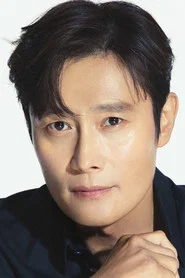
Lee Byung-hun
Lee Dong-seok
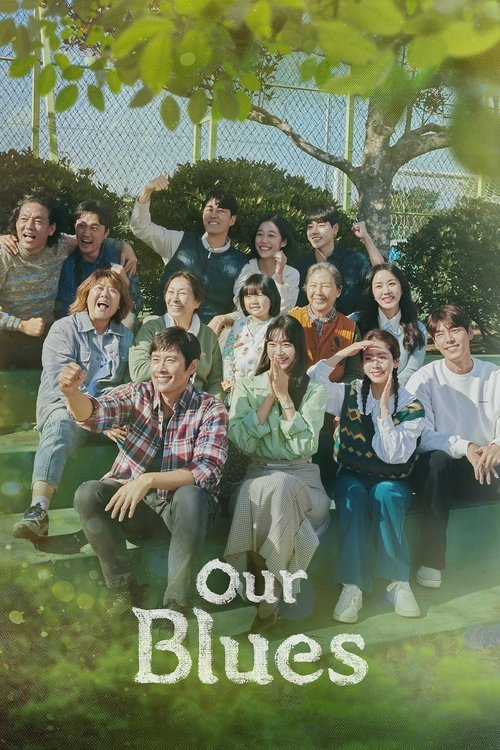
“Rooting for you through sour, sweet, and bitter life.”
Romance is sweet and bitter — and life riddled with ups and downs — in multiple stories about people who live and work on bustling Jeju island.
Official
Lee Byung-hun
Lee Dong-seok

Shin Min-a
Min Seon-a
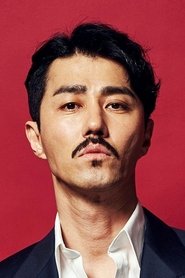
Cha Seung-won
Choi Han-su
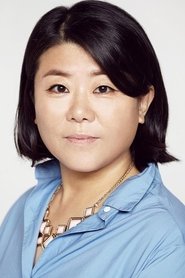
Lee Jung-eun
Jung Eun-hui

Han Ji-min
Lee Yeong-ok
I kept thinking, while watching Our Blues, that few television series are as interested in the way weather lives inside people. Not metaphorically — though there’s plenty of that too — but in the simple, stubborn sense that a place like Jeju Island can press itself into a life. The sea is always there, the market noise, the volcanic rock, the work of hauling, selling, mending, surviving.
People fall in love, get annoyed, lie, forgive, sulk, and age in the presence of all that salt air. latestnetflix.com's read is that the series, created by Noh Hee-kyung, doesn’t treat this as background decoration.Jeju isn’t a postcard here; it’s a co-author.
What made the show stick with me is how calmly it refuses the usual television insistence on escalation. It’s an omnibus drama, yes, but that word makes it sound tidier than it is. The episodes circle several characters — old friends, estranged parents, teenage lovers, neighbors who know too much and not enough — and let their stories rub against one another.
That structure can be clumsy in lesser hands. Here, it mostly feels like a moral choice. No one gets the luxury of being the “main” human being on the island.
Everyone is somebody else’s inconvenience, memory, burden, or second chance.
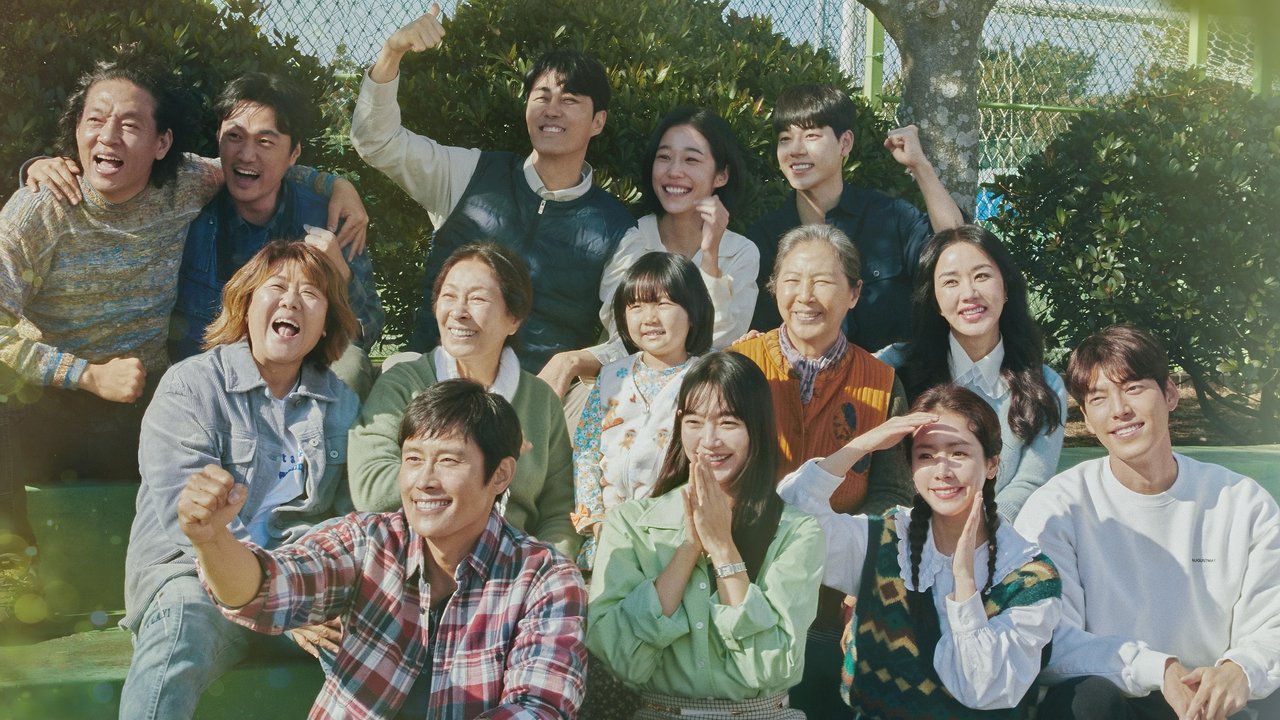
Noh Hee-kyung has spent years making dramas about ordinary emotional weather: Dear My Friends, Live, The World That They Live In, and earlier work that understood that big feelings are often carried in small, almost embarrassing gestures. Our Blues belongs comfortably in that line, but it also feels like a homecoming project of a different sort. The cast is stacked with star names — Lee Byung-hun, Shin Min-a, Cha Seung-won, Han Ji-min, Kim Woo-bin, Uhm Jung-hwa, Lee Jung-eun, Kim Hye-ja, Goh Doo-shim — yet the series keeps pulling them toward the texture of daily labor.
Famous faces are made to listen, wait, haggle, grieve, and stand in line. That’s the point, I think. Stardom gets sanded down by community.
The central conversation around the series, from what I found in reviews and interviews, has been about tone. Some viewers wanted a more forceful dramatic engine; others admired how the show trusts small reversals and accumulated shame. That split feels revealing.
If you come to Our Blues expecting tidy catharsis, it can seem almost mischievous in its refusal to hurry. But if you’ve ever lived long enough to know that people rarely arrive at their turning points with a neat soundtrack, the show feels surprisingly accurate. I don’t mean “accurate” in some social-science sense.
I mean emotionally recognizable. It knows how apologies stall, how affection gets disguised as irritation, how the past can sit at a kitchen table without anyone naming it.
One of the series’ nicest recurring tricks is its use of crowd scenes. Markets, fishing boats, deliveries, neighborhood gossip — these moments keep reminding us that private anguish is never fully private. There’s a scene early on where the camera stays low and patient as villagers go about their business, the frame crowded with movement and practical chatter.
Nothing grand happens, which is exactly why it works. You feel the island as a working organism, not a scenic backdrop. The sound design helps too: waves in the distance, shoes against stone, someone calling out across a lane, the little friction of human life against geography.
It’s not polished in the way prestige dramas sometimes are, where every ambient sound has been art-directed into significance. Here, the noise is messy. Like life.
Sorry for the cliché, but the series earns it.
The strongest episodes, for me, are the ones that let contradiction sit uncorrected. A character can be selfish and funny, wounded and manipulative, all in the same conversation. That’s where the writing feels most alive.
Noh doesn’t flatten people into case studies, and she doesn’t ask the actors to do much more than stand there with their defenses visible. Lee Byung-hun, who has spent so much of his career moving between sleek action work and grim prestige roles, is especially effective when the show asks him to be less armored than he usually appears. There’s a nice discomfort in watching someone so controlled seem briefly unsure how to occupy an ordinary room.
Shin Min-a, meanwhile, brings an almost frustrating ease to the part — not because she’s shallow, but because she makes reserve look like a habit formed over years. Her face often seems to be doing two things at once: receiving what’s being said and refusing to give away what it means.
Kim Woo-bin’s casting carries a bit of outside meaning too. After his public battle with cancer and return to acting, even his most casual scenes can feel freighted with survival, though the performance itself doesn’t beg for that reading. He has a way of holding still that doesn’t read as vacancy; it reads as someone measuring how much of himself to reveal.
That can be devastating in this kind of drama, where silence isn’t emptiness but strategy. And Lee Jung-eun — reliably one of the great secret weapons of Korean screen acting — brings the kind of lived-in physical comedy that keeps the series from sagging into solemnity. She can snap a line off like she’s been saving the annoyance for three years.
Then, just as quickly, she lets a glance soften it.
A lot of people singled out one of the late-series episodes — the one set around youth and first heartbreak — as the show’s emotional high point, and I get why. There’s something almost cruel, in a good way, about the series’ willingness to place adult grief beside teenage embarrassment and let both register with equal seriousness. A scene I can’t shake begins with a simple act of refusal: a young person won’t say the thing everyone wants said.
The camera doesn’t push. It waits at conversational distance, letting the hurt build in pauses rather than in speeches. A body shifts in place.
Someone looks down. The sea keeps moving behind them, indifferent and somehow consoling. By the time the scene ends, what’s happened is tiny on paper.
On screen, it feels like the first day of the rest of somebody’s life.
I was reminded, off and on, of the better ensemble work in Boys Over Flowers stripped of its glamour, or of the gentler humanism of Ozu filtered through a contemporary Korean television rhythm. That may sound fussy, but I mean it as praise. Our Blues understands that a community is not made of consensus; it’s made of tolerable friction. The show keeps returning to people who misread one another, not because they’re stupid but because everyone arrives burdened with old scripts.
Parents act like parents because they were raised by other parents. Lovers become suspicious because they’ve learned suspicion from the people who came before. Children, as usual, inherit the unpaid bill.
If I have a reservation, it’s that the series can sometimes lean too hard on coincidence and interlocking wounds, especially when it wants to connect the ensemble in neat emotional patterns. I’m not sure every thread lands with the same force. A few storylines feel like they’re waiting for a deeper sorrow the show doesn’t quite supply.
But even those softer passages have a social patience I admire. They don’t exist to speed us toward a finale. They exist because these people would still be here, chatting, arguing, hauling things, going on with their lives, whether the camera came or not.
That’s the real achievement of Our Blues. It makes human persistence feel dramatic without exaggerating it. No miracles.
No speeches that arrive too perfectly on cue. Just people, in all their exasperating tenderness, trying to live near one another on an island where the sea never stops reminding them how small they are. I finished it feeling not cleansed, exactly, but accompanied.
That may be the more generous gift.
Our Blues (2022) arrived with the kind of fanfare reserved for K-drama royalty—an ensemble cast featuring Lee Byung-hun, Shin Min-a, Kim Woo-bin, and Han Ji-min, all set against the picturesque backdrop of Jeju Island. But behind the omnibus storytelling and bittersweet narratives, the series was dogged by controversy before its first episode even aired. From product placement scandals to whispers about AI’s role in production, latestnetflix.com contends, Our Blues became as much a talking point for its off-screen drama as its on-screen charm.
The series’ all-star lineup was its biggest selling point, but it also became a lightning rod for criticism. Lee Byung-hun and Shin Min-a, two of Korea’s most bankable stars, led a cast that included veterans like Kim Hye-ja and Uhm Jung-hwa, alongside rising names like Kim Woo-bin. The sheer star power drew comparisons to anthology dramas like Hospital Playlist, but with a grittier, more socially conscious edge. Writer Noh Hee-kyung, known for her award-winning work on More Beautiful Than a Flower (2004), crafted an omnibus format that promised to explore the "sweet and bitter lives" of characters at life’s crossroads.
Yet, the hype was tempered by early backlash. Reports surfaced that Our Blues was pushing boundaries with its on-screen content, raising concerns about how far the drama would go in depicting sensitive social issues. The controversy wasn’t just about the themes—it was about the execution. Some viewers and critics questioned whether the series’ anthology structure could sustain its emotional weight over 20 episodes, a rare length for a K-drama of this style.
The drama’s most persistent off-screen drama revolved around two issues: product placement and the use of AI. Director Lee Seung-young, known for Agent Kim Reactivated, broke his silence on the controversies, though his statements did little to quell the uproar. Viewers accused Our Blues of excessive and jarring product placements, with some scenes feeling more like infomercials than organic storytelling. The backlash was swift, with fans taking to social media to call out what they saw as a betrayal of the drama’s artistic integrity.
Then came the rumors about AI. Reports suggested that artificial intelligence played a role in the series’ production, though details were scarce. Director Lee addressed the speculation, but his comments were vague, leaving more questions than answers. Was AI used for scriptwriting, editing, or something else entirely? The lack of clarity only fueled speculation, with some fans worried that the technology had been used to cut corners in a project already under fire for its commercialism.
Despite the behind-the-scenes chaos, Our Blues earned praise for its emotional depth and performances. Teen Vogue called it a "satisfying" exploration of difficult situations, while Lee Byung-hun himself described the experience as "touching" and "hopeful" after reading the script. The series’ omnibus format, which allowed each episode to focus on different characters, was both a strength and a weakness—some viewers loved the variety, while others found it disjointed.
Critics were divided on the execution. The French review aggregator SensCritique gave it an 8.2/10, praising its blend of comedy and drama, but the score was based on fewer than 200 votes, suggesting a niche rather than universal appeal. Meanwhile, the controversy over product placement and AI may have overshadowed the series’ artistic merits, leaving some to wonder if Our Blues would be remembered more for its scandals than its storytelling.
Our Blues was always going to be a high-stakes project. With a powerhouse cast, a celebrated writer, and a visually stunning setting, it had all the ingredients for a K-drama classic. But the controversies—some self-inflicted, others the result of heightened scrutiny—ensured that the conversation around the series was as much about what happened off-screen as on it.
For fans, the drama’s emotional core and standout performances (particularly from the ensemble) may have been enough to outweigh the distractions. For critics, the series’ flaws—whether in its pacing, product placements, or rumored use of AI—were harder to ignore. One thing is certain: Our Blues was never just a drama. It was a cultural moment, for better or worse.
Entertainment rumors and trivia aggregated from public reporting. Treat speculation as unverified unless a cited source confirms it.
More titles in the same genres and with the same cast.